

CDL's partnership with Hongkong Land may be better route for it to grow in China

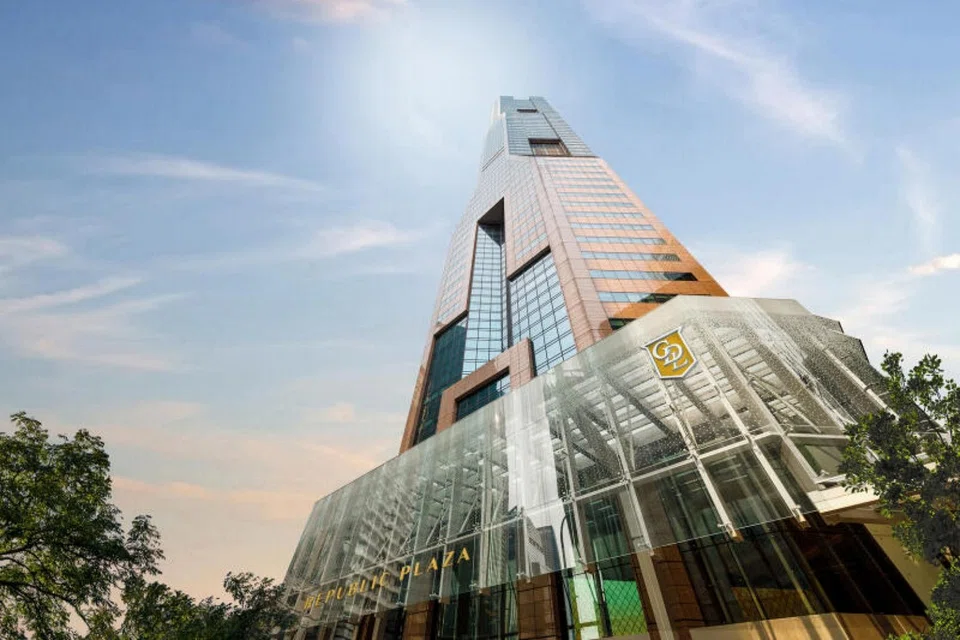
HONGKONG Land's H78 fully-owned subsidiary MCL Land and C09 (CDL) seem to have formed an alliance of sorts. Since March 2019, the duo have teamed up to bid for more than half a dozen residential sites at Singapore Government Land Sales (GLS) tenders. They have been successful on two occasions so far, both this year.
The first was in April, when they placed the highest bid for a plot directly connected to Farrer Park MRT station near Mustafa Centre. The site is designated for private housing development with commercial space at the first storey.
Then, in May, an MCL Land and CDL partnership placed the winning top bid for the maiden executive condominium (EC) housing site in the new estate of Tengah in western Singapore. ECs are a public-private housing hybrid.
The partnership of MCL Land and CDL brings together two property groups with long histories.
Hongkong Land, a member of the Jardine Matheson Group, traces its beginnings back to 1889.
CDL, meanwhile, was set up in September 1963 and listed on the then Malayan Stock Exchange in the same year. In 1969, Hong Leong Group, founded by Kwek Hong Png, bought into the company.
Word on the grapevine is that the Keswick family behind the Jardine group opened the door to the partnership between MCL Land and CDL to jointly develop Singapore residential projects.
Beyond that, how can CDL and Hongkong Land take their partnership to the next level?
Within Singapore, the two could be suitable partners if the Urban Redevelopment Authority were to put up for tender white sites in the immediate neighbourhood of the Marina Bay Financial Centre (an office, residential and retail project co-developed by Hongkong Land). Or if the white site next to the Sands Expo and Convention Centre were to be offered for sale.
There are also opportunities for the two groups to cooperate beyond Singapore.
Hongkong Land may be most famous for its ownership of 12 interconnected prime commercial buildings in the heart of Hong Kong's financial district in Central, but the group has also been developing residential and mixed-use projects on the Chinese mainland. It has a presence in seven key markets: Chongqing, Shanghai, Nanjing, Hangzhou, Chengdu, Beijing and Wuhan. It also operates in South-east Asia.
As at the end of last year, the group's attributable interest in the developable area of its projects totalled 9.1 million square metres.
Early last year, Hongkong Land clinched a 23-hectare plum mixed-use site on the West Bund of Shanghai. With a planned gross floor area of 1.09 million sq m (or 11.7 million sq ft), the project comprises five neighbourhoods and 28 land parcels.
The site is along the Huangpu River. Based on information on the Hongkong Land website and in its filings, the development is planned to comprise some 660,000 sq m of offices, 210,000 sq m of retail space, 170,000 sq m of luxury residences, 55,000 sq m of five-star hotels, a 30,000 sq m convention centre, and 10,000 sq m of sports facilities. Hongkong Land classifies the project under investment properties; there will also be a trading component.
The West Bund project is expected to be constructed over multiple phases stretching until 2027. It will be jointly developed with a strategic investor headquartered on the Chinese mainland and a government-held special purpose vehicle, with Hongkong Land retaining a 43 per cent interest in the joint venture as well as ongoing project and asset management rights.
For years, CDL had struggled to grow its business in China. Its top management thought it had finally discovered a golden opportunity in 2019 to scale up its presence in the world's most populous country by taking a stake in Sincere Property Group, based in Chongqing and headquartered in Shanghai. CDL in April 2020 announced the acquisition of a 51.01 per cent stake in the heavily indebted group founded by Wu Xu, whom CDL's chief executive Sherman Kwek had known for a decade.
But Sincere's liquidity challenges mounted following China's implementation of the "three red lines" policy to cap borrowings for property developers. CDL also discovered a 95 per cent drop in the revalued net asset value of Sincere as at April 30, 2020, when comparing China's accounting standard against the draft Singapore Financial Reporting Standards (International).
This resulted in CDL announcing in February this year that it had booked a S$1.78 billion impairment on its investment in Sincere Property for the year ended Dec 31, 2020, effectively writing down 93 per cent of its S$1.9 billion investment in Sincere.
CDL has stressed that it has ring-fenced its financial exposure to its investment in Sincere and will not be supporting Sincere's continuing financial obligations. This was reiterated earlier this month when Sincere was slapped with a bankruptcy claim by a creditor. But the prospects of expansion into China via the Sincere investment have clearly dimmed.
Meanwhile, however, the business opportunity of developing and selling residences to China's burgeoning middle class and increasingly affluent population is just too big for CDL to ignore. The company may find it more feasible to partake in this opportunity alongside a blue-chip partner such as Hongkong Land.
TRENDING NOW

Two Singapore-listed palm oil firms named in Greenpeace report on Indonesian plantation fires

Singapore Airlines flight returns to San Francisco after ‘unruly’ passenger incident
Singapore looking into which companies responsible for haze-causing fires: PM Wong
Deluge IPO 3.86 times subscribed ahead of SGX debut

