People transformation crucial to a company’s strategic agenda: UOB’s Dean Tong 

Tan Nai Lun
Published Tue, Dec 20, 2022 · 05:50 AM
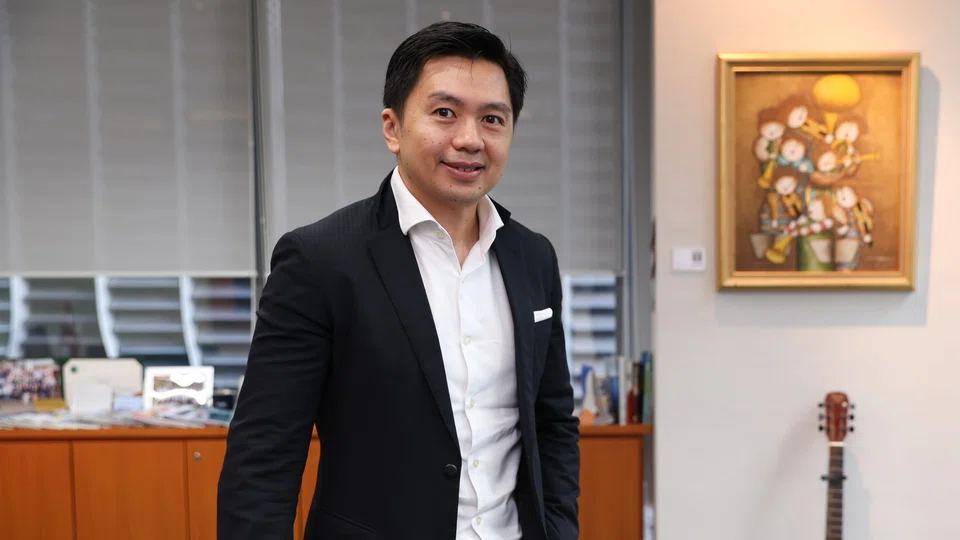
    • Today's human resource function should be linked it to the company’s strategic agenda, says Dean Tong, managing director and head of group HR at UOB.
    • Today's human resource function should be linked it to the company’s strategic agenda, says Dean Tong, managing director and head of group HR at UOB. PHOTO: YEN MENG JIIN, BT

    HIS experience in the consulting industry has taught Dean Tong the importance of people and organisation.

    Tong did not start his career as a banker. He was brought into UOB as the bank’s managing director and head of group human resources (HR) in 2018.

    He has spent his last few years trying to apply what he learned to transforming the bank.

    How did you end up here?

    I was a consultant with the Boston Consulting Group (BCG) for more than 20 years, where I specialised in people transformation. I then started my PhD, and went into teaching and some freelancing.

    My thesis was on people transformation, and the job offered to me at UOB was to transform the organisation. So, I thought this was actually a live stage for me to leverage what I’ve been preaching and to bring my thesis to life.

    Coming out from what I was doing was actually a very difficult decision. Having worked for 20 years, I finally took a break that I needed, and could spend time with my family.

    But it was too good an opportunity to give up because a position like this doesn’t open up all the time. And this was an opportunity for me to step up and test a lot of the things I’ve been preaching to my clients, and to be in the driver’s seat to actually execute it.

    Can you elaborate on a key trend you see within your area?

    Today’s human resource function is very different from the past. In the past, HR was associated with administrative tasks such as running payroll. But today, HR should be linked to the company’s strategic agenda.

    People strategy includes planning the company’s structure, recruiting, onboarding, performance, management, and engagement. You have to look at it from a holistic perspective.

    Banking today is also quite different from the banking that we were in: the competition for manpower and the skill sets required are changing due to digital transformation in the financial services industry.

    For employees, border closures during the pandemic added a lot of work stress to the environment. Worries about financials and losing jobs are among the key concerns driving the employment environment today.

    How does this affect your role?

    I need to understand what is the group strategy, what is the requirement for success, and how the people strategy can enable this success. This includes building the capabilities and having the right organisation structure.

    We also talk about hiring talent that we may not have yet. How can you change your employee value proposition to attract those new candidates that you need to bring on board?

    To build a sustainable workforce, it also means you cannot squeeze people dry in a short period of time. Instead, you try to make people stay and build a long-term career.

    As a consultant with a timeline for each project, I wanted things to move fast. I could be quite impatient. When I came to UOB, the first advice my CEO gave me was: to go far, you have to go with your team. I learnt to be patient over time.

    If change is not painful, then you’re not changing enough. When you hear people complain, but you start to see them moving along with you, then you know you’re making a difference. But if you don’t want any noise, then don’t change. And that’s the balance that we have to strike.