
PepsiCo to roll out 100 Tesla Semis in 2023, exec says
 Add BT as a preferred source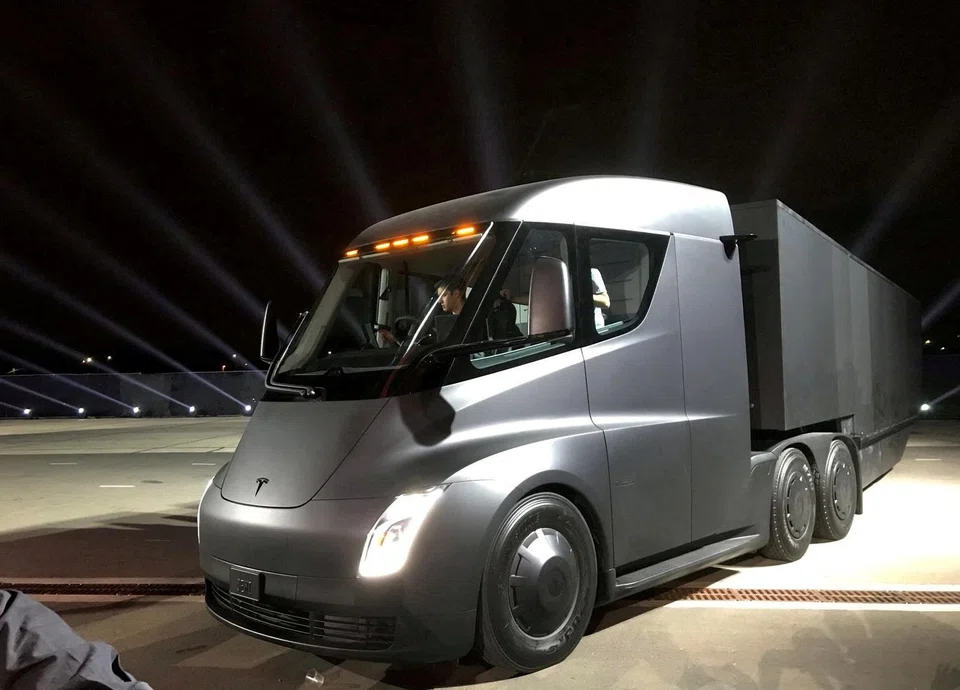
PEPSICO plans to roll out 100 heavy-duty Tesla Semis in 2023, when it will start using the electric trucks to make deliveries to customers like Walmart and Kroger, the soda maker’s top fleet official told Reuters on Friday (Dec 16).
PepsiCo, which ordered the big trucks in 2017, is purchasing them “outright” and is also upgrading its plants, including installing four 750-kilowatt Tesla charging stalls at both its Modesto and Sacramento locations in California, PepsiCo vice-president Mike O’Connell said in an interview. A US$15.4 million state grant and US$40,000 federal subsidy per vehicle helps offset part of the costs.
“It’s a great starting point to electrify,” said O’Connell, who oversees the company’s fleet of vehicles.
“Like any early technology, the incentives help us build out the programme,” he said, adding that there were “lots” of development and infrastructure costs.
PepsiCo is the first company to experiment with the battery-powered Tesla Semis as a way of cutting its environmental impact.
United Parcel Service and food delivery company Sysco have also reserved the trucks, while retailer Walmart is testing alternatives.
Navigate Asia in
a new global order
Get the insights delivered to your inbox.
PepsiCo’s plans to use the Semis have been reported, but O’Connell provided new details on how the company is using them and its timeline for deploying them. Tesla chief executive Elon Musk initially said the trucks would be in production by 2019, but that was delayed due to battery constraints.
PepsiCo said it plans to deploy 15 trucks from Modesto and 21 from Sacramento. It is unclear where the others will be based but O’Connell said the firm is targeting rolling out the Semis in the central United States next, and then the East Coast.
The company’s Frito-Lay division sells lightweight food products, making it a good candidate for electric trucks, which have heavy batteries that could limit cargo capacity.
The Semis can haul Frito-Lay food products for around 684 kilometres (km), but for heavier loads of sodas, the trucks will do shorter trips of around 160 km, O’Connell said.
“Dragging a trailer full of chips around is not the most intense, tough ask,” said Oliver Dixon, senior analyst at consultancy Guidehouse.
“I still believe that Tesla has an awful lot to prove to the broader commercial vehicle marketplace,” Dixon said, citing Tesla’s unwillingness to offer information on payload and pricing.
PepsiCo has earmarked some of the trucks planned for the Sacramento location to make deliveries to Walmart and grocers such as Kroger and Albertsons. The trucks at the Modesto Frito-Lay plant have just gone to PepsiCo distribution centres, O’Connell said.
All of the Semis going to PepsiCo will have an 805 km range. O’Connell added that he is not aware of when Tesla will start deploying 480 km trucks. When Tesla starts building them, PepsiCo “will rotate those up” into its fleet, he said.
PepsiCo declined to share details on the price of the trucks, a figure that Tesla has kept quiet. Competing vehicles sell for US$230,000 to US$240,000, said Mark Barrott of consulting firm Plante Moran. He added that the 805 km range Tesla Semi could be priced higher because its 1,000 kilowatt-hour battery pack is about twice the size of many of its rivals.
“We keep the trucks for a million miles, seven years,” O’Connell said. “The operating costs over time will pay back.”
The Gatorade maker declined to share specifics on the weight of the trucks, another closely guarded secret by Tesla.
He said Tesla did not help pay for the trucks’ megachargers but provided design and engineering services for the facilities, which come with solar and battery storage systems.
O’Connell said that a 684 km trip carrying Frito-Lay products brings the Semi’s battery down to roughly 20 per cent, and recharging it takes around 35 to 45 minutes. REUTERS
Decoding Asia newsletter: your guide to navigating Asia in a new global order. Sign up here to get Decoding Asia newsletter. Delivered to your inbox. Free.
Share with us your feedback on BT's products and services

