

Pfizer takeover makes dent in a US$32b stock-market slump
New York
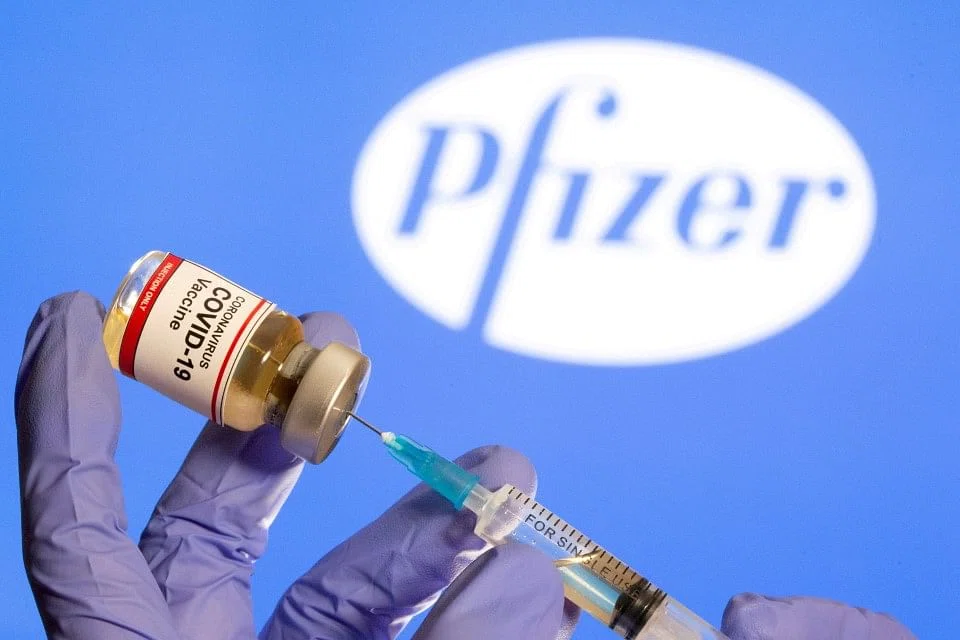
PFIZER'S acquisition of ReViral chipped away at the drug maker's stock-market slump.
The company's shares gained 4.3 per cent on Thursday (Apr 7) after the announcement that it was buying the lung-focused biotech firm for as much as US$525 million, bucking the broader market's drop.
But the shares are still down almost 7 per cent this year - cutting some US$32 billion from its market value - amid investor concern about the loss of revenue as drug patents expire and the uncertain fate of its booster shots as the Covid-19 pandemic winds down.
That's left the company trading at a discount to healthcare peers that have been hitting record highs as investors turn to defensive bets amid geopolitical turmoil and an uncertain economic outlook.
Wall Street is itching for Pfizer to act to shore up growth, potentially by utilising the US$150 billion of capacity that Bank of Montreal estimates it has for acquisitions.
Yet, Thursday's deal for ReViral, a closely-held drug developer, is likely too small to do much to change the pharmaceutical behemoth's outlook.
"While we are encouraged with M&A in BioPharma, this is not exactly the deal we had hoped for," BMO analyst Evan David Seigerman wrote.
Big drugmakers have been eschewing large deals in favour of partnerships or buyouts of smaller companies. That helped drive merger activity for the sector during the first quarter to the slowest since the immediate aftermath of the pandemic in 2020.
Chris Schott an analyst with JPMorgan Chase & Co, said Pfizer is "the most controversial name" among the large-cap drugmakers, with bulls pointing to the company's Covid vaccines and ability to deploy large amounts of capital and bears saying its valuation is still too high given the company's core business beyond the coronavirus inoculations.
Excluding Pfizer's Covid-19 vaccine and antiviral sales, Schott sees negative compound annual sales and earnings growth through 2025 as the company faces one of the industry's biggest revenue losses due to patent expirations.
Still, with Pfizer's stock up investors appear to support the acquisition, which builds on gene-therapy partnerships forged in January.
Truist's Robyn Karnauskas said the deal could signal "a potential return to M&A, especially in an environment where companies seem to face hurdles going public". BLOOMBERG
Decoding Asia newsletter: your guide to navigating Asia in a new global order. Sign up here to get Decoding Asia newsletter. Delivered to your inbox. Free.
Share with us your feedback on BT's products and services
TRENDING NOW

Two Singapore-listed palm oil firms named in Greenpeace report on Indonesian plantation fires

Singapore Airlines flight returns to San Francisco after ‘unruly’ passenger incident

Singapore looking into which companies responsible for haze-causing fires: PM Wong

Deluge IPO 3.86 times subscribed ahead of SGX debut

