

Political turmoil roils bonds as Malaysia's deficit risk rises
A blowout in state spending could cause another downward revision in the nation's outlook
 Add BT as a preferred source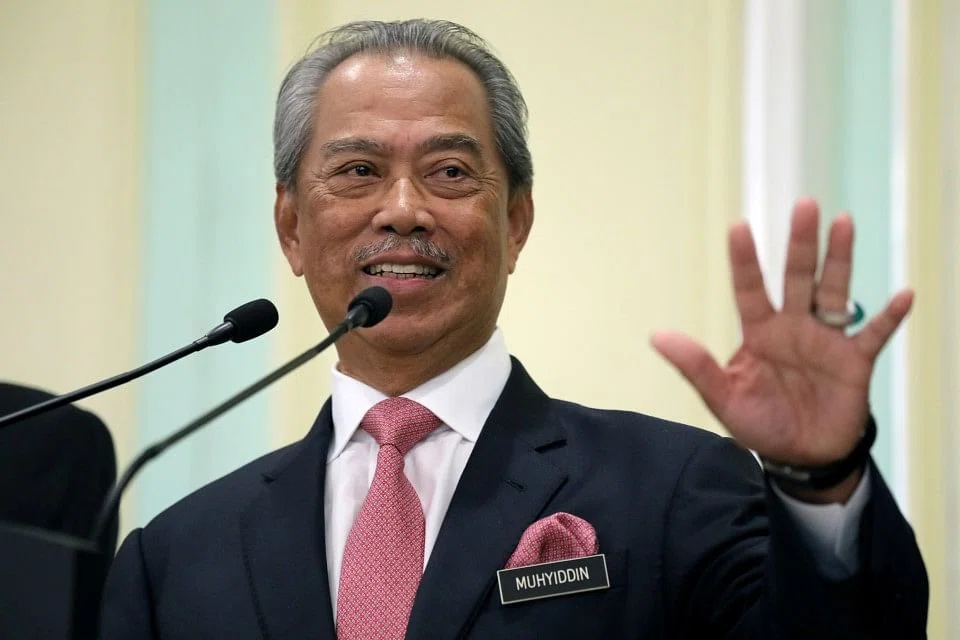
New York
A NASCENT recovery in Malaysian bond inflows could be derailed as political turmoil and the threat of a downgrade in the sovereign rating outlook deter investors.
A tussle for control of the government and the spectre of a snap election are weighing on foreign ownership, which climbed from a 10-month low in May. As Prime Minister Muhyiddin Yassin looks to shore up growth, a blowout in state spending could trigger another downward revision in the nation's outlook.
The risks may make it harder for the authorities to attract inflows after they unveiled US$69 billion of stimulus, with crude-related state revenue also under pressure from volatile oil prices. Waning global demand for the nation's assets will damp sentiment as the economy teeters on the brink of a recession.
"Private investors' confidence, and the scope for sustaining a strong recovery into 2021, depend on the demonstration of a parliamentary majority which is not in evidence as yet," said Aninda Mitra, senior sovereign analyst at BNY Mellon Investment Management.
"As government debt dynamics turn more fragile, the rating agencies may consider assigning negative outlooks" to the nation's credit ratings.
At the heart of the worries lies a RM295 billion (S$96 billion) stimulus programme aimed at helping the economy weather the fallout from the pandemic. The government estimates the budget deficit will widen to between 5.8 per cent and 6 per cent of gross domestic product this year, the most in over a decade.
The numbers have unnerved investors. Benchmark 10-year yields capped their biggest weekly increase in more than two months after the authorities unveiled the latest round of stimulus worth RM35 billion in early June.
S&P Global Ratings noted in its March report that Malaysia's rating could be at risk "if economic growth suffers a deeper or more prolonged downturn than we currently expect, or if we assess a weaker commitment to fiscal consolidation". The agency rates Malaysia A-, the fourth lowest investment grade.
"Short-term external debt remains very high relative to the region," said Sue Trinh, managing director for global macro strategy at Manulife Investment Management in Hong Kong.
"We would expect negative credit rating outlooks this year."
Still, there are bright spots for some investors.
What the government has been doing - including the stimulus packages - is "at least providing a strong support for the economy", said Ng Kheng Siang, Asia-Pacific head of fixed income at State Street Global Advisors in Singapore. "For bond investors, we know that the government is taking action that's going to stabilise the market."
The deficit risks come as Mr Muhyiddin tries to fend off a challenge to his three-month old government, which came into power after ruling lawmakers defected to form a new alliance.
The opposition is contesting the premier's contention that he commands the support of the majority of lawmakers and has vowed to unseat him.
Speculation is mounting that an election may be called to put an end to the uncertainty, and the opposition could table a no-confidence vote against Mr Muhyiddin when parliament resumes on July 13.
"The unexpected transition illustrates heightened policy uncertainty, and there is still some doubt about support for the current government in parliament," Fitch Ratings' Asia-Pacific sovereign team said.
"Deterioration in governance and political uncertainty may dampen investor sentiment, constraining economic growth."
Fitch lowered the outlook for Malaysia's debt to negative from stable in April, citing the impact of the pandemic. It rates the nation A-.
Global funds boosted ownership of Malaysian government bonds to RM167 billion in May, the first inflow in four months, as the broader risk sentiment stabilised. Overall holdings are still substantially below the record RM215 billion reached in late 2016.
"For investors to truly return, there needs to be clarity on the government's stability," said Vishnu Varathan, head of economics and strategy at Mizuho Bank in Singapore.
"There needs to be some clarity on the oil picture." BLOOMBERG
Decoding Asia newsletter: your guide to navigating Asia in a new global order. Sign up here to get Decoding Asia newsletter. Delivered to your inbox. Free.
Share with us your feedback on BT's products and services
TRENDING NOW

Johor property old hand KSL readies family handover amid market boom

Seatrium eyes S$28 billion in project opportunities amid global race for energy security

China targets offshore billions in biggest crackdown in decades

Trek 2000 shares jump 26% after Osim founder Ron Sim drops claims, sells 7.3% stake to Azure Capital

