

Post failed merger, Sabana sets sights on asset revamps, disposals
It has completed F&B-focused mall NTP+, and plans to unencumber assets should its portfolio valuation improve
Singapore
FOLLOWING the abortion of the merger with ESR-Reit, Sabana Shari'ah Compliant Reit plans to continue to divest its non-performing assets and rejuvenate others in a bid to improve the resilience and growth trajectory of the real estate investment trust (Reit) despite its constraints.
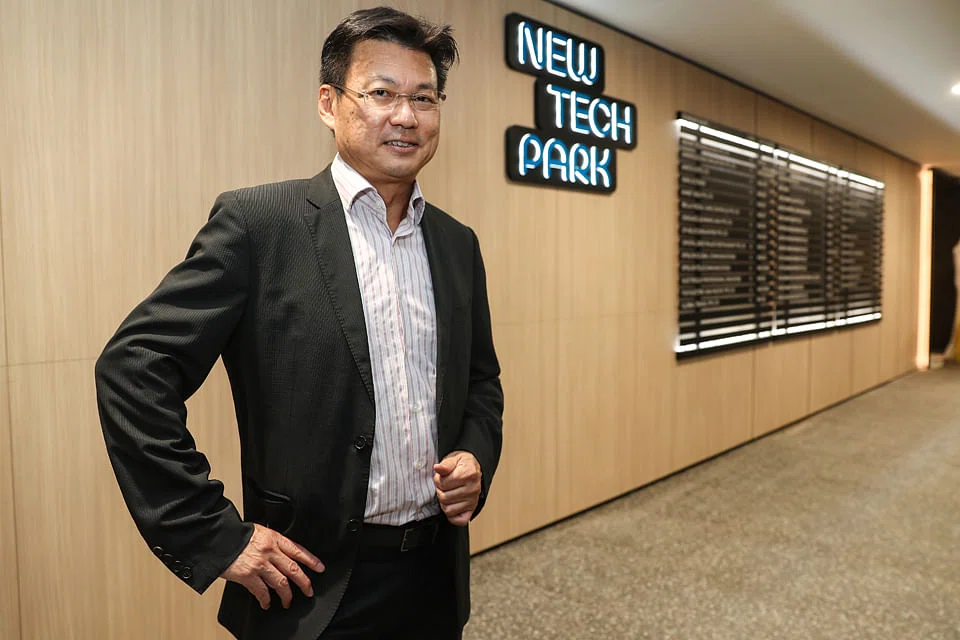
For instance, it has recently completed NTP+, a food and beverage-focused retail mall located at its New Tech Park at Lorong Chuan, and is in the midst of upgrading the industrial park's lifts and electric system.
Analysts have flagged these updates to the building - one of the Reit's key assets - as positives that are expected to improve its portfolio valuation, while stemming the earlier flight to better-quality offices that the landlord had seen. The mall is set to open next month.
DBS Group Research expects the Reit to rake in S$2.6 million in net property income from NTP+ based on monthly rents of S$9 per square foot (psf) per month, and said these rents could rise further.
The mall is expected to yield double digits in returns, and thus be accretive to the Reit's distribution per unit (DPU). DBS also believes it will strengthen New Tech Park's proposition and boost its occupancy (77 per cent as at end-2020) and rental rates.
The brokerage has a "buy" call on the counter. The Reit currently trades at a FY21 yield of 6.8 per cent and FY22 yield of 7.2 per cent, after a stunning 18.3 per cent climb in unit price year to date.
Speaking about New Tech Park, CEO Donald Han told The Business Times in a recent interview that his occupancy target for the industrial park is to achieve the 85 per cent rate that business parks across Singapore are averaging.
In time, he also has plans to maximise the plot ratio of the property from the current 2.02 to the maximum allowable limit of 2.5, subject to regulatory approval. The additional space could be built-to-suit to house campus sites for multinationals, whom he believes will favour the strategic central location.
But the Reit's limitation lies in its considerably smaller portfolio, valued at about S$840 million as at end-2020. This limits how much development it can undertake, as every vacant space will move the needle significantly on its operational numbers.
Mr Han said: "I'd like to do four or five asset enhancements now, but I have to chase four or five master tenants out, and that will leave me with a big gap, so we can only do one at a time."
Next on his list that is due for a major revamp is 10 Changi South Street 2, a warehouse building with ancillary offices that was only 64 per cent leased as at end-2020. The manager plans to engage the regulators and nearby stakeholders such as the Singapore University of Technology and Design before deciding on the direction to take.
Mr Han said he prefers to redevelop and build than to buy assets. This is partly because the Reit is hampered from borrowing, as about 93.8 per cent of its assets are still encumbered - a problem he hopes to unwind when the Reit's portfolio valuation improves. This would either allow the manager to pare some of the loans or give it more clout to re-negotiate with lenders.
But another reason is the much higher yields that development can generate at lower cost, compared to buying new assets at higher considerations for yields below 6 per cent.
The manager will also focus on rejuvenating the older assets, which will help to retain existing tenants and attract new ones. At the same time, it is trying to dispose of assets such as 1 Tuas Avenue 4, which previously operated as a data centre but now lies vacant, and 30 & 32 Tuas Avenue 8, which are also empty after the master tenant moved out.
Ahead of the annual general meeting on April 27, activist funds Quarz Capital and Black Crane have rallied unitholders to vote against the resolutions allowing the manager to issue units as part of capital raising and the implementation of a distribution reinvestment plan.
They called the resolutions "unnecessary" and said they were proposed to entrench the interests of certain unitholders to the disadvantage of independent unitholders.
To this, Mr Han is bewildered. He said the manager has no plans to raise money at the moment, but would like the financial flexibility to do so when "a heavenly deal with double-digit yield drops into my lap".
The manager has had this general mandate since 2018, but has never issued any new units. The 20 per cent that is being sought is also well below the 50 per cent which received unitholders' approval in 2019, and is at the same level as what was passed in 2020.
As for the dividend redistribution plan, he believes that long-term unitholders should vote yes if they want to participate in the growth of the Reit.
Units of Sabana Reit ended flat at S$0.42 on Wednesday.






