Powell pivot splits views on Fed rate scenarios for 2024

Yong Jun Yuan
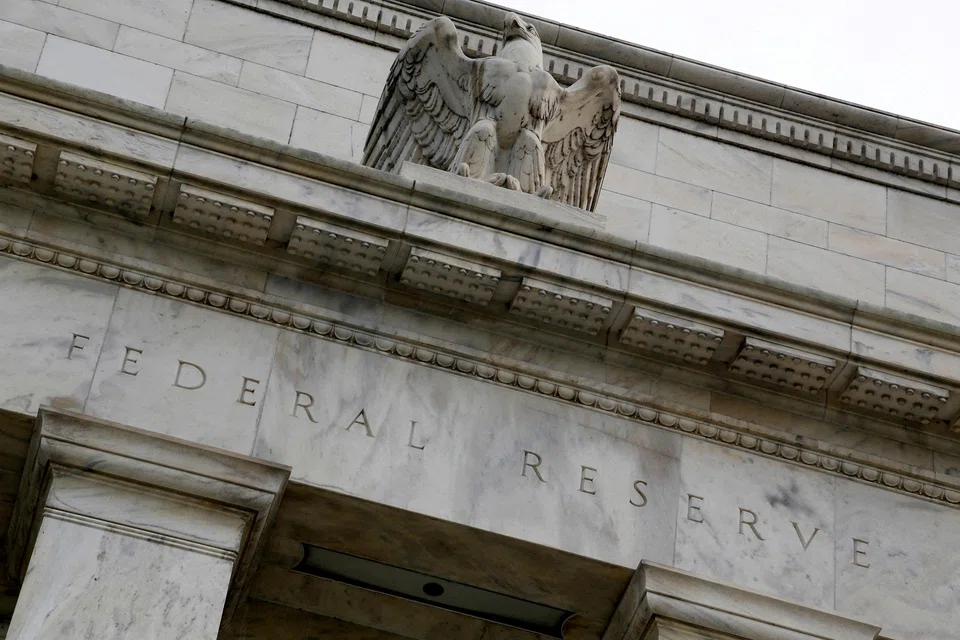
HIGHER-FOR-LONGER has ceased to be the consensus position on interest rate directions next year. Instead, investment managers are increasingly divided over how the United States Federal Reserve will move in 2024.
BlackRock Investment Institute’s chief Asia strategist Ben Powell is among those who still expects interest rates to remain elevated.
Even though inflation has come down, he noted that it remains significantly above the Fed’s targets.
“We think it is unlikely the Fed will pivot anytime soon. They’re going to wait until they are far more confident that they are indeed victorious in their fight against inflation before they declare victory, if you will,” he said during a media briefing on Dec 6.
He believes interest rates in the longer term are expected to stay at higher levels than markets have been used to over the last 15 years or so.
In a Bloomberg interview on Thursday (Dec 14), BlackRock’s Powell said his view remained unchanged by the Fed’s latest decision.
“The message today was dovish, that’s for sure, but I think the market has probably got a bit carried away with it in the short-term,” he said.
Sat Duhra, Janus Henderson Investors’ co-portfolio manager for Asian dividend income, is in the same camp. Even if interest rates are cut, he does not expect the easing to be “too dramatic”.
Before last week, the views espoused by Duhra and BlackRock’s Powell were almost universal among market watchers.
US Fed chair Jerome Powell had spent months schooling the market to expect a hawkish stance on inflation and an unwillingness to cut rates.
That changed on Dec 13, when he indicated the winds are shifting. “Our policy rate is likely at or near its peak for this tightening cycle,” he said in a statement.
Even before that day, a small number of market participants had begun to forecast rate cuts.
Among the most aggressive have been analysts at ING, who are looking for 150 basis points (bps) of rate cuts in 2024; and a further 100 bps in early 2025 as macroeconomic indicators weaken.
In a Nov 30 report, ING said it saw a real risk of recession as real household disposable incomes flatlined, credit demand fell and pandemic-era accrued savings were exhausted.
“If low gasoline prices are maintained, inflation could be at the 2 per cent target in the second quarter of next year, which could open the door to lower interest rates from the Federal Reserve from May onwards – especially if hiring slows as we expect,” ING said.
At the time, ING had been in the minority. Recent falls in US Treasuries indicate it no longer is. The 10-year US Treasury yield closed at 3.9 per cent on Friday. It had spent over four months above 4 per cent.
The CME FedWatch Tool now shows a 73.1 per cent probability of a rate cut in March.
Fidelity International South-east Asia client portfolio strategist Christopher Wong expects a cyclical recession in the next six to 12 months, especially in developed markets.
He noted headwinds facing the US consumer as the savings they have built up dwindles and government fiscal support falls, leading to tighter financial conditions. He also expects US unemployment to tick upwards, while inflation trends downwards.
“Interest rates may be a little bit higher for a while... but potentially this will come down if the economic growth slows down as we expect,” he said.
Lion Global Investors Asian equities portfolio manager Kenneth Ong said he expects interest rates to stay at a more “normal” range of 2 to 4.5 per cent in the long-term.
“The past 10 years have been an anomaly for interest rates because the market was very sensitised to the Federal Reserve determining interest rates...
“Now, we’re going back to the pre-great financial crisis era – where interest rates can actually function normally, and interest rates will be determined by demand,” he said.
He added that unlike in past economic cycles, the delta in global growth will be driven by governments funding infrastructure projects and meeting their climate targets.
For investors, that means treading carefully and picking stocks astutely in the year ahead.
Lion Global’s Ong said a key theme to watch is consolidation – mergers would boost companies’ pricing power and allow them to push for further growth.
He will also be paying greater attention to industrial companies that pay a dividend, particularly those that have pivoted towards renewable energy.
“One area where governments can really generate quite a lot of demand is in the restructuring of the global power grid, especially in shifting power grids from legacy (sources) to renewables,” he said.
Fidelity’s Wong is finding opportunities in banks and certain aspects of the natural resources sector. Indian and Indonesian banks, in particular, have been beneficiaries of structural trends such as digitalisation, allowing them to expand their reach to more customers.
“Covid obviously accelerated all of this, but there’s still a lot of room to grow... from a financial penetration perspective, to really catch up with the rest of the developed (world),” he said.
Janus Henderson’s Duhra, too, believes banks in Indonesia and India could generate attractive yields. They have good operating metrics and are guiding for higher returns on equity, he noted.
In Singapore, he is bullish on OCBC as the company’s private banking operation has generated good growth.
“They’re pretty steady; not very exciting, but they do the job in terms of yield and, again, they could be beneficiaries of rates being higher for longer as well,” he said.
Managers are less bullish on real estate investment trusts (Reits), even though they ought to rebound as interest rates are cut.
Lion Global’s Ong said when compared with dividend-paying industrial companies, such as shipbuilders or power suppliers, Reits lack the growth potential to complement the yield they provide.
Fidelity’s Wong also warned that capitalisation rates could rise in Singapore, which would negatively impact local Reits.
“That may also impact leverage ratios,” he said. “When that happens, we may potentially also need to see them start to raise some equity to... bring their leverage ratios back to healthier levels.”