Powell puts market on notice over heightened risks
US stocks start retreat after Fed chair noted 'elevated' asset prices and threat of trade war
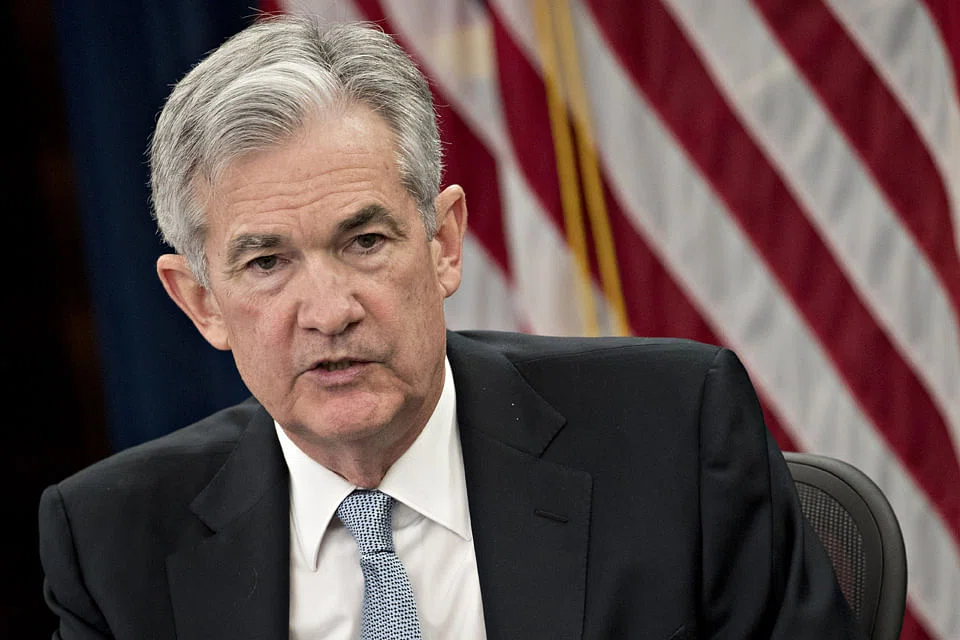
JUBILATION at Jerome Powell's measured tone in his first policy statement as the chairman of the Federal Reserve faded to trepidation as he highlighted worries about global trade in a press conference.
Mr Powell's Fed boosted the benchmark Fed Funds rate by a quarter of a percentage point to a range between 1.5 per cent and 1.75 per cent. The average central banker's target for the number of expected rate hikes this year remained at three, even as more than one banker raised their individual target to four. Futures markets are already pricing in more than three hikes in 2018.
In a note to clients following the Fed's press statement, economists at Swiss bank UBS argued that the statement was consistent with the view that yields on Treasury bonds - and hence debt payments for the US and major corporations - are set to rise steadily for the foreseeable future.
"For 2019 and 2020, the path was revised higher," said UBS economist Seth Carpenter, in a note to clients. Most significantly, the new path would bring the benchmark rate above the "neutral" level, where it's running in line with historical inflation rates. That's a sign that inflation is likely to accelerate, forcing the central bank to "impart restraint on the economy," the economist said.
The market reaction took the form, initially, of a relief rally. The Dow Jones Industrial Average rose by more than 200 points as the scenario that markets had braced for - an increase in the Fed's official target for 2018 hikes - did not materialise.
Only when Mr Powell began answering questions in a press conference did Treasury yields start to pick up rapidly and stocks to shed their gains. The yield on the 10-year note finished near the 2.9 per cent level that spooked investors earlier this year. The Dow finished slightly in the red on the session.
Mr Powell addressed a range of topics. At one point, he stated that some asset prices were "elevated", a hint that he may consider the surge in stocks late last year and early this year as highly speculative.
"It would be silly to suggest nearly 10 years into the bull market with (earnings multiples) trading significantly above five and 10 year averages, to say they're not elevated because they are," said Oliver Pursche, chief investment strategist at broker dealer Bruderman Brothers.
Nevertheless, stock prices could remain "elevated" and even rise further if earnings growth continues to accelerate as most stock analysts anticipate, Mr Pursche said. Central bankers often warn about valuations but seldom pick the "top" of the market to do so.
Mr Powell also told reporters that several central bankers had raised the threat that the new US trade policy presented to the economic growth outlook.
"He obviously during the interview came out and said 'yeah, trade policy is becoming a growing concern'," said Mr Pursche. "The one thing that can derail - not just US economic growth - but global economic growth is a trade war."
"President Donald Trump appears to be headed in that direction - and I stress the word 'appear,' because, so far, all we've heard is a lot of talk about tariffs."
On Wednesday, Mr Trump's Trade Representative Robert Lighthizer pressured Congress to support the administration's plans to impose tariffs and other punitive financial measures as a gambit to curb what's perceived as China's disregard for intellectual-property laws.
While Mr Trump has talked tough on China, "he's leaving himself plenty of room to essentially do nothing," said Mr Pursche.
The European Union, however, already seems to be responding to the affront from the Trump administration, which did not name its largest trading partner as automatically exempted from steel tariffs. The EU's executive branch, the European Commission, said it was considering raising taxes on American tech giants such as Google parent Alphabet and social network Facebook, which has faced outrage in Europe and elsewhere in recent controversies showing violations of digital privacy.
After a slide in the value of Facebook and other former tech leaders of the stock market, the broad Standard & Poor's 500 is once more poised about halfway between its January highs and its February lows.
Another UBS strategist said US stocks will likely head toward the high end of that 10 per cent range.
"Sentiment remains fragile, but macro policy worries are being priced into markets while still solid corporate micro fundamentals have been discounted notably," said Keith Parker, US equity strategist for Swiss bank UBS.
Whether or not the bull market continues may hang, in large part, on the extent to which rhetoric about a trade war becomes a reality, according to Mr Pursche.
There are many economic factors in favour of continued economic growth, including the salutary effects of a tax cut and the momentum of corporations in a range of sectors, Mr Pursche said. The Fed and other economists are sending a clear message to the Trump administration and the Chinese and European officials that are responding to its trade threats.
"Don't (mess) it up with tariffs and a potential trade war," said Mr Pursche.
READ MORE: Asian markets shrug off rate hike as trade war threat looms