

Prices mixed on rebounding US$ and supply jitters
London
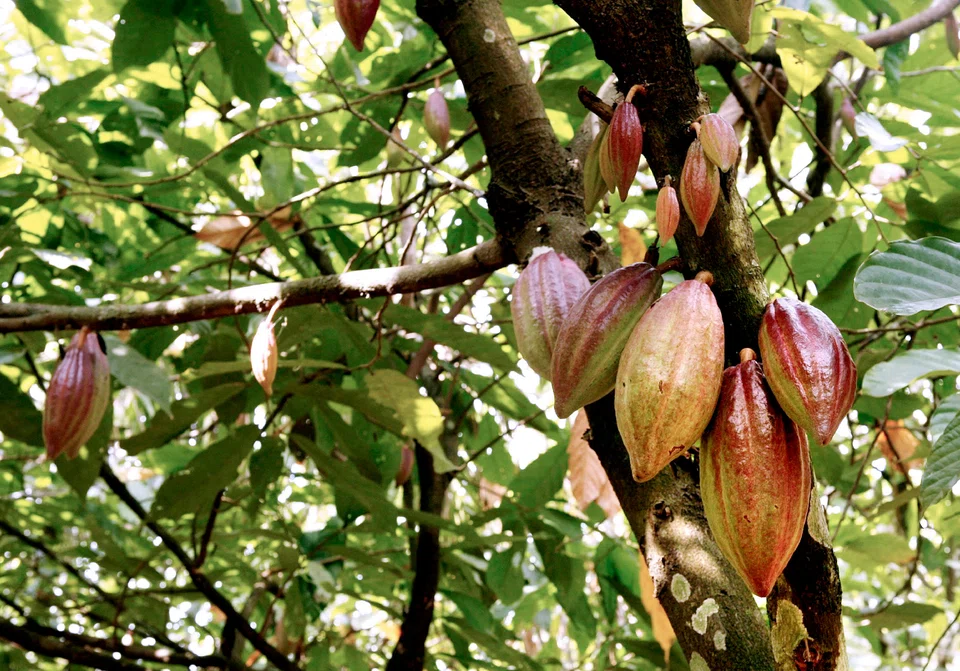
COMMODITY markets diverged last week as traders balanced the strong dollar against supply concerns, while star performer cocoa hit seven-month peaks on output fears in key producer Ghana.
"Commodities in general . . . ended the week on the defensive, pressured by renewed dollar strength," said Capital Economics analyst Julian Jessop.
World oil prices fell on Friday on profit-taking and the strong dollar, but finished the week in positive territory on hopes that a global supply glut could end soon, dealers said.
Prices dropped on Monday and Tuesday as the ongoing global supply glut and soft demand overshadowed the impact of geopolitical tensions in the crude-rich Middle East.
They rebounded sharply on Wednesday and Thursday after the US Department of Energy (DOE) revealed sliding US petroleum supplies and production. The weekly DOE report stirred expectations of an easing in a supply glut that had sent prices tumbling in recent months.
US crude inventories fell for the third consecutive week, by 2.7 million barrels, much more than analysts expected.
The report also showed US production falling 112,000 barrels a day to 9.26 million. The fall in output has raised hopes of an easing in the build-up of global crude reserves, which was a key reason for the recent collapse in prices.
In recent weeks, the oil market has fought back after prices plummeted more than 60 per cent between June and January, as the Organization of the Petroleum Exporting Countries refused to cut production late last year despite the glut. The move by the 12-nation cartel, which pumps about 30 per cent of global crude, was widely taken as an attempt to push US shale producers, which have higher costs, out of the market.
Opec ministers will meet again in Vienna on June 5 for their next scheduled output meeting.
By Friday on London's Intercontinental Exchange, Brent North Sea crude for delivery in July rose to US$65.57 a barrel compared with US$64.74 a week earlier. On the New York Mercantile Exchange, West Texas Intermediate or light sweet crude for July climbed to US$59.60 a barrel from US$58.70 for the expired June contract a week earlier.
Gold hit a three-month peak on Monday but has since fallen in line with the strengthening dollar, as dealers tracked the US interest rate outlook.
The stronger greenback makes dollar-denominated commodities - like gold - more expensive for holders of other currencies.
That tends to dent demand and depress price levels.
By Friday on the London Bullion Market, the price of gold dipped to US$1,204 an ounce from US$1,220.50 the previous week.
Silver was unchanged at US$17.25 an ounce.
On the London Platinum and Palladium Market, platinum fell to US$1,143 an ounce from US$1,150.
Palladium decreased to US$769 an ounce from US$785.
Base or industrial metals prices slid on downbeat data in key consumer China, with additional pressure from the strong US currency.
China's manufacturing activity contracted at a slower pace in May, an HSBC survey showed Thursday.
By Friday on the London Metal Exchange, copper for delivery in three months dived to US$6,173 a tonne from US$6,404.50 the previous week.
Three-month aluminium fell to US$1,770 a tonne from US$1,855.
Three-month lead decreased to US$1,954 a tonne from US$1,977.
Three-month tin declined to US$15,805 a tonne from US$15,945.
Three-month nickel dropped to US$12,790 a tonne from US$13,890.
Three-month zinc slid to US$2,171 a tonne from US$2,289.
Prices rallied to seven-month peaks on intensifying supply woes in Ghana, which is the world's second largest cocoa producer after Ivory Coast.
The market surged on Thursday as high as £2,104 in London and US$3,181 in New York.
"Concerns that Ghana's cocoa harvest will be significantly lower than last year sent the price of cocoa higher," said Capital Economics analysts. By Friday on LIFFE, London's futures exchange, cocoa for delivery in July gained to £2,099 a tonne from £2,050 a week earlier.
On the ICE Futures US exchange, cocoa for July climbed to US$3,160 a tonne from US$3,094.
Prices declined on forecasts of a smaller-than-expected deficit in the current crop year, owing to a bumper crop in Brazil.
"The deficit in 2014/15 looks set to total 6.4 million bags, which is 2.5 million bags lower than previously anticipated," said Commerzbank analysts.
"This is because global supply is expected to grow to 143.8 million bags on the back of improved yields, which is 1.6 million bags higher than the previous estimate."
On ICE Futures US, Arabica for delivery in July sank to 129.45 US cents a pound from 138.40 cents the previous week.
On LIFFE, Robusta for July dipped to US$1,679 a tonne from US$1,745. AFP
TRENDING NOW

Nvidia reinstates Jensen Huang as CEO; Trump says move poses no national security risk

Indonesia’s coal tycoon Low Tuck Kwong replaced as Bayan Resources president-director

Nvidia surges 33% after reinstating Jensen Huang, reviving AI trade; stocks soar in US and Europe

Consider lowering homeownership barriers for some non-resident foreigners

