

Private banking transformation starts with its underlying philosophy: UOB’s Chew Mun Yew
Tan Nai Lun
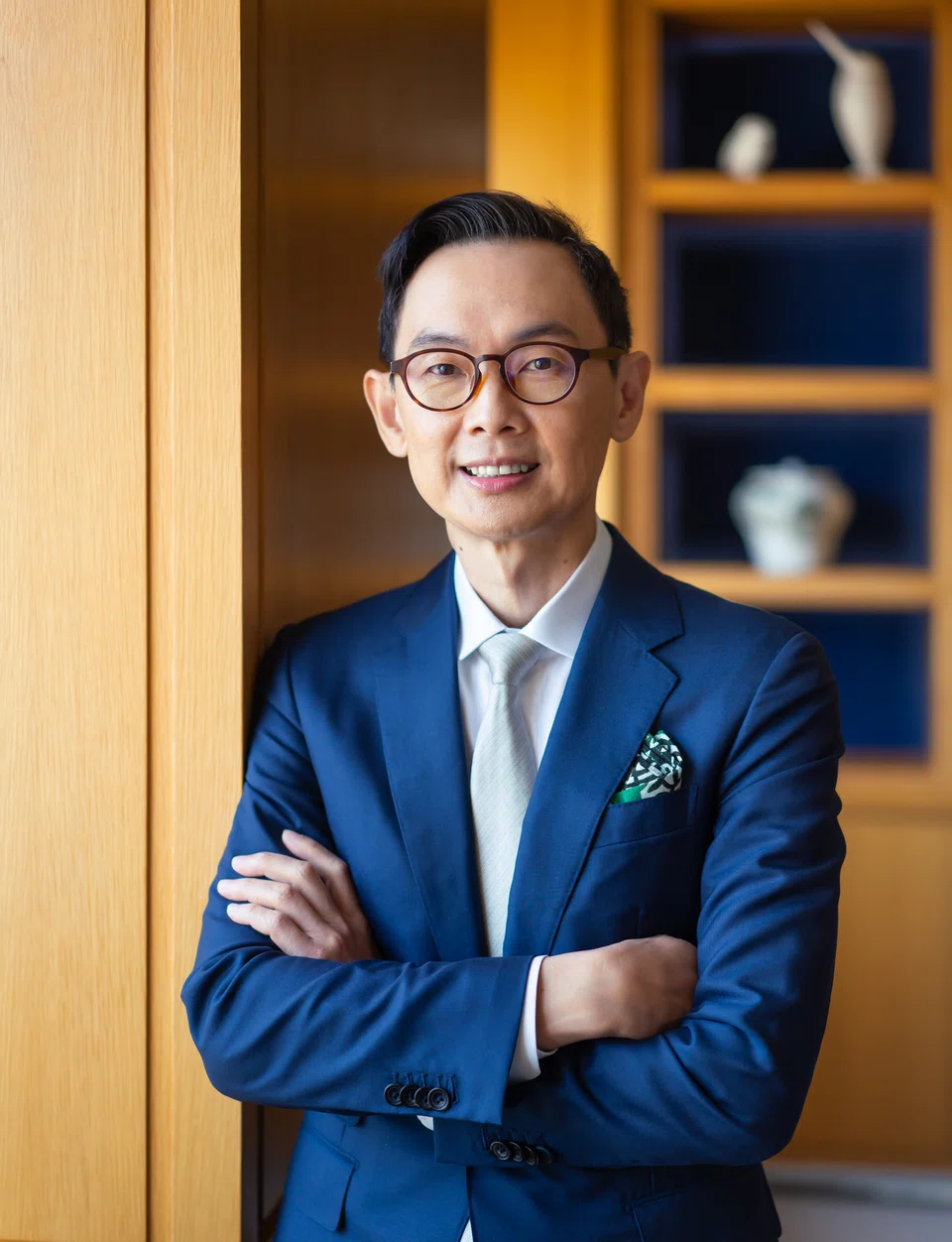
CHEW Mun Yew believes in achieving “management alpha”: To deliver better-than-normal results, a good leader needs to assemble the right team and galvanise its members to work towards a common goal.
He was appointed as UOB’s managing director and head of private wealth in December 2021, under the bank’s drive for a private wealth arm focusing on its high-net-worth and ultra-high-net-worth customers.
But Chew’s career route had an unconventional start. He had begun by teaching philosophy at the National University of Singapore (NUS). He was also a banking and insurance regulator at the Monetary Authority of Singapore (MAS).
Nevertheless, his experiences helped him build a deeper and more balanced understanding of the business.
He said: “Experience, especially if you make mistakes, really hones your instinct… There are some challenges in business and in management that you cannot simply think your way out of.”
Here are some excerpts from his conversation with The Business Times:
How did you end up here?
My path to management in private banking is slightly different: I was never a relationship manager. But I like to think that the breadth and depth (of my past experience) has given me more (perspective).
I started out teaching philosophy at NUS. I really enjoyed it because the world is complex, and I like taking complexity and making sense of it.
I then joined MAS as a banking and insurance regulator, when Singapore first started to liberalise the domestic banking and insurance sector.
Then I moved on to the private sector to head up the consumer banking strategy and business transformation for DBS. In the midst of the financial crisis, I was hired by private equity firm Carlyle Asia to run and turn around an unprofitable bank in Taiwan.
After that, for the next 10 years, I was in Swiss private banks – first, leading teams in risk management, then eventually moving to the front office to manage bankers.
At UOB, the bank needed a leader to help transform and grow the bank’s private wealth business – to take care of, more completely, the wealth management needs of our high- and ultra-high-net-worth clients, many of whom were also long-standing clients of the bank on the commercial side.
Can you elaborate on a key trend you see within your area?
In Asia, we stand on the cusp of an unprecedentedly large transfer of wealth from one generation to the next.
(High-net-worth individuals) know it’s important, but they may avoid (addressing) it because some Asians find it taboo to talk about death, or find it awkward to talk to their children about it. Or they worry about how to do it fairly.
In South-east Asia, there is also a predominance of business owners – private wealth and corporate wealth are fused together, inexplicably intertwined, and therefore very difficult to try to tear apart.
It used to be that private bankers just looked after investments. Even in investments, they tend to be focused on one asset class.
So it’s important that bankers start to move from just being investment-focused to encompassing a broader consideration of the needs of the client.
How does this affect your role?
Because of UOB’s strengths as a commercial bank, we are often also the primary bank of the client’s corporate side. This gives us a special vantage point in understanding what clients need, and how to navigate solutions.
It’s not that the private banker has to be a commercial banker. It’s not possible, because there’s a whole lifetime of skills and experience there. But he needs to know enough to be able to know when to call in the commercial banker as a partner.
If you deal with deep-rooted structural issues, then you’re responding to fundamental needs, and (that makes) your relevance more permanent.
To me, the fact that the client… needs to be considered as a whole, is a real need.
TRENDING NOW

Once staunchly pro-China, Malaysian Chinese businesses are now distancing themselves from Beijing

Looking beyond looming CEO succession, should UOB potentially pursue a transformative merger?

Could stablecoins be the future of money?

Grab CEO’s wife Chloe Tong on life with Anthony Tan and finding her purpose

