

Private credit, core-plus infrastructure could offer ‘good risk-reward’ in 2026: Temasek CEO
The appeal lies in the stable cash yields such assets generate over time

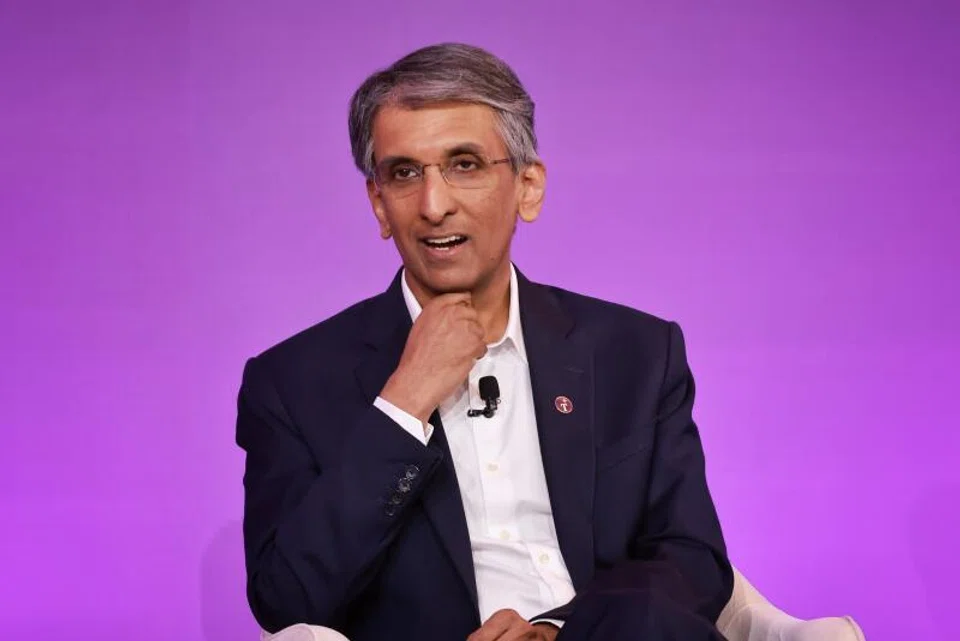
[ABU DHABI] Private credit and core-plus infrastructure assets could put investors looking to diversify from equities in a “good risk-reward” position in 2026, said Dilhan Pillay, executive director and chief executive officer of Singapore investment company Temasek.
In private credit, “you’re further up the cap stack”, said Pillay, referring to a company’s hierarchy of claims in which those at the top are repaid first and face lower risk than equity holders.
For core-plus infrastructure, he added, the appeal lies in the stable cash yields such assets generate over time.
Core-plus infrastructure – typically essential assets with room for growth or operational enhancement – includes data centres, infrastructure supporting the energy transition, and ageing facilities requiring upgrades or replacement.
Pillay was speaking on a panel in Abu Dhabi on Monday (Dec 8), the opening day of the four-day Abu Dhabi Finance Week, in response to a question from the moderator on what he thought would be the best-performing asset class in 2026.
His comments build on remarks at Temasek’s annual review in July, where he pencilled plans to increase exposure to core-plus infrastructure, and the spin-off of private credit platform Aranda, previously an in-house unit.
Also on Monday’s panel were Sergio Ermotti, group CEO of UBS; Clare Woodman, head of Europe, the Middle East and Africa, Latin America and Canada, and CEO, Morgan Stanley International; and Oliver Bate, CEO of Allianz. The session was moderated by CNBC anchor Dan Murphy.
When asked about the biggest geopolitical risk in the coming year, the panellists said a “hot war” – particularly in Europe – topped the list.
“I hope that Mr Putin keeps his cool and doesn’t do any more stupid things, particularly in the Baltics,” said Bate, referring to Russian President Vladimir Putin and the ongoing Russia-Ukraine war.
The situation in Europe “is very fragile”, concurred Ermotti, who said the continent was “playing with fire very close to the borders of Nato”. On Saturday, the alliance’s fighter jets were scrambled in Poland after overnight drone and missile strikes from Russia hit Ukraine.
“Not to talk about history, but World War I started with an incident,” Ermotti added. “I hope some mistakes or incidents (do not) trigger an escalation of this matter.”
Yet the conflict in Europe and US President Donald Trump’s “America First” policy – both of which have pushed the continent to re-arm – could offer opportunities for investors focused on military-related sectors.
Responding to Murphy’s question on where investors might deploy capital, Bate pointed to Europe’s desire to avoid “being bullied by any side and having to choose sides”.
“Today, that’s very difficult because we cannot run our military in Europe without the United States,” he said.
“Therefore, I think it’s very important for people that think about long-term asset allocation to think about (investing in) partners” that will allow the continent to stand on its own militarily, he added.
Decoding Asia newsletter: your guide to navigating Asia in a new global order. Sign up here to get Decoding Asia newsletter. Delivered to your inbox. Free.
Copyright SPH Media. All rights reserved.
TRENDING NOW

The only common thing in S-E Asia is that we all eat rice: Cisco’s Asean president

‘How many will survive?’: Bubble fears arise as China’s humanoid robotics face reality check
Green fuels, autonomous ships: How Singapore is future-proofing its shipping industry

Could stablecoins be the future of money?

