

PropertyGuru sees healthy demand for 2023; no plans to cut jobs

Janice Lim
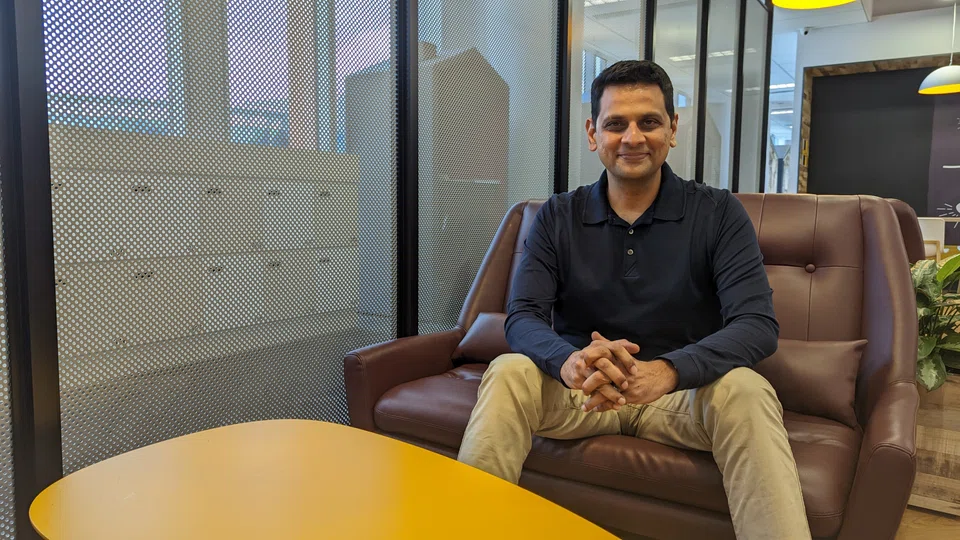
TALK of Singapore’s property sector slowing down as a result of successive cooling measures is still just talk, said PropertyGuru’s chief executive officer Hari Krishnan.
As a property listings platform, PropertyGuru occupies two spaces that are facing some headwinds: property and technology. The former is expected to see a slowdown as interest rates rise, cooling demand for big loans. The latter is shedding jobs, partly due to overly enthusiastic hiring.
Krishnan, however, foresees “very healthy” demand for the property sector in 2023. And he told The Business Times that the proptech company would not be looking to cut any jobs.
Even as the global economy stares at a potential recession, Krishnan said PropertyGuru’s profitability is “expanding”.
The company reported net income of S$3.8 million for the second quarter of FY2022, becoming the first Singapore-grown startup to turn profitable after listing in the United States – albeit only on a quarterly basis. But it sank into a net loss of S$7.4 million in Q3. This was, nevertheless, a year-on-year improvement, as the company had reported a net loss of S$9.6 million in Q3 FY2021.
Krishnan’s preferred measure, however, is adjusted earnings before interest, taxes, depreciation and amortisation (Ebitda), which came in at S$5.7 million in Q3 – up from S$3 million in Q2. This better reflects PropertyGuru’s performance since it is an asset-light business, he said. The adjusted number excludes a S$3.9 million depreciation and amortisation expense and a S$3 million net finance expense.
For the full year, PropertyGuru expects adjusted Ebitda to come in at between S$8 million and S$12 million. Revenue is projected to be in the range of S$134 million to S$138 million.
Singapore property market healthy
Unlike the real estate sector in the United States and China, where prices are crashing due to higher interest rates and a funding gap, Krishnan said Singapore, which is PropertyGuru’s biggest market, is still very healthy.
“The transaction volumes are slowing, but it’s slowing off an incredible pace. So it’s like saying: ‘I’m not flying. I’m just running really fast.’” he said.
This is despite the Singapore government rolling out yet another slew of curbs, nine months after the last tranche in December 2021, to cool the property market.
The latest measures, announced in September this year, require private property owners to serve a temporary wait-out period of 15 months after selling their homes before they are allowed to buy a non-subsidised Housing & Development Board (HDB) flat.
New rules have also been announced that reduce maximum loan amounts, to promote prudent borrowing by property buyers as interest rates rise.
Krishnan said these measures aim to shape behaviour rather than kill the sector. Various rounds of cooling measures have been imposed over the last decade, he added, yet property prices in Singapore have largely remained resilient.
“They’re trying to say: ‘Young Singaporeans should have a chance to buy a home, like their parents before them and their grandparents before them.’ The government’s actually said they are doing it to make sure... fair participation (is) possible. And you only do this so-called fair participation if you think there’s a lot of demand to participate. If people aren’t interested, you wouldn’t do that,” he said.
Much of the demand, which is far ahead of supply, is driven by young Singaporeans moving out of their family homes but now finding themselves priced out of the market.
While the government has tried to moderate pricing by announcing that it will be launching up to 23,000 new HDB Build-To-Order flats every year in 2022 and 2023, Krishnan believes this move will also lead to more people participating in the market.
Tech layoffs
The global wave of tech layoffs in 2022 is a result of companies expanding their workforce tremendously without a corresponding increase in their revenue, therefore leading to lower profitability, said Krishnan.
But he noted that PropertyGuru has a large cash balance and has been operationally profitable since 2018.
“We know how to manage our cash reserves, we know how to manage our staff, and therefore we will not be doing layoffs,” he said.
If business were to slow down, the company would instead look at cutting investments into certain projects. For example, plans to roll out new features for developers or agencies in a market that is not fully open for business may be suspended temporarily.
But there are no major projects in the pipeline that will be on the chopping board, said Krishnan.
“We will focus our investments much more given the economic climate… We’ve got to be a little bit more precise on our return on investment.
“We are not going to be as expansive, but we are grateful for the fact that, because we are a public business with a healthy balance sheet position and a healthy profit and loss statement, we are able to perhaps be more expansive in our thinking than some of our peers.”
PropertyGuru will continue to invest in data services, financial technology, marketplaces and the five markets where it has operations, Krishnan said.
It recently acquired home services technology company Sendhelper, which it believes is a strategic expansion of its value proposition to its customers.
Krishnan added that PropertyGuru will continue to invest more in 2023 compared with 2022.
‘Not stressed by share price’
PropertyGuru’s share price has taken a beating, largely in tandem with weaker investor sentiment this year.
Since its listing in March, shares have fallen by 41.3 per cent, or US$3.49, to US$4.97 on Dec 16.
Krishnan said he is not stressed by the share price performance and that the team has performed well since going public.
When asked whether PropertyGuru could have chosen to list at a better time given the diminished investor interest earlier in the year and seeing how markets have descended into a bloodbath since then, Krishnan said going public has enabled the company to prepare for a potential economic downturn with S$340 million on its balance sheet.
Despite the weak sentiment, he said, PropertyGuru attracted interest from “investors of a very high calibre”, including Bailey Gifford and KKR.
“You raise money when you can, not when you need. If you do it under a need situation, you’re going to be in a lot of trouble,” he said.
“Now, would I want the share price to drop? Of course not,” Krishnan added. “You pick among the choices that are there in the real world, and you try and find the best one for you and the company.”






