TOPLINE

ProsperCap seeks to ride UK domestic tourism recovery, upgrade hotels

Despite a fire incident that hit revenue, chief executive Iqbal Jumabhoy is optimistic about the company’s recent performance and growth prospects


Sharanya Pillai
Published Mon, Sep 16, 2024 · 05:00 AM
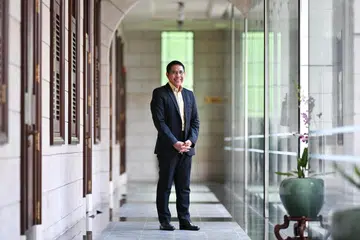
    • Chief executive Iqbal Jumabhoy hopes ProsperCap can build up recognition among investors “as a value-added investor".
    • Chief executive Iqbal Jumabhoy hopes ProsperCap can build up recognition among investors “as a value-added investor". PHOTO: PROSPERCAP

    HOSPITALITY specialist ProsperCap Corp is looking to ride the recovery in domestic business and leisure travel in the UK, while upgrading some properties in its portfolio of mostly upscale hotels across the country’s key cities.

    “(There is) strong, continued support in local travel in both business and leisure. That’s good; it helps us because many of the hotels have a component of conference facilities,” said ProsperCap’s chief executive and hospitality veteran Iqbal Jumabhoy.

    ProsperCap is a unit of Thai conglomerate DTGO Corp, and made its debut on Catalist in January via a reverse takeover (RTO) of investment holding company 3Cnergy. Its hotels operate under franchise agreements with major international brands such as IHG, Hilton and Marriott.

    For H1 FY2024 ended June, ProsperCap sank into a net loss of S$19.7 million, reversing the year-earlier S$46.1 million net profit. This came on the back of S$10 million in one-off listing expenses, as well as a S$5.5 million fair value loss on derivative financial assets.

    The company posted a 3 per cent rise in revenue to S$116 million, but in UK currency terms, revenue was flat at £67.9 million.

    ProsperCap’s topline was hit by a fire incident at one of its hotels, the Crowne Plaza Stratford-upon-Avon, in April. The hotel is expected to reopen in stages from September, and ProsperCap has recognised insurance income of S$6.4 million from claims. 

    Excluding the impact of the fire, ProsperCap’s revenue in pounds would have increased 3.5 per cent instead, which Jumabhoy cited as “a good number”.

    He noted that the hospitality industry now faces increased competition, especially with the popularity of online comparison tools.

    “In today’s world of absolute transparency, you can get on the Internet, look up the rates and you can set up comparisons with the hotels you like…When (a hotel) puts its rate up, occupancy can drop,” said Jumabhoy.

    In H1, ProsperCap’s average daily rate increased 3.1 per cent to £99.90, while occupancy dipped 1.4 percentage points to 76.5 per cent. Revenue per available room overall rose 1.3 per cent to £76.41.

    Amid these results, investor sentiment has been relatively muted, with the company’s share price down 18.2 per cent since the RTO to S$0.18 as at Sep 14.

    Upgrades, refinancing

    Looking ahead, ProsperCap plans to upgrade some of its hotels, while also exploring where room capacity can be increased.

    “The moment you upgrade, hopefully that can attract a better rate, a better return… We will also be looking at upgrading some of the other facilities, such as our health clubs,” said Jumabhoy.

    Another area of focus is manpower, with ProsperCap taking steps to improve the proportion of permanent staff, as opposed to casual workers.

    “It’s more expensive but you get much more consistent service and your training costs are lower. You train them, they stay with you and provided you look after them, you’re in good shape,” said Jumabhoy.

    These plans come as ProsperCap recently secured refinancing. On Sep 13, the company announced that it had obtained new loan facilities for up to £310 million – comprising a term loan facility of up to £296.04 million and a capital expenditure loan facility of up to £13.96 million.

    The proceeds will be used to refinance existing facilities, and to pay for transaction costs, budgeted capital expenditure and general corporate purposes. Both facilities come with an initial tenure of 24 months and three extension options of 12 months each.

    In the long run, Jumabhoy hopes that ProsperCap can build up recognition among investors “as a value-added investor – initially in the hospitality space, and hopefully later in the wider occupied property space”.

    Jumabhoy brings with him decades of experience in hospitality. He was previously an executive director of Scotts Holdings and also founded Edge Capital, an investment and consulting platform focused on travel and real estate since 2015.

    Optimistic that ProsperCap is well-positioned for growth, he said: “Apart from the fact that we have a parent that has access to a lot of deals, I believe that we have the capability to analyse projects and to see where the value-add can be.”