Punching above their weight: Boutique gyms find their niche in the face of competition, rising costs
Opening a competitive commercial gym will set potential owners back at least S$750,000 – a figure that’s been increasing

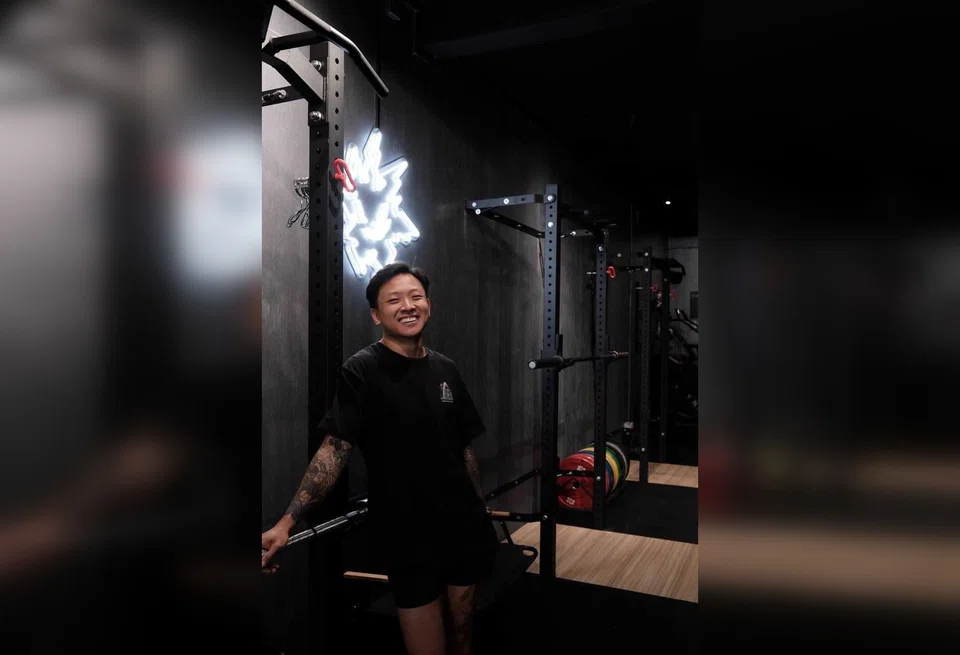
[SINGAPORE] Eager to open a boutique training gym, Li Kun Rong emptied his bank account four years ago – which had less than S$70,000 at the time – to launch Storm Athletic Club.
That amount was barely enough to purchase the basic equipment. In fact, he did not even have anything left to buy enough training mats to cover the gym flooring.
Today, the 31-year-old founder and CEO of the gym that is located in Kim Keat near Novena has some 100 active members.
Li’s capital outlay issue is not an uncommon issue among aspiring business owners, as it reflects the realities of the heavy costs of opening a gym in Singapore.
Said Li: “I couldn’t even (open a) franchise if I wanted to... so I had to start my own thing.”
A spokesperson for Snap Fitness, a global franchise gym with 11 outlets in Singapore, told The Business Times that opening a competitive commercial gym will set potential owners back at least S$750,000 – a figure that has been increasing over the years.
Rather than competing against the franchise gyms – which have advantages in both scale and size – many independent operators here are carving out their own niches to protect their margins.
Specialised programmes
With a modest outlay of less than S$150,000, high-intensity interval-training gym Grityard struggled to differentiate itself against competitors with similar operating models and deeper pockets.
“We were not marketing or PR (public relations) people. We struggled to tell people exactly what we were trying to infuse into our classes that makes us different,” said co-founder Teh Chong Nyen.
Together with Lim Yao Xiang and his brother Lim Yao Peng, the trio tapped their decades of experience as former national athletes to provide training programmes driven by sports science.
Grityard’s efforts to expand, however, have not been successful. The co-founders opened a second branch in the Central Business District area in 2022, but there was not enough footfall as office crowds failed to return in large enough numbers in the aftermath of the Covid-19 pandemic.
When the rent for its first gym, a 3,000-square-foot facility in Outram, went up by 40 per cent, the co-founders had little choice but to move to a unit in Paya Lebar that is half the size.
Now, the gym owners are embracing their sport science background to enhance the experience of its members. This includes ensuring the form and movement of its members will be strong, better and more efficient.
“We had to educate people that training for Hyrox does not mean doing 100 lunges a day,” said Teh.
Co-working model
Instead of trying to stand out from the competition, some boutique operators have sought to rewrite the traditional model of gyms completely.
Recognising that competing on membership volume was a losing battle against the more established chains, Construct Fitness abandoned the traditional consumer membership model and instead adopted a co-working space concept.
The gym charges freelance personal trainers a flat fee to rent the facility that they can use for sessions with their clients.
While Lim Jun Wei, co-founder of the gym, acknowledged that they are not the first to implement such a model, he noted that the demand for facility renting remains high as personal trainers “want to have the flexibility”.
Today, the main bulk of the gym’s revenue is derived from the rental of its services and its own in-house personal training.
Fierce competition
As independent gyms continue to differentiate themselves in an already saturated market, they remain wary of the aggressive expansion of commercial, franchise gyms.
Snap Fitness shared that it currently has 11 gyms in Singapore, particularly in heartland regions. It plans to open four more branches by the end of 2026.
As at Jul 8, franchise gym Anytime Fitness had 161 gyms operating in Singapore, according to its website.
The chain in 2025 announced its ambitions to open 200 gyms across the Republic by the end of the decade.
Rival BFT (short for Body Fit Training), an international chain that specialises in 50 to 60 minutes group strength and conditioning training, has more than 50 outlets in Singapore, according to its website.
Teh of Grityard likened BFT locations to “McDonald’s”, with three to four outlets in Tampines alone.
Instead of submitting to larger competitors, many independent gyms are embracing the competition.
“They are just going to bring more people to the area,” said Li of Storm Athletic Club.
He noted that at least half of Storm Athletic Club’s clientele migrated from other gyms – including mass-market commercial gyms – as they were looking for a more personalised experience.
“They really like the privacy (the gym provides). That is a big thing,” he added.
Teh, too, noted a sizeable number of Grityard’s clients are from other gyms who are looking for a new experience.
Industry-wide challenge to persist
However, rising rental fees and energy costs are pressuring both independent and franchisee gym owners.
“The industry has been hit with rising costs and, especially, higher rentals over the last few years,” said a spokesperson from Snap Fitness.
Another business pressure identified by owners was high labour costs.
“In the fitness space in Singapore, not many people see it as a viable career option,” said Teh, noting that most people in the industry would end up becoming business owners themselves.
As a result, independent operators have to rely on freelance trainers to handle their workload – an arrangement which Teh noted was not ideal.
“From an employer’s perspective, you want that loyalty to your business, to your brand,” he said.
As costs increase, fitness operators are bearing the brunt.
“Consumer prices and consumer price sensitivity haven’t allowed this segment of the market to really increase their prices in proportion to how much landlords have increased rentals,” said the Snap Fitness spokesperson.
TRENDING NOW
He built the Vingroup empire. Now South-east Asia’s richest man is handing some key roles to his sons
Developers rush to build homes on Vietnam’s breathtaking coast, testing a new urban model
US dollar falters after Iran’s offer to reopen Hormuz sends oil lower
Tokyo reverses baby bust with AI matchmaking and generous subsidies