

Qualitas Healthcare mulls listing on SGX
Its chairman is in no hurry to decide on this, but says the company needs funds to grow

Anita Gabriel
Singapore
IF the Singapore Exchange wants it - and works - hard enough, it could score the flotation of Malaysian-headquartered regional healthcare player Qualitas Healthcare Corp, in a development that would undoubtedly infuse a healthy dose of excitement into this year's lethargic pipeline of stock offerings.
But this is not to say Bursa Malaysia is not all fired up to snag this initial public offering (IPO), which could raise some S$200 million for Qualitas; Malaysia was, after all, the group's choice listing venue two years ago, but the exercise was eventually scrapped because of weak market settings.
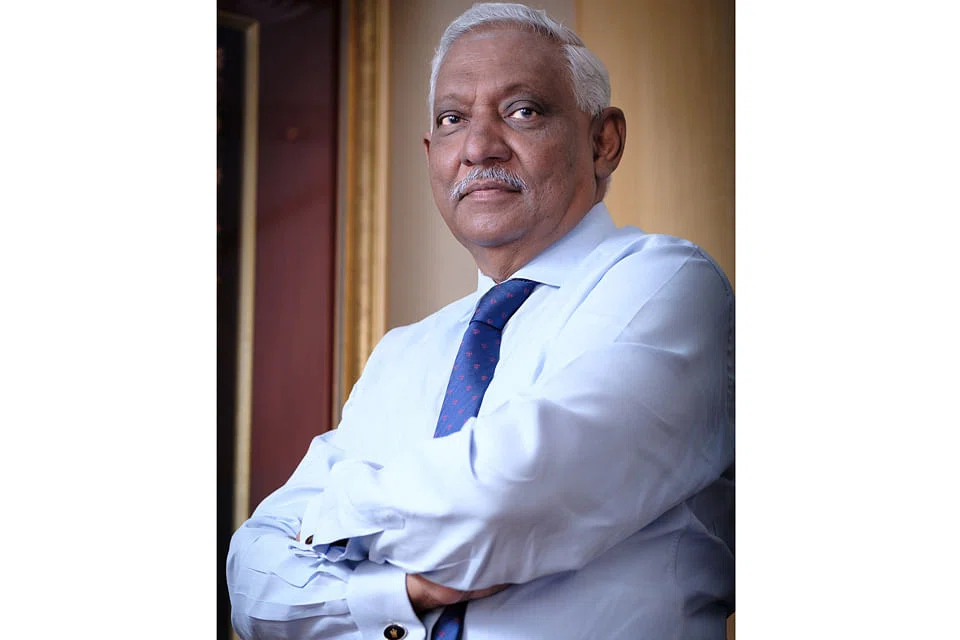
Dr Noorul Ameen, founder, chairman and managing director of Qualitas, told The Business Times in an interview: "A listing is one of our options. The other options include a trade sale or co-investment by a third party. We are not in a hurry or hard pressed to make a decision... Maybe, by the next month or so, we will come to a decision."
A let-down may be in store for Bursa. Firstly, the Singapore bourse is familiar ground for Qualitas, which spent three years on the Catalist. In 2011, it was taken private, and has since grown bigger.
A comeback - with an "upgrade" to the mainboard to boot - may thus hold sweet appeal.
Secondly, Qualitas is a "regional company". It has a network of some 280 private medical centres, mostly general practitioner or GP clinics, in Malaysia, Australia, Singapore and India.
As Dr Noorul put it: "It may be better to do it in Singapore to attract investors from the region".
But he is quick to add that no decision has yet been made.
While the stock exchanges and investment bankers fiercely court Qualitas for a potential deal, the 67-year-old sports medicine specialist appears admirably removed from the hype that generally surrounds a listing.
"For me, the listing is just a passage ... a different phase. My ultimate achievement would be to see this company build a significant presence in providing quality primary care in a larger market than what we started with."
The India-born Malaysian, who began his practice in the public sector before moving into the private space, owns - together with a group of doctors and management - 13 per cent of Qualitas. The rest is held by Singapore-based private equity firm Southern Capital Group.
(In mid-2011, it was Southern Capital Group, which at one point counted Fullerton Healthcare as an investee company, that led a group of investors to take Qualitas, then called Qualitas Medical, private in a US$36 million deal.)
Qualitas had its start in 1997. Dr Noorul had observed then that doctors were far too saddled with the administrative headaches of running clinics, which distracted them from doing "100 per cent of doctoring".
It was his eureka moment to take this drudgery off them by setting up Qualitas. Not long after, backed by its maiden investor - US private equity firm Warburg Pincus, no less - Qualitas began adding private GP clinics to its stable, most of which it wholly owns. This was to eventually include dental clinics and imaging and diagnostic centres in various markets.
At one time, Malaysian-listed builder Landmarks Berhad, then led by once-high-flying tycoon Samsuddin Hassan, was also invested in Qualitas. Then Landmarks, hit by the Asian Financial Crisis, sold its stake.
Since Qualitas's delisting from the Catalist, growth has been commendable. Its revenue jumped nearly four-fold from S$40 million in 2011 to about S$150 million last year.
Its topline grew at a compounded annual growth rate (CAGR) of just over 30 per cent with Ebitda (earnings before interest, taxes, depreciation and amortisation) growing at a CAGR of 36.5 per cent over the period.
The number of medical centres under its belt has grown from 223 to over 280 across four markets.
"We are larger than what we were before," said Dr Noorul.
Apart from expanding in existing markets, new markets are on the company's radar - chiefly Myanmar, which Dr Noorul said could be a done deal soon. Indonesia, where it once had a presence - and more specifically, Surabaya, where "there is buying power but lack of facilities" - is next.
Qualitas's plan to move upstream is also taking shape in calculated steps. Already, the group opened its first ambulatory care centre in Kuala Lumpur this year; by September, a second one will debut, also in the Klang Valley.
In Malaysia, Qualitas is banking on its focus on primary healthcare (GPs) - this is a more affordable option than tertiary or specialist care - to drive its growth.
In Singapore, its strategy to expand from the expat market to the "heartlands" in the last 11/2 years has also yielded "aggressive growth".
In Australia, the company has a strong presence in GP clinics and imaging services in key urban areas; in India, its smallest market, the focus is on dental care.
Dr Noorul said: "We are quite optimistic that we are in the right place at right time. We need more funds to grow."
TRENDING NOW

Simba admits exceeding spectrum limits amid failed M1 deal; full-year profits surge 277%

Temasek’s Wan Chee Foong to helm PIL, Lars Kastrup to be board adviser

He built the Vingroup empire. Now South-east Asia’s richest man is handing some key roles to his sons

One-third of Singapore-listed firms at risk in severe AI downturn: MAS

