

Quarz Capital decries 'value destructive' offer for MNACT in proposed merger with MCT

ACTIVIST fund manager Quarz Capital Management has taken issue with what it says is a "value destructive" deal for Mapletree North Asia Commercial Trust (MNACT) RW0U to merge with Mapletree Commercial Trust (MCT) N2IU .
In an open letter addressed to the board and management of MNACT, Quarz said the proposed merger price significantly undervalues MNACT and comes at a "massive" discount to its net asset value (NAV) per unit.
"The proposed merger offer price for MNACT is at one of the highest discounts to NAV in the 20-year history of the Singapore real estate investment trust (Reit) market," Quarz said in a letter sent to MNACT on Wednesday (Feb 9) night. "We urge MNACT's board and management to protect unitholders' interest and negotiate for a higher and fairer merger offer."
Quarz claims that it has been approached by "many MNACT unitholders" regarding MCT's "inferior offer" for MNACT.
The fund manager said it advises entities that hold long term investments on behalf of institutions, endowments and families. Together with its affiliates, Quarz said the combined holdings it controls in MNACT would rank it among the top 10 unitholders of the trust.
According to Bloomberg data, Temasek Holdings - through Mapletree Investments - is the top unitholder for MNACT, with a 38.1 per cent stake in the trust. This is followed by Schroders and Vanguard Group, with 4.6 per cent and 2.3 per cent stakes, respectively.
MCT and MNACT on Dec 31, 2021, proposed the merger between the 2 Mapletree Reits to create Mapletree Pan Asia Commercial Trust (MPACT). The merged entity would leapfrog its way to become the third largest Reit in Singapore and rank among the top 10 Reits in Asia by market capitalisation.
The proposed trust scheme would see MNACT unitholders receive a scheme consideration of S$1.1949 for each MNACT unit held - either via 0.5963 new MCT units at an issue price of S$2.0039 apiece, or a combination of 0.5009 consideration units and S$0.1912 in cash.
For illustrative purposes, this means that a unitholder holding 10,000 MNACT units will receive 5,963 MCT units should they elect to receive the scrip-only consideration or 5,009 MCT units and S$1,912 in cash should they elect to receive the cash-and-scrip consideration.
This implies a gross exchange ratio of 0.5963 times.
The Reit managers said then that the scheme consideration price of S$1.1949 was in line with MNACT's NAV.
Since the announcement, however, units of MCT have dived, changing the dynamics of the proposed merger. Units of MCT have fallen 8.5 per cent or S$0.17 - from S$2.00 before the proposed merger announcement - to close at S$1.83 as at Feb 9.
Meanwhile, units of MNACT are trading flat at S$1.11 - the same level it was at before the announcement.
"With MCT's price correction, the implied scheme consideration for MNACT is now at a significantly lower level of approximately S$1.08 to S$1.10, down from S$1.1949," Quarz said.
In addition, Quarz said the implied merger offer is at a "massive discount" of about 12 per cent from MNACT's NAV of S$1.23 in October 2021. "The offer price is at an even larger approximately 14 per cent and approximately 23 per cent discounts to MNACT's NAV of S$1.27 and S$1.41 in March 2021 and March 2020, respectively," it added.
Noting that about a quarter of MNACT's current portfolio had been purchased at around NAV in the last 4 years and have mostly appreciated in value, Quarz called the merger proposal to "sell" the assets at below NAV "both ludicrous and value-destructive".
It added that this substantial discount to NAV is "unprecedented", as nearly all the Reits involved in takeovers and mergers in Singapore over the years had - like MNACT - also traded below NAV.
In its letter, Quarz claimed MNACT unitholders will see declines in distribution per unit (DPU) of between 8.2 per cent and 9.3 per cent after the merger - depending on whether they choose the scrip-only or cash-and-scrip option.
"We believe that MCT has opportunistically taken advantage of MNACT's depressed NAV and unit price to launch the merger offer and benefit from MNACT's potential sizeable DPU and unit price upside," Quarz said.
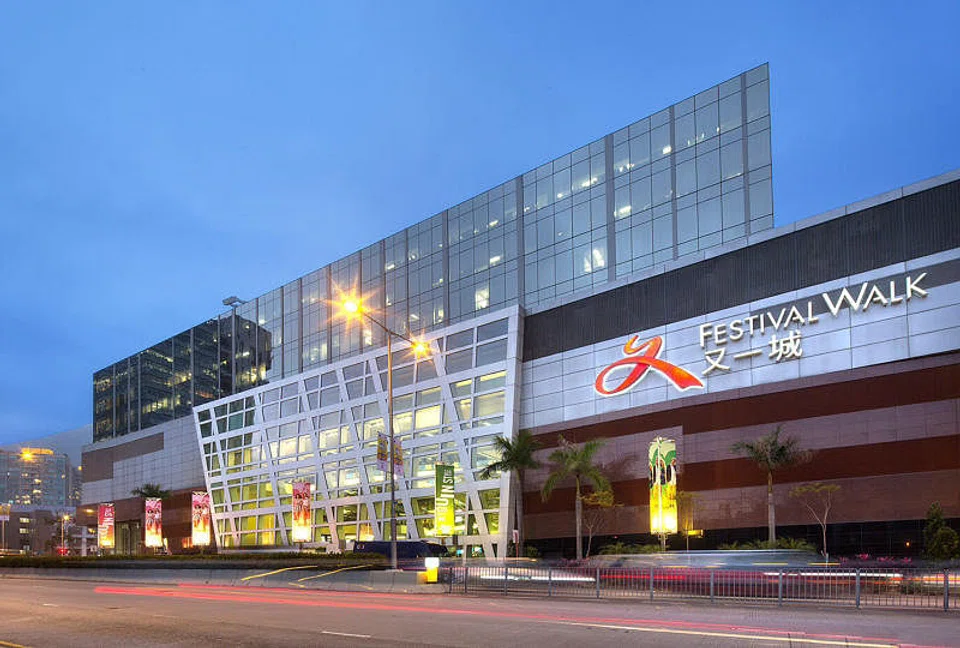
The fund manager argued that the performance of MNACT's portfolio had been "temporarily disrupted" by the stumble of its largest asset - the Festival Walk mall in Hong Kong.
Festival Walk had suffered extensive damage due to street protests in November 2019. Since it reopened in January 2020 following repairs, the mall has been bogged down by the closure of the Hong Kong-China border due to the Covid-19 pandemic.
"Despite the temporary weakness in Festival Walk, MNACT continues to yield a highly attractive dividend yield of about 6.3 per cent - one of the highest among large-cap Reits with reputable sponsors," Quarz said.
Quarz is expecting MNACT's NAV, DPU and unit price to stage a strong recovery in the second half of 2022 on the back of a number of key catalysts.
"A conservative approximately 10 per cent recovery in rental rates from the reopening of the Hong Kong-China border and the enactment of the government stimulus plans can drive MNACT's DPU to about S$0.073 and dividend yield to around 6.8 per cent," Quarz said.
It added that MNACT's unit price could rerate back to over S$1.20 in H2, with its potential inclusion into the FTSE Nareit Developed and Developed Asia indices at the June 2022 review.
"The potential increase in institutional following and passive buying following the entry into the indices can significantly rerate MNACT's unit price," Quarz said.
"The sizeable value creation benefits of the merger seem mostly skewed in favour of MCT's unitholders," it added. "It is thus disappointing and troubling that the manager of MNACT is pushing for a merger offer at such a sharp discount to NAV and forcing MNACT unitholders to forgo the trust's promising standalone prospects and suffer substantial DPU and NAV reduction."
"The proposed merger between MNACT and MCT is the second largest transaction in Singapore Reit history and will be keenly watched by the investment community," it added.
"Mapletree's treatment of MNACT minority unitholders will serve as a reference by potential new investors to evaluate their investment in Mapletree-managed Reits."
Quarz suggested the exchange ratio for the proposed MCT-MNACT merger should be 0.68 times, instead of 0.5963 times.
It noted that the scheme issue price of MCT units at S$2.0039 is a premium to MCT's NAV. "An appropriate issue price for MCT should be S$1.82 per unit and a scrip-only unit exchange ratio in excess of 0.68 MCT unit for 1 MNACT unit," Quarz said.
This is not the first time Quarz is protesting valuations in a Reit merger.
Together with Black Crane Capital, Quarz led minority unitholders to scuttle the proposed merger between ESR-Reit J91U and Sabana Reit M1GU in 2020. It had argued then that the valuation accorded to Sabana Reit in the transaction was too low.
In response to queries by The Business Times (BT), the manager of MCT said that the merits of the proposed merger are articulated in the joint announcement issued on Dec 31.
"We note that Quarz acknowledges the deal rationale, as stated in the joint announcement made on Dec 31, 2021, and sees value in MNACT," the Reit manager said. "Unitholders should also note that listed Reits are required to comply with regulatory requirements and safeguards which are in place to protect the interests of minority unitholders."
MNACT's manager, meanwhile, said it appreciates the perspectives and feedback of unitholders. It added that the scheme document - expected to be issued at the end of March - will contain the recommendations of the independent directors for the trust scheme as well as the independent financial adviser's opinion for unitholders to make an informed decision.
"The rationale and terms of the proposed merger have been carefully considered, and we continue to believe these to be beneficial to unitholders, both from a strategic and financial perspective," the MNACT manager said.
READ MORE
TRENDING NOW

Once staunchly pro-China, Malaysian Chinese businesses are now distancing themselves from Beijing

Cliff Tan has 7 million followers and a 4-month waitlist. Why won’t he expand his business?

Could stablecoins be the future of money?

Grab CEO’s wife Chloe Tong on life with Anthony Tan and finding her purpose

