‘Quite alarming’: More companies must think about replacing their CEOs, boards
Apac firms’ significant lack of confidence in their renewal processes may spell trouble, warns Heidrick & Struggles’ Terence Quek

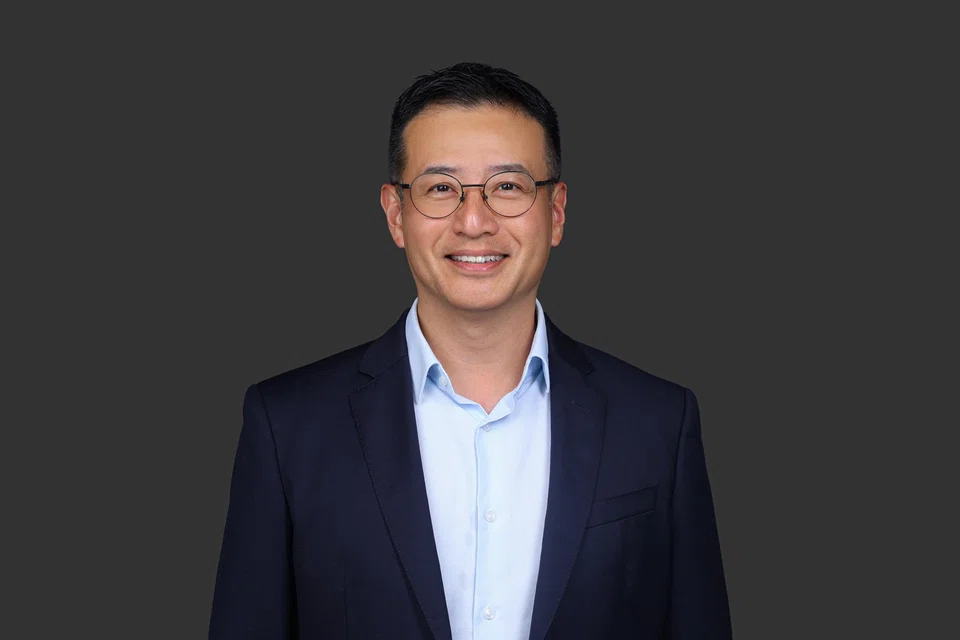
[SINGAPORE] Companies across the region must focus on how they plan to replace their chief executives, even as boardrooms remain preoccupied with artificial intelligence and cyberthreats, said Terence Quek.
The partner at executive search firm Heidrick & Struggles warned that businesses that neglect leadership renewal are doing so at their own peril.
While corporate directors pour time and resources into managing technological shifts, many fail to prepare their next generation of leaders.
“Are we having enough conversations often enough to think about: ‘Is this still the right CEO?’,” Quek asked.
This warning comes as a new study highlights a clear gap between technological confidence and governance readiness in the region.
According to the 2026 CEO & Board Confidence Monitor published by Heidrick & Struggles, which surveyed 254 leaders across the Asia-Pacific, technology issues have dominated the leadership agenda.
The survey found that 44 per cent of Apac respondents view AI as a major issue for their organisation this year, while 39 per cent cited cybersecurity risks. This focus on cyberthreats is notably higher than the global average of 31 per cent.
At the same time, economic uncertainty and volatility were key concerns for 44 per cent of regional leaders.
Despite these pressures, regional organisations feel well-equipped to handle digital dangers. Half of the Apac respondents expressed confidence in their ability to manage AI, marking the highest confidence level across all five global regions surveyed.
Furthermore, 55 per cent reported confidence in handling cybersecurity risks, outperforming the global average of 51 per cent.
However, this confidence disappears when it comes to long-term governance and succession planning.
Succession could be “secret weapon”
The study revealed that 75 per cent of regional respondents are confident in their current executive leadership teams. Yet, far fewer report confidence in governance mechanisms designed to position organisations well for the future.
Only 54 per cent feel confident in their internal CEO succession planning processes. Similarly, just 55 per cent express confidence in their board evaluation and refreshment practices.
This, Quek said, is “quite alarming”. He warned that if half the companies in the region lack confidence in their own renewal processes, they are heading for trouble.
“Leaders are the ones in the driver’s seat; they’re the ones (navigating) the ship,” he said. “If you’re not thinking about the transformation of your leaders, (how) is the transformation going to take place?”
Quek believes that companies are missing out on what should be a primary source of competitive advantage. He described a prepared leadership pipeline as a corporate “secret weapon”.
”Let’s assume there are two companies, both offering the top premium products of quality, and both are using the best AI tools… How do we differentiate (between them)?” he asked.
The differentiating factor, he argued, is: “Who are the board members, who is the C-suite, and how are they looking at transforming their business moving forward?”
Quek speaks from a position of direct experience in governance.
Before joining Heidrick & Struggles as a partner, he spent four years as CEO of the Singapore Institute of Directors. During his tenure at the membership body, he watched board discussions move past basic regulatory compliance towards active business transformation.
However, he found that the specific topic of leadership transformation rarely received the same weight.
Awkward conversations
In South-east Asia, the high number of family-owned conglomerates makes succession discussions particularly difficult. Board members often avoid the topic to prevent personal friction with founders or relatives.
Quek dismissed this hesitation bluntly. “Awkward is not an excuse for not having a conversation.”
He advised that boards should frame succession as a positive, strategic exercise rather than a negative reaction to a crisis.
The conversation must not start with the idea of removing an executive. Instead, directors should look at the long-term business strategy and decide who is best suited to sit in the driver’s seat.
According to Quek, this evaluation must happen continuously. Boards should ideally review their leadership pipeline in tandem with their primary business strategies.
External rules are also beginning to force change. The Singapore Exchange previously introduced a nine-year tenure limit for independent directors, causing a wave of board refreshes across listed firms.
Quek urged companies not to treat these regulations as simple box-ticking exercises.
“Use that opportunity to have a very strategic conversation,” he said. “Now that we’ve got no choice but to refresh our board, can we have a very strategic conversation about what kind of board we want?”
Quek concluded that even if an intensive leadership review reveals that the current CEO and board remain the perfect fit, the structured process of asking the question remains vital for preserving corporate value.
“At least, we must have that conversation,” he said.