

Raffles Infrastructure on new path to redemption
Formerly known as China Fibretech, the company has discarded fabric business to venture into infrastructure
Singapore
DOWNPLAYING customer complaints can damage a company's reputation and its bottom line.
But in the case of China Fibretech, it did the exact opposite and damaged itself even more by hastily compensating three customers over dubious claims of defective products.
As a result, the S-chip saw its cash almost wiped out, share price tank and directors leaving. The trading of its shares was also suspended by the Singapore Exchange (SGX) for nearly three years.
Rebounding from this debacle has been an uphill climb since, with the company overhauling its management, taking on a new business and renaming itself Raffles Infrastructure Holdings. A measure of its success is that it has managed to persuade SGX to allow its shares to resume trading on Sept 28.
One reason for the renaming is that the company has dropped its fabric processing business altogether.
Instead, it plans to work with China state-owned enterprises (SOEs) on infrastructure projects. Although Raffles Infrastructure does not have a track record of building roads and bridges, it expects to benefit from advantages such as its listing status in Singapore, where it can easily tap capital financing. Singapore's good relations and trade agreements with regional neighbours are also seen as helpful in terms of speeding up processes such as tendering.
Raffles Infrastructure has already started on projects and partnerships, signing a tripartite agreement on Sept 10 with China Railway Construction Corporation's 23 Bureau Group and Tianfu Railtech Valley to jointly bid for infrastructure projects.
On Sept 28, it invested 100 million yuan (S$20 million) in Bo Dao Road Construction Co, which is undertaking a Xingwen county rural road construction project.
And on Oct 22, it announced that it had entered a framework agreement through its subsidiary Raffles (Chengdu) Investment and Development Co to build about 70 kilometres of tourist railways in China. The contract value is estimated at six billion yuan.
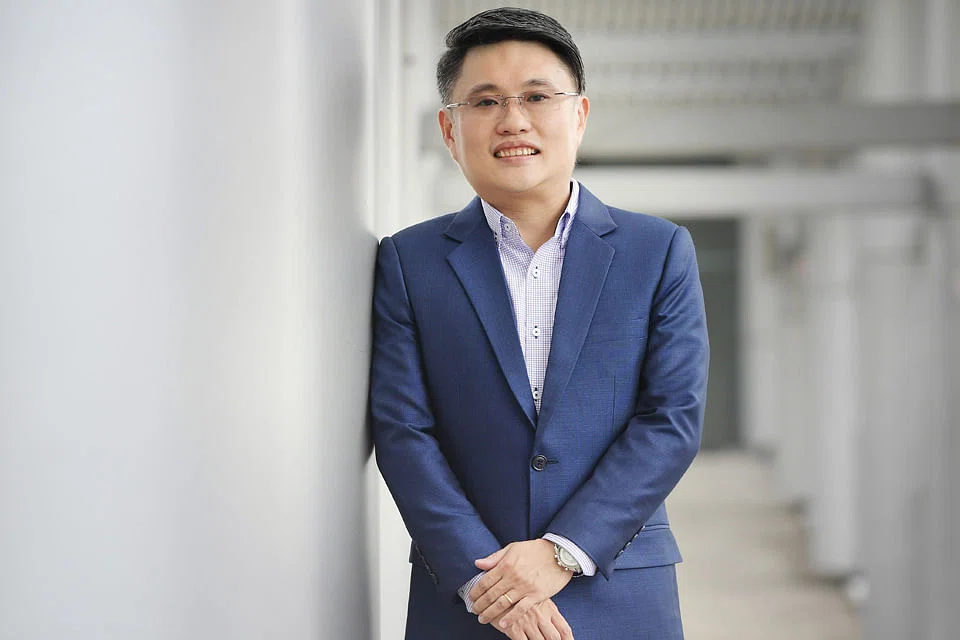
"In South-east Asia, infrastructure provides quite stable returns because this is something people need," Raffles Infrastructure's executive director and chief executive Eric Choo told The Business Times.
The company will look to seize opportunities in the One Belt, One Road (OBOR) initiative, building on Mr Choo's experience and contacts from more than 10 years of working in China and with Chinese partners.
When Mr Choo joined China Fibretech in October 2017, the counter had been suspended for two years, as a result of three customer complaints in November 2015. The trio had claimed that products supplied by China Fibretech were defective and sought compensation. However, their claims were far larger than the value of the products supplied. This disclosure prompted SGX to order a trading suspension. It also asked the company to investigate the matter thoroughly before taking any action.
Tightened proceedings
Unexpectedly, China Fibretech's chief executive Wu Xinhua and non-independent director Wu Dezhi authorised compensation payments to the customers in September 2016 without seeking board approval. The payments wiped out 99.9 per cent of the company's cash and bank balances.
Some directors left and the vacancies were unfilled.
Mr Choo came on board a year later but his appointment was not without controversy. The Wus, who made up the majority of the rapidly shrinking board, appointed Mr Choo without going through the Nomination Committee. While this was permitted under China Fibretech's by-laws, it did not conform to SGX's Code of Corporate Governance guidelines.
When contacted by BT, an SGX spokesman said companies that deviate from the 2012 Code of Corporate Governance in appointing directors would not be penalised. But they would have to explain this deviation in their next annual report.
The SGX has further tightened proceedings.
With effect from Jan 1, 2019, the guideline will become a part of SGX listing rules and board appointments must go through a Nominating Committee.
Restoring faith
Raffles Infrastructure also has its work cut out in convincing shareholders that it is a reformed company.
"The legacy issue is one that definitely needs to be tackled," Mr Choo said, referring to how the claims and payments were handled. As part of conditions for its trading resumption, Raffles Infrastructure commenced a special audit on Oct 1 to thoroughly investigate the compensation payments issue. The audit, which is being conducted by external audit firm KPMG, is expected to take about six months to complete.
No matter how he was appointed, Mr Choo expressed hope that his conduct and the new measures the company is undertaking to be accountable to shareholders will prove his sincerity in running Raffles Infrastructure honestly. He said he has also worked closely with SGX over the past year to satisfy the conditions for trading to resume. "We are given a more stringent set of rules, and are being scrutinised and monitored, but it's good because everything will be done according to the rules," he said.
"(SGX) has looked closely at the business and they had their team go to China and look around and they are happy with it. That's how we got the trading resumption," he said.
While Mr Wu Xinhua remains on the board, he is now a non-executive, non-independent director. Mr Choo is set on rebuilding the firm's reputation as a local company, with the name change and appointment of more Singaporean directors.
Corporate governance experts said Raffles Infrastructure has taken significant steps towards restoring investors' faith in the company, although more could be done to clear up lingering questions.
Stefanie Yuen-Thio, joint managing partner at TSMP Law Corporation, said that although Mr Choo's appointment may have come at a time of turmoil in the company, when it could have been difficult to observe the best corporate governance practices, it would still be a good idea to review and ratify his appointment through proper procedures after the fact.
"The SGX allowing trading to resume is not an indication that it has blessed the new management and board team, as it is retail shareholders who suffer when there is no ready market for the shares," she said. "That said, it does sound like the board is making the right moves in its corporate governance."
"It seems that the company is serious and committed to redress the past deficiencies," said Lawrence Loh, director of Centre for Governance, Institutions and Organisations, NUS Business School.
"It now has to demonstrate by solid actions that they are operating on a new plane and have gotten over the tumultuous events under the previous company name and in the transition."
Mr Loh noted that an updated company website with the necessary investor-related information would help foster the critical assurances.
Raffles Infrastructure said it is working on having a website up and running within the next three to four weeks.






