Razer turns profitable for FY2020, with revenue exceeding US$1b
Published Wed, Mar 24, 2021 · 08:43 AM

    GAMING hardware and fintech firm Razer posted net profit of US$5.6 million for its FY2020 ended December, marking its first year of profitability since it went public in 2017.

    The Hong Kong-listed company reversed a loss of US$84.2 million in the previous financial year. Earnings per share was 0.1 US cent for the full year, compared to a loss of 1 US cent in FY2019.

    Razer's chief executive, Tan Min-Liang, said: "2020 marked an inflection point in which our sustained levels of revenue growth across our ecosystem of hardware, software and services resulted in Razer's first year of profitability as a public company since 2017."

    Revenue crossed the US$1 billion mark for the first time, rising 48 per cent to a record US$1.21 billion, from US$820.8 million a year ago.

    Apart from revenue growth, Lee Li Meng, chief strategy officer at Razer, said at a media briefing that Razer had also exercised discipline. "We kind of tightened our belts and improved our productivity over the course of 2020 as the pandemic hit the globe".

    While operating expenses grew by 5.3 per cent to US$278 million, it made up a smaller percentage of revenue at 22.9 per cent, against 32.1 per cent a year earlier.

    The hardware segment grew 51.8 per cent during the year and accounted for 89.2 per cent of revenue.

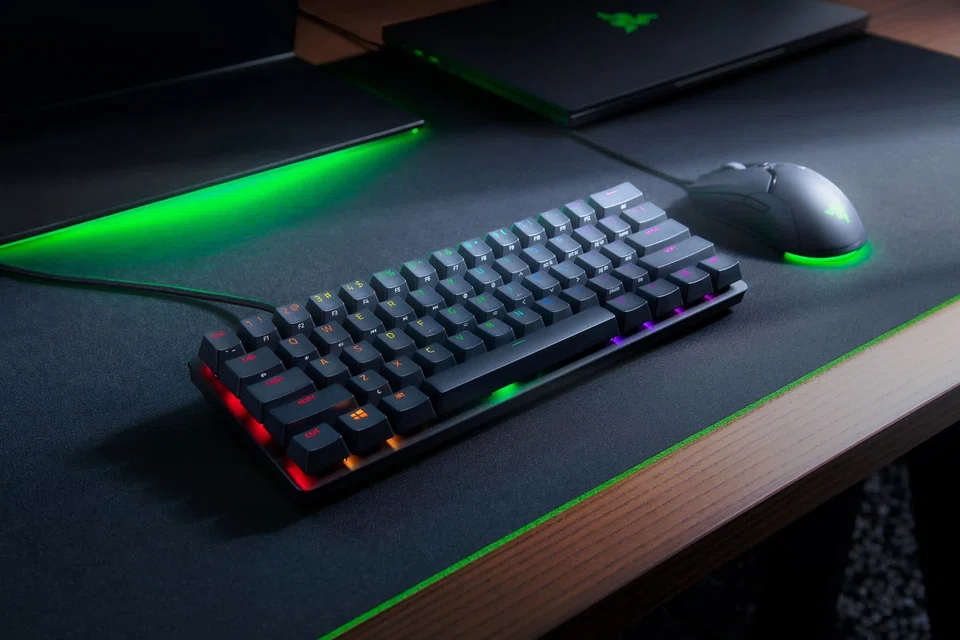
    Sales of peripherals, such as mice, keyboards and audio devices, grew 73.8 per cent to US$773.2 million. Revenue from systems, such as laptop sales, increased 15.4 per cent to US$310.5 million.

    Mr Lee noted: "When people started having to work from home, you also saw non-gamers who wanted the best equipment for their work from home actually coming in to buying more and more Razer products."

    Razer's software business saw total user accounts rising 53.8 per cent to around 123 million as of end December. Its services business, which comprises Razer Gold and Razer Fintech, recorded 66.8 per cent revenue growth to US$128.4 million in 2020, with gross profit margin of 43.8 per cent.

    Mr Lee noted that services contribution was negligible at Razer's initial public offering in 2017. It currently accounts for around 10 per cent of revenue, and the higher margins means it makes up around 20 per cent of gross profit.

    The increased contribution of the higher margin services business, together with better margins in the hardware segment boosted gross profit margin to 22.3 per cent, from 20.5 per cent a year earlier.

    Razer Gold, which is a game and digital entertainment payment service, saw total payment volume (TPV) double during the year, with registered users growing 23.8 per cent to 26 million. Razer Fintech, which provides fintech services in emerging markets, generated US$4.3 billion in TPV, around double from the previous year.

    Mr Lee said: "We saw huge growth in online activity, whether it's ordering of groceries when you're locked down at home, making your purchases online for your essential goods, and also digital entertainment."

    In terms of digital banking, Mr Lee said it was disappointing to not win a licence in Singapore, but things have also moved on. While Razer is watching out for opportunities, he said there are no updates at this point in time.

    Mr Lee said that Razer's current focus is to continue investments to grow the geographical reach of its services businesses and acquiring more users for its platform.

    For 2021, Mr Lee said Razer will seek outsized growth and continued profitability. The company plans to continue strong operating expenses discipline, and introduce new hardware, with continued improvement of margins.

    Mr Lee noted that Razer had a strong balance sheet, with cash and bank balances at end 2020 increasing to over US$600 million, with no debt.

    Razer will continue with investments in research and development, as well as "opportunistically" entering the market to do share buybacks, Mr Lee said, but did not disclose the quantum of the buybacks. Razer bought back around 62 million shares in 2020, according to Bloomberg data.

    He added that Razer will also look to invest and acquire new businesses across hardware and software services, that will give it new product segments or geographical reach.

    "For example, for Razer FinTech we're right here in Southeast Asia, we're looking at potentially making acquisitions that could extend our reach either in the region, or into new high growth, emerging markets like Latin America, Middle East, and Africa."

    Razer shares closed at HK$2.29 on Wednesday, down 1.3 per cent or 3 Hong Kong cents.

    Read more: