

Real estate, industrial STI constituents have among the youngest CEOs
Long-serving individuals can bring valuable continuity, institutional memory and stakeholder trust
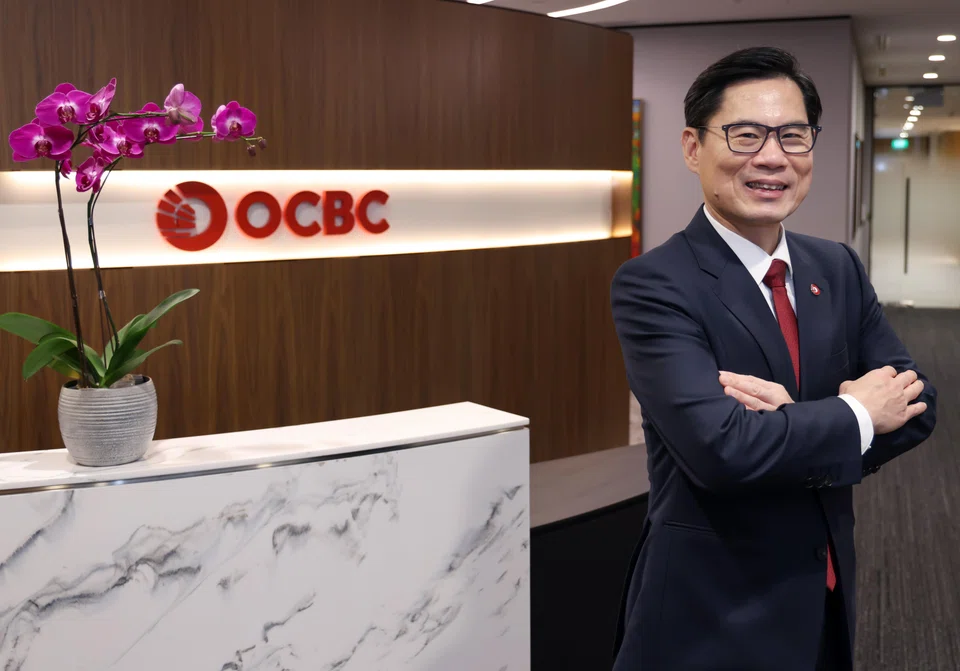
[SINGAPORE] Chief executive officers who took the helm at Straits Times Index (STI) companies in 2025 were younger than their predecessors, the firms’ annual reports show.
The sole exception was Genting Singapore , where Lim Kok Thay, 74, stepped in as acting CEO after the departure of Tan Hee Teck, 69.
Professor Lawrence Loh, director of the Centre for Governance and Sustainability at the National University of Singapore (NUS) Business School, does not see this as a permanent arrangement.
“It is necessary for the company to first ascertain its new strategy for the next technology era underpinned heavily by AI, and then decide on the leadership transition,” he explained.
A check of annual reports shows that the ages of STI company CEOs span 44 to 76 years; Ren Letian of Yangzijiang Shipping is the youngest, and Kuok Khoon Hong of palm oil giant Wilmar International is the oldest.
Among the three local banks, Tan Teck Long of OCBC is the youngest; the 56-year-old took the reins at the lender on Jan 1. DBS CEO Tan Su Shan is 58, and Wee Ee Cheong of UOB is 73.
Real estate and industrial companies skew towards the younger end of the spectrum, with examples such as Yangzijiang Shipbuilding’s Ren and 49-year-old Tan Choon Siang from CapitaLand Integrated Commercial Trust .
Less a generational pivot, more a capability one
Those close to Singapore’s boardrooms see age as just one factor in boardroom renewal.
“Boards are not simply looking for younger leaders,” said Ooi Huey Tyng, a member of the Singapore Institute of Directors’ (SID) governing council. “They are looking for leaders and directors who combine judgment, learning agility and the ability to engage credibly on technology, cybersecurity and AI.”

She added that these are “no longer specialist topics, but boardroom essentials”.
Several STI companies are run by a long-tenured insider.
Goh Choon Phong, who joined Singapore Airlines as a cadet administrative officer in 1990, worked his way up before becoming CEO two decades later.
UOB’s Wee, meanwhile, is part of the bank’s founding family and has spent his entire career there.
Another group of STI company CEOs comprises long-serving individuals who joined after establishing their credentials elsewhere.
Loh Chin Hua, for instance, started his career in GIC before joining Keppel in 2002 and becoming the group’s CEO in 2014.
Loh Boon Chye, who has steered the Singapore Exchange (SGX) since 2015, previously worked at Deutsche Bank and Bank of America-Merrill Lynch. He was brought in to transform SGX into a multi-asset platform spanning equities, fixed income, currencies and commodities.
ST Engineering CEO Vincent Chong spent 20 years at ExxonMobil before joining the defence and engineering group in 2014 and taking on the top position two years later.
DBS’ Tan Su Shan was a high flyer at other financial institutions before joining the bank in 2010.
SID’s Ooi draws a clear line between tenure and relevance.
“Long-serving CEOs can bring valuable continuity, institutional memory, stakeholder trust and the ability to execute over multiple cycles. In the right context, stability can be a competitive advantage,” she said.
“However, long tenure should not be conflated with continued relevance,” she warned. “The risk is not the length of tenure itself. The risk is complacency, weak succession planning, and a board that stops asking hard questions.”
Prof Loh of NUS echoed the point, emphasising the need for adaptability. “The more important issue is whether the CEO can get access to technical inputs and is able to incorporate these into the strategies.”
In terms of how boards should assess long-tenured CEOs, Ooi said that nominating committees and boards should consider such leaders “less by the years they serve, but by whether they continue to renew the business, the leadership bench and themselves”.
Decoding Asia newsletter: your guide to navigating Asia in a new global order. Sign up here to get Decoding Asia newsletter. Delivered to your inbox. Free.
Copyright SPH Media. All rights reserved.
TRENDING NOW

Once staunchly pro-China, Malaysian Chinese businesses are now distancing themselves from Beijing

Looking beyond looming CEO succession, should UOB potentially pursue a transformative merger?

Could stablecoins be the future of money?

Grab CEO’s wife Chloe Tong on life with Anthony Tan and finding her purpose

