

‘Really difficult’ for smallholder farmers to join the carbon market: Verra CEO
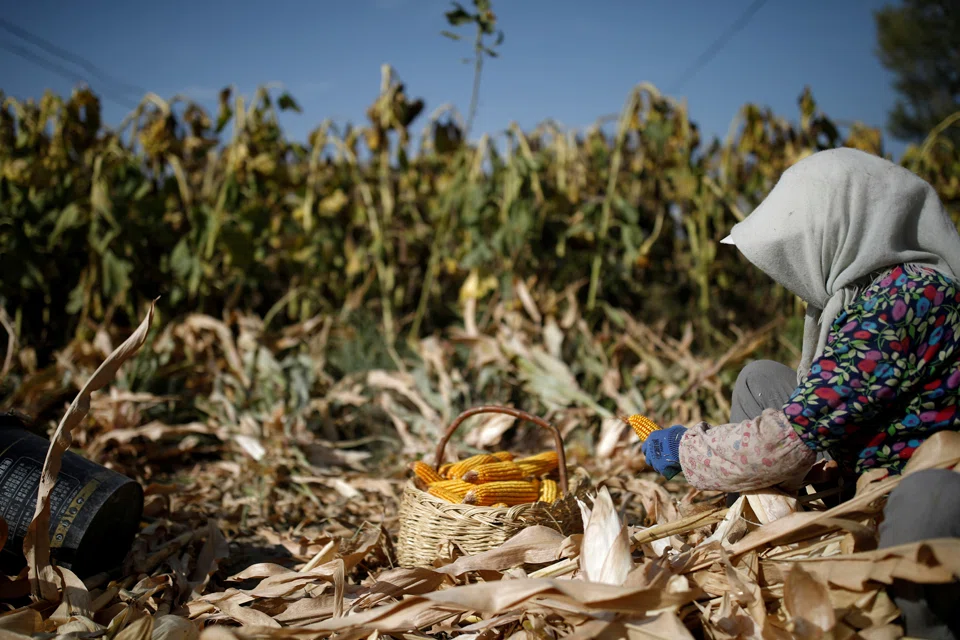
CARBON credits have been touted as a possible new income source for farms, but stringent accounting standards required in the space means the market will find it hard to include the scores of smallholder farmers who might need the money the most – for now, at least.
At a conference on Thursday (Jun 9), David Antonioli, the chief executive officer (CEO) of Verra, by far the world’s biggest carbon credit standards body, was asked how Asia’s small-time farmers who cannot afford to be certified by carbon credit standards bodies could participate.
In response, he said it is “really difficult”, as they will have to follow an accounting methodology that takes knowledge and understanding of following what the rules are in order to offer a “real carbon credit”.
“You have to hire an auditor to assess the outcomes of your project. There are some transaction costs that are just part of the reality of a carbon market,” he added, tuning in virtually as a panellist at Ecosperity Week, Temasek’s annual sustainability event.
“So it’s not like you get to wave a magic wand and say ‘Everything’s cool, and everybody can join and participate’. It does require a certain level of rigour and demonstration of that rigour to be able to join the carbon market.”
But Antonioli added that it does not mean that the small-scale farmers will be excluded from the system.
Remote sensing and other emerging technologies should bring down the cost of monitoring, reporting and verification (MRV), which underpins the activity of carbon pricing, thus lowering the barrier to entry for these farmers, he said.
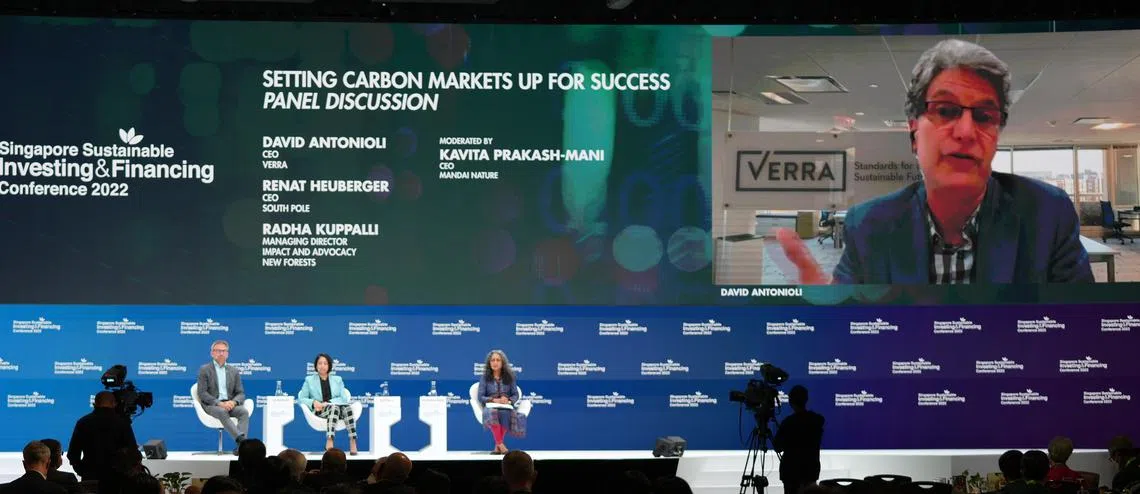
Verra will also continue its work to streamline rules for easier compliance, he said, adding that it is in the process of automating and digitalising methodologies. He noted, however, that turning around the economics will inevitably lead to a higher price of carbon.
Fellow panellist Radha Kuppalli, who leads sustainable real assets investment manager New Forests’ impact and advocacy group, said the conversation needs to be brought back to commercial reality.
Noting that agricultural land prices are going up — in Australia’s, for instance, it has risen by 20 per cent per annum — she said the carbon price for re-vegetation needs to be at US$50 or even US$100 a tonne for the economics of land use to compete.
“Whether you’re a farmer in Laos, Tasmania or Canada, everyone understands what their bottom-line is. And so, ultimately, the investment models that we have to develop (and) deliver have to organise into demand over the long term to deliver that certainty of value back to these individual landowners and farmers,” she said.
The panellists were also asked whether there is sufficient transparency in carbon prices.
Renat Heuberger, CEO of South Pole, a Swiss carbon project developer that recently earned unicorn status, said price transparency is a function of increased volumes.
Reminding his audience that prices had become transparent when demand for carbon credits was high after the Kyoto Protocol, and that many exchanges were now emerging, he said: “This problem is solving itself automatically.”
In a separate segment of the conference, Frederick Teo, CEO-designate of GenZero, Temasek’s new investment company dedicated to decarbonisation solutions, said price is one of the elements that companies that perform MRV should look out for.
“We have to make sure that the way to introduce transparency and trust is also cost-effective. We don’t want to layer unnecessary administrative costs over these things and return more of the economics to the project developers and the local communities,” he said.






