

Reduced SGX board lot sizes a win for investors, but issues remain
The exchange says the lower minimum investment size for higher-priced securities could broaden investor participation
Koh Kim Xuan
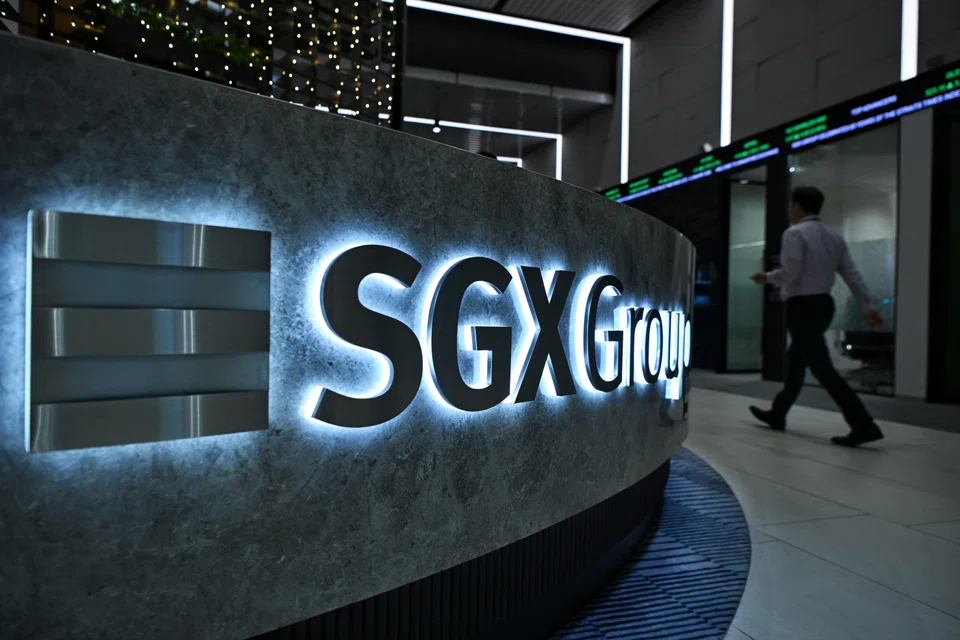
[SINGAPORE] Having smaller board lot sizes for some stocks on the Singapore Exchange (SGX) is a positive move, but the change is only part of the wider equation of making the local market more attractive, industry players said.
The exchange, which issued a consultation paper on this topic on Friday (Jan 23), said that the lower minimum investment size for higher-priced securities could broaden investor participation.
This would increase trading activity and enable investors to access higher-priced securities easily to build more diversified portfolios.
The changes mean that the standard board lot size from the current 100 units will be reduced to 10 for instruments above $10 and up to $100, and from 100 units to one unit for those priced above $100.
For example, with DBS closing at S$58.65 on Friday, 1,000 shares would require an investor to shell out S$58,650, while the current 100-share lot costs S$5,865 excluding fees.
Under the proposal, investors could invest in 10 shares for a much lower capital sum of S$586.50.
The proposal says that counters that trade at the smaller board lot size do not revert to the larger lot size even if their share prices subsequently fall below the S$10 threshold. This feature aims to give investors greater certainty and avoids the removal of accessibility once it has been introduced.
That said, industry watchers told The Business Times that some practical challenges – including trading costs, liquidity and investor behaviour – remain.
“Meaningful step to lowering barriers to entry”
Isaac Lim, chief market strategist at Moomoo Singapore, said the proposed changes are positive for retail investors. “It is one of the things that retail investors have been asking for.”
He added that the proposal “significantly lowers the minimum capital required to invest in high-priced blue-chip stocks”, which refer to large, well-established companies with a strong reputation and solid returns.
David Gerald, president and chief executive officer of Securities Investors Association (Singapore), agreed that the reduction acts as “a meaningful step to lowering barriers to entry” for retail investors.
While the reduction improves affordability and accessibility, and boosts participation by retail investors, a lower level of commissions will further help to encourage trading activity.
Gerald noted: “We need the brokers to do their fair share for the market as well. If investors are still charged a S$25 minimum commission, we will see little to no uptake.
“With trading now fully digital, brokerages should seriously consider removing minimum commissions or cutting them to a nominal level, say S$2 to S$5, if the objective is to make investing genuinely accessible to all.”
Lim pointed out that investors who use traditional Central Depository-linked accounts might face higher commission charges per trade, on top of a minimum fee.
“Investors should take note of this and reduce their fees by switching to MAS regulated custodian brokerage accounts,” he added.
Attracting more foreign issuers and local firms
For Phillip Securities, some of the stocks with a high daily traded value include Jardine Matheson , Jardine Cycle & Carriage , local banks DBS , OCBC and UOB , as well as SGX .
Robson Lee, director at Legal Solutions, told The Business Times that with more liquidity, this “will motivate issuers to raise new funds by further tapping the Singapore equity market post-IPO (initial public offering)”.
“The resulting ripple effect will precipitate the much needed ‘light-house impact’, attracting more foreign issuers and local companies to list on the Singapore stock market.”
He noted that in the US, equities are typically quoted in round lots of 100 shares. However, odd-lot trading is widely permitted.
These proposals are among wide-ranging changes mooted last year, after the Equities Market Review Group was formed in 2024 to recommend measures to enhance the development of Singapore’s equities market.
Moomoo’s Lim noted that other aspects need to be addressed. “This is just a small piece of the puzzle in bringing more retail investors back to the Singapore market,” he said.
“Another angle to be worked on is to drive more attractive listings in the Singapore markets through the Nasdaq-SGX linkage and even in the search for quality Chinese companies.”
Comments on the consultation paper are to be in by Feb 13. SGX said it intends to implement the proposed changes in mid-2026.
TRENDING NOW

Once staunchly pro-China, Malaysian Chinese businesses are now distancing themselves from Beijing

Looking beyond looming CEO succession, should UOB potentially pursue a transformative merger?

Could stablecoins be the future of money?

Grab CEO’s wife Chloe Tong on life with Anthony Tan and finding her purpose

