Regional palm oil stocks book solid Q1, but cost pressures, CPO price correction loom

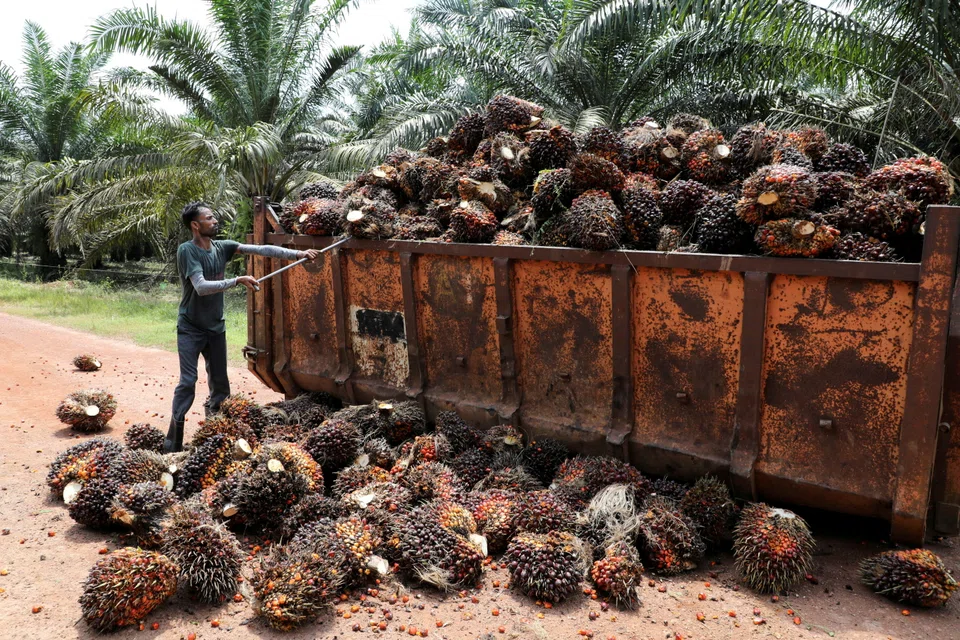
SOUTH-EAST Asian companies in the crude palm oil (CPO) space have had another stellar quarter as elevated prices of the commodity have boosted their revenue and sales figures, and lifted profits. But the industry could run out of steam over the coming months, market watchers warned.
Across the board, listed CPO companies in the region appear to have booked stronger financials in the first quarter of 2022, as stocks enjoyed higher average selling prices and stronger demand for the commodity. Year to date, CPO futures are up about 51 per cent.
In Singapore, the 4 counters that reported updates for Q1 saw profits and revenues rise on a year-on-year basis. Pure plays Bumitama Agri and First Resources showed the biggest improvements.
Bumitama said the “commodity super-cycle” had pushed its margins to multi-year highs in Q1. The company’s net profit rose to 873 billion rupiah (S$82.6 million) from 167 billion rupiah in the year-ago period, while revenue was up 69.1 per cent to 3.9 trillion rupiah.
First Resources, meanwhile, saw sales rise 54.1 per cent year on year to US$303.5 million in Q1, while net profit rose to US$73.6 million from US$8.8 million in the corresponding quarter in 2021.
Agribusiness giant Wilmar International , which also has business in the likes of sugar, flour, rice and biodiesel, saw a more muted improvement in its top and bottom lines. Revenue for the quarter was up 23.2 per cent to US$17.6 billion, while net profit climbed 17.8 per cent to US$503.4 million.
In Indonesia, the flip-flopping of the country’s palm oil restrictions appears to have had minimal impact on planters. Stocks like Sinar Mas Agro Resources and Technology, Astra Agro Lestari and Dharma Satya Nusantara all reported better earnings for Q1.
“We think that the Indonesian government’s steps to ensure adequate palm oil supplies to the domestic market will sustain,” said Akash Gupta, a director at Fitch Ratings Asia-Pacific Corporates team.
“This is likely to impact exports from Indonesia and support palm oil prices in the international market. For Indonesian producers, we expect lower price realisations compared with Malaysian companies.”
Most recently in Indonesia, the government has proposed to cut the combined maximum CPO export tax and levy rate per tonne to US$488, from US$575 previously, to encourage shipments. If the domestic market obligation is not fulfilled, a new export tax will be imposed.
“While the net effect of the change in tax and levy rate is a reduction, the addition of the special export tax is punishing,” RHB analyst Hoe Lee Leng said in a Jun 9 report.
Companies affected by this could include Kuala Lumpur Kepong and Sime Darby Plantation, she said.
Meanwhile, companies that sell domestically could benefit from the change in tax structure. Genting Plantations and IOI Corp, for instance, are beneficiaries as they only sell their output domestically and will not need to pay the special tax.
“The Singapore-listed and Jakarta-listed companies would also not need to pay the special tax as they would already have avenues to sell their oil domestically,” added Hoe.
Over in Malaysia, FGV Holdings turned around from a loss in Q1 2021 to a profit in Q1 2022. Boustead Plantations saw revenue jump 88.5 per cent to RM324.2 million (S$101 million), while earnings improved to RM435.2 million from RM12.2 million in the year-ago period. Genting Plantations and Ta Ann Holdings, too, saw Q1 net profit more than double.
Maybank analyst Ong Chee Ting noted that record quarterly CPO and palm kernel average selling prices had caused Malaysian planters’ core earnings to rise for the ninth consecutive quarter.
But a deeper look into the individual CPO stocks in Malaysia reveals a “mixed bag”, said Ong.
The core profit of 22 per cent of the stocks under the research house’s coverage had exceeded its expectations, while 33 per cent missed expectations. Some 45 per cent came in within expectations, he noted.
Many Malaysian planters are also continuing to engage in forward sales practices with locked-in prices, according to Ong.
“The downside to that strategy is they will not be able to benefit from the high CPO spot prices as their forward sales are always referenced against the BMD (Bursa Malaysia Derivatives) futures prices. And the futures price curves have been in constant backwardation for more than a year now, favouring those who sell more spot,” he said.
Looking ahead, observers said the industry could face challenges in H2. Fitch’s Gupta is expecting CPO prices to correct over the next 6 to 12 months as the output of palm oil and other vegetable oils rises.
“Higher output is likely to be driven by favourable weather conditions and higher planted areas,” he said.
Maybank’s Ong added that growers are currently exhausting cheaper fertiliser supplies that they had locked in towards the end of 2021.
The recent spike in fertiliser prices due to the Ukraine conflict, as well as the impact of the new minimum wage hike in Malaysia, will be more evident in H2, although these cost pressures will be mitigated by seasonally higher output in the second half.
As CPO prices track lower, Ong said integrated players such as Kuala Lumpur Kepong and IOI Corporation will exhibit greater earnings resilience compared to pure growers, who are more sensitive to CPO price movements.
UOB Kay Hian analysts, however, are more optimistic. They reckon CPO prices will remain elevated on supply tightness due to the bad weather in 2020 and 2021.
“The global oilseeds and vegoil tightness will only see a more balanced demand-supply scenario if South America is able to deliver bumper crops in the coming 2022/23 season,” they said.
The brokerage’s top pick for the sector is Malaysia-listed Hap Seng Plantations as the counter is set to benefit the most from much higher spot market prices and suffer the least in terms of labour shortage.
Among big-cap stocks in Malaysia, IOI Corporation is UOBKH’s preferred pick as it has the highest Malaysia exposure, as well as higher refining margin when compared with other big-cap plantation companies.