

Regional poultry stocks warrant closer look despite industry challenges, say analysts

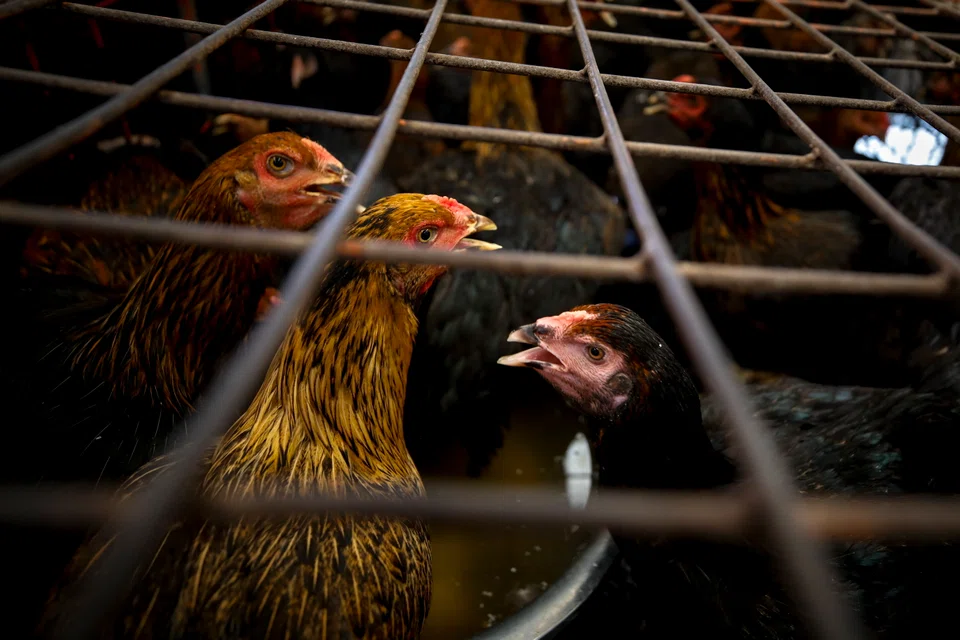
FOOD inflation has had a positive impact on the revenues of protein producers Japfa and Charoen Pokphand Indonesia (CPIN). Yet, shares of the two companies, as well as those of Japfa subsidiary Japfa Comfeed Indonesia, are down for the year. Analysts see positive prospects for all three counters as demand-supply dynamics continue to improve.
Prior to an update on Thursday (Dec 15) about the Hong Kong listing of its China-focused dairy unit AustAsia Group, Singapore-listed agri-food company Japfa was down about 20 per cent in spite of active share buy backs. Shares of Japfa shot up 13.4 per cent or S$0.065 to close at S$0.55 on Thursday, following the update.
Japfa specialises in producing dairy, packaged food and protein staples such as beef, swine and aquaculture. The company operates an integrated network of farming, processing and distribution facilities in Indonesia, China, Vietnam, India and Myanmar.
Its animal protein business in Indonesia, Japfa Comfeed Indonesia, is listed on Indonesia’s exchange IDX. Japfa Comfeed has the second-largest industrialised poultry operation in Indonesia. It produces animal feed for both its own use and for sale to third parties. It also sells day-old chicks, does commercial broiler farming and produces consumer food products.
Shares of Japfa Comfeed are also down this year by 26.2 per cent, closing at 1,270 rupiah on Thursday.
The weakness in Japfa’s shares may be due to the company’s falling margins.
For the first nine months of the year, Japfa reported earnings of US$46.3 million – down 59 per cent from the corresponding year-ago period.
The weaker bottomline showing came despite a 10 per cent increase in revenue to US$3.7 billion on the back of “sales volume growth across all segments”, Japfa said.
High raw material costs across all segments hampered profitability, the company said. The weak performance of its swine operations in Vietnam also played a role in the lower profits. Japfa’s operating profit margin fell 1.9 percentage points year on year to 6 per cent.
IDX-listed Japfa Comfeed did slightly better. For the nine-month period ended Sep 30, earnings fell by a milder 5.2 per cent. Sales were up 12.2 per cent. It nevertheless reported a similar trend of rising costs outpacing revenue growth.
Japfa chief executive Tan Yong Nang said the group continues to battle a “challenging operating environment” particularly with the likes of inflationary pressures on costs, geopolitical tensions, as well as the African swine fever in Vietnam.
Indonesian peer CPIN has had a far better year, which is somewhat reflected in its share price performance. The counter has declined by a more muted 3.8 per cent this year, closing at 5,725 rupiah on Thursday.
CPIN is Indonesia’s largest producer of poultry feed, day-old chicks and processed chicken. It is also the largest vertically integrated poultry producer by capacity. The company’s main product is poultry feed in the form of concentrate, mash, pellet or crumble. These are produced across seven production facilities.
The company also sells food products under four brands, including Golden Fiesta and Champ.
For the same nine-month period, CPIN reported a 19.1 per cent increase in earnings to 3.2 trillion rupiah (S$278.2 million) – from 2.7 trillion rupiah for the same period in 2021. Net sales rose 15.5 per cent to 43.4 trillion rupiah.
Segmentally, sales of feed and day-old chicks saw a decline year on year. But sales of broilers and processed chickens increased.
According to an October report by CGS-CIMB, CPIN has been able to pass on raw material price increases to its customers to “partially protect” margins of its feed segment. This segment contributed 77 per cent of earnings before interest and taxes in FY2021.
CGS-CIMB is positive on the prospects of CPIN, Japfa Comfeed and Japfa, with “add” calls on all three counters.
Bloomberg data shows the two other analysts with coverage on Japfa are slightly less optimistic, with “hold” calls. The average target price hovers at around S$0.65.
Analyst consensus is much more optimistic for Japfa Comfeed and CPIN. Bloomberg data shows 17 buys and one hold for Japfa Comfeed, with no sells, and an average target of 2,033 rupiah.
For CPIN, there are 13 buys, five holds and no sells, and an average target of 6,796.54 rupiah.






