

ARA H-Trust poised to ride growing wave of ‘bleisure’ travellers
Stapled group must shake off negative sentiment as a US-focused trust, says Lee Jin Yong, CEO of its managers

Jude Chan
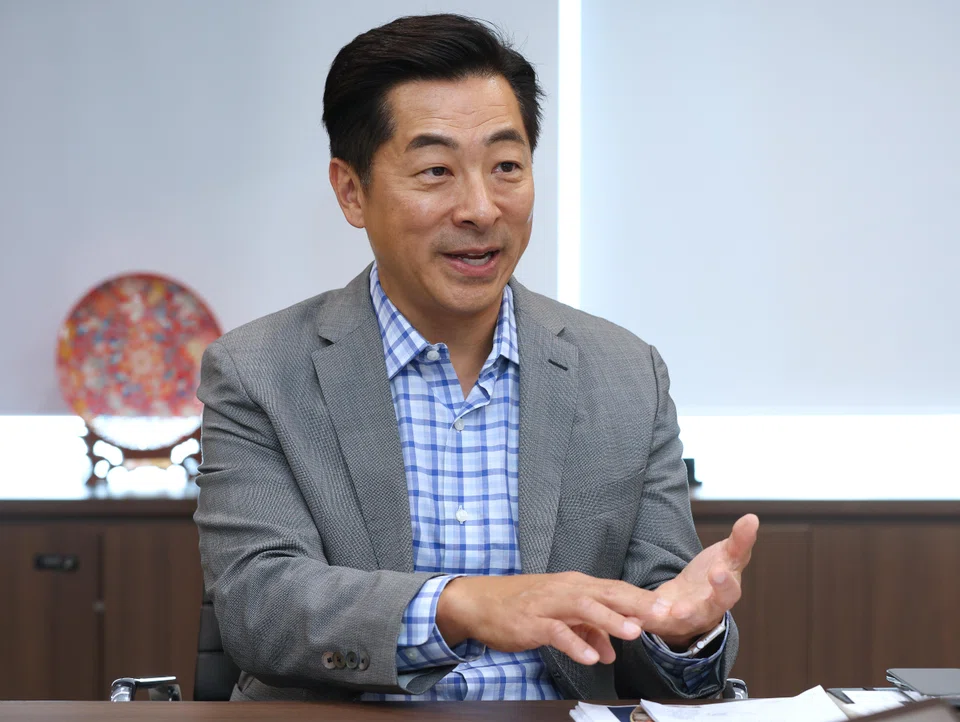
ARA US Hospitality Trust (ARA H-Trust), whose portfolio comprises about three dozen hotels across the United States, is one of five actively traded US-focused property trusts listed in Singapore.
Lee Jin Yong, chief executive officer of its managers, appears keen for the trust to be treated as separate from its US peers.
“It’s a bit frustrating because you’re doing everything right and improving performance, yet the market is not recognising that,” he said. “We’re seen as a US strategy, which we clearly are, but we’re distinct because we’re a different asset class than most of the other US strategies which are office-focused.”
Out of ARA H-Trust’s four actively traded US peers, three – Keppel Pacific Oak US Reit , Prime US Reit and Manulife US Reit – are in the office sector. The fourth, United Hampshire US Reit , is in the retail space.
“We’re showing continuous improvement – year-over-year and quarter-over-quarter – but our security price is now… where we were in 2020 before we had the (Covid-19) vaccines,” Lee said.
Stapled securities of ARA H-Trust – a stapled group comprising ARA US Hospitality Property Trust, a real estate investment trust (Reit); and ARA US Hospitality Management Trust, a business trust – closed at US$0.335 on Jun 1.
The stapled securities are trading at 62 per cent below their initial public offering (IPO) price of US$0.88 and at a 56 per cent discount to ARA H-Trust’s net asset value per stapled security of US$0.77 as at Mar 31.
In the year to date, the counter has lost 4.3 per cent. Total returns with dividends reinvested stood at negative 0.2 per cent over the period.
Red, white and bruised
ARA H-Trust made its trading debut on the Singapore Exchange mainboard in May 2019, in the same month as another trust focused on US-based hospitality assets, Eagle Hospitality Trust (EHT).
To a casual observer, the similarities were striking.
“Back then, people didn’t see the differences between us and Eagle,” Lee said.
He pulled out an old clipping of a commentary in The Business Times, titled “Hard to pick clear winner between two upcoming US hotel Reit listings”.
“Articles like this, where they said: ‘They’re about the same thing. You could pick either one, and it’s the same bet’. I couldn’t believe it,” he said. “We don’t have a master lease, we’re well-diversified, we don’t have concentration risks… We’re so different.”
EHT was suspended from trading barely a year into its listing, as a string of scandals surfaced – including a gross overvaluation of its flagship asset, The Queen Mary.
Local investors, most of whom never set eyes on the property half a world away, were shocked when it was eventually uncovered that the ship-turned-hotel was in a state of disrepair and at risk of sinking.
The EHT saga would rock the confidence of investors in Singapore-listed Reits with assets overseas.
For ARA H-Trust, which occupied the same geography and asset-class sector as EHT, market sentiment would be particularly harsh.
“When they tanked, and they lost their entire portfolio, everyone was like: ‘You guys must be next in line’ – without understanding the differences,” Lee said.
To make matters worse, ARA H-Trust was hit around the same time by another unforeseen event: the Covid-19 pandemic.
“It was a lot of hard work, a lot of sleepless nights, because no one’s ever seen a dislocation like that. Even the global financial crisis (GFC) was almost a cakewalk (in comparison),” Lee said.
“The Covid downturn was three times the magnitude of GFC, in terms of revenue decline – for the industry, not just us,” he added.
ARA H-Trust would survive the pandemic, but soon became entangled with more bad news for its US-focused peers.
Employees became reluctant to return to the office after getting used to working from home for more than two years. As physical occupancy fell, so did market confidence in the US office Reits.
At the same time, sentiment for US-focused Reits was dampened by interest-rate hikes and forecasts of a potential recession in the US.
“The fortunes of the office market and hotel market are quite divergent,” Lee said. “But when people feel negative about US office – not the whole universe of commercial real estate – they kind of lump us in. And I think that’s what is a little bit frustrating about where our security price is today.”
“We operate in different asset classes, and the outlook for our asset classes are very, very different,” he added.
Hot on hotels
The way Lee sees it, the US travel and lodging sectors are poised to benefit from a paradigm shift in consumer behaviour.
“The restrictions in order to calm the pandemic also removed a lot of people’s freedoms. One of the dynamics we see post-Covid, particularly in the travel and lodging industry, is that the appetite for travel is enormous,” he said.
“The reopening and lifting of Covid restrictions unleashed a tonne of pent-up travel demand. And that demand, in my view, has now pivoted,” he added. “Travel was once considered to be somewhat discretionary… Now, when people think about travel… it’s a basic right.”
For the full year ended December 2022, ARA H-Trust posted a 29.3 per cent increase in revenue to US$169 million. Net property income (NPI) rose 66.4 per cent to US$41.4 million.
Distributable income soared to US$17.5 million, from US$2 million the year before. Distribution per stapled security (DPS) jumped in tandem – to US$0.03054 for FY2022, from US$0.00355 the previous year.
The momentum carried over into the latest quarter ended March 2023, as total revenue climbed 10 per cent year on year to US$36.2 million, and NPI rose 19 per cent to US$6.4 million.
The improvements were largely attributed to a continued recovery in the US lodging market, despite increasingly bearish sentiment amid inflation concerns and risks of an economic slowdown.
The recovery in lodging demand was led by pent-up travel demand from the leisure segment.
“The paradigm has changed. People say: ‘Look, I’m going to travel. And I’m going to travel even when I don’t feel super rich or comfortable, because travelling now is something that’s a very important part of my life’,” Lee said. “That, to me, is an interesting structural change that benefits lodging.”
ARA H-Trust has also gained from what has been called “bleisure” – a blend of business and leisure travel that combines a work trip with an extended holiday.
“Bleisure is kind of a post-Covid dynamic,” Lee said. “We are taking advantage of the new work-from-home culture and capturing that demand. And it’s also benefited our style of hotels that are in our trust, because we have a lot of extended-stay hotels.”
Lee anticipates more upside for the trust. While the recovery has been spearheaded by leisure travellers, he said the industry is now seeing the return of business travellers and the group travel segment.
He added that ARA H-Trust’s hotels are not only popular with hotel guests, but with investors as well.
“The average price point is somewhere between US$15 million and US$30 million for an asset trade,” Lee said. “That size of trade is accessible not only for institutional buyers, but also for family offices and high-net-worth individuals. So, it’s the most liquid segment in the market.”
“Our view is that the market is flush with those opportunities for us to add on to the portfolio. We just need the capital to get there,” he added. “And our belief is that we will get there. Barring unforeseen circumstances, we anticipate continuing to deliver good results. We just need the market to recognise why we’re so different.”
TRENDING NOW
World’s largest offshore wind platform by Seatrium consortium on track to be completed by 2028

Is stamp collecting enjoying an analogue revival or are its best days over?

GovTech retrenches another 38 staff in second round of layoffs
MBS adjusted property Ebitda falls 20.6% in Q3 with fewer high-roller visits, weaker hold

