Asset enhancements could bring some warmth to S-Reits amid acquisition winter

Jude Chan
RISING interest rates have all but frozen the acquisition of properties by Singapore-listed real estate investment trusts (S-Reits) – choking off a key source of net property income (NPI) and distribution per unit (DPU) growth.
Analysts said there are still some opportunities for accretive acquisitions in the market. Under the current cloud of uncertainty, however, they expect Reit managers to switch tack and focus on asset enhancements instead.
There have been four proposed property acquisitions in the first quarter of 2023. Three of them happened in the same month.
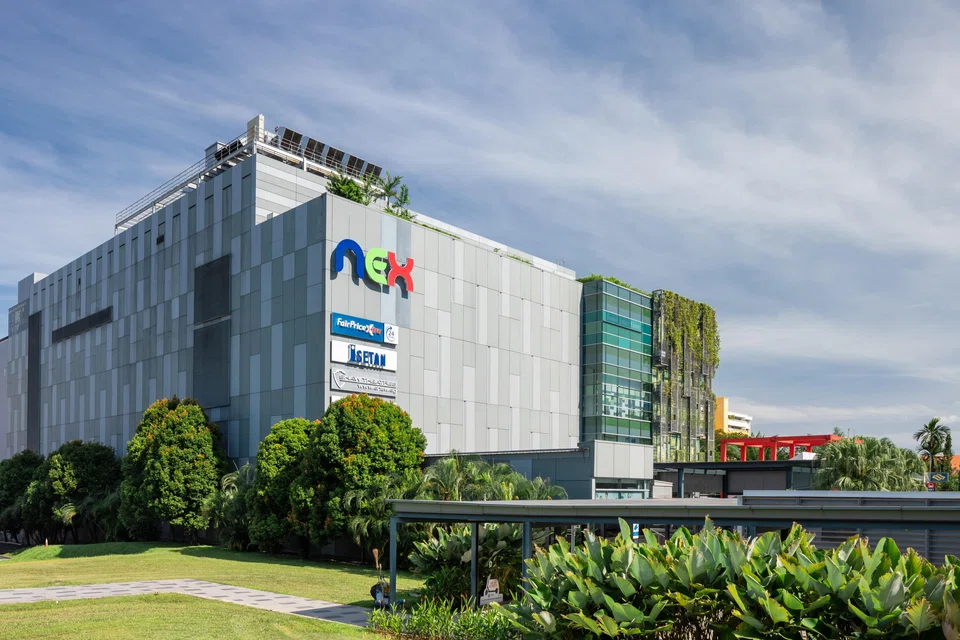
In January, ARA US Hospitality Trust proposed to acquire a 119-room Hilton-branded hotel property in the US for US$29 million; CapitaLand India Trust entered into a forward purchase agreement to acquire a one million square foot (sq ft) IT park in Bangalore for 12.3 billion rupees (S$201 million); and Frasers Centrepoint Trust – together with sponsor Frasers Property – announced the joint acquisition of a 50 per cent stake in suburban mall Nex for S$652.5 million.
After a steep drop in the number of transactions last year – S-Reits announced 30 asset acquisitions in 2022, whereas there were over 50 in 2021 – the spate of acquisitions in January raised hopes that the worst could be over.
But renewed fears of interest rate hikes in February brought a chill to the dealmaking scene.
The dry spell was broken only last month, when Mapletree Logistics Trust at the end of March announced the acquisition of eight logistics properties in Japan, Australia and South Korea for a total of S$913.6 million.
In comparison, there were seven acquisitions announced in the corresponding quarter the year before.
Market watchers said deal flow for property acquisitions is likely to remain slow in the months ahead.
Discussions are hampered by continued uncertainty over interest rates. And concerns have also mounted following the banking crisis in the United States and Europe.
“The current slowdown in S-Reit acquisitions is a function of market conditions, especially high interest rates that have made accretive and attractive acquisitions much less likely,” said RHB analyst Vijay Natarajan.
“Overall, we believe acquisitions will likely take a backseat this year, with total S-Reit acquisitions likely to be below S$3 billion – a moderation from S$5 billion last year,” he added. “For acquisition markets to return, we believe interest rates need to peak and turn – along with a moderation in sellers’ pricing expectations.”
DBS analyst Derek Tan shared similar sentiments. “The cost of debt remains prohibitive for S-Reits to make accretive acquisitions as asset values have yet to really correct to reflect the new interest rate environment,” he said.
Tan nevertheless believes selected S-Reit sectors, such as hotels and industrials, can still pull off accretive acquisitions.
“We may see selective buying and, potentially, some equity raising, as most managers are unlikely to want to leverage up post-deal,” he said. “We need clarity on the Federal Reserve front, so Q2 after May 2023 will be the time to watch.”
A lack of deals need not be a bad thing for Reit investors, though.
Gabriel Yap, a veteran Reit investor and chairman of investment firm GCP Global, noted that “most Reits’ acquisitions have not been really DPU-accretive in the past few years”.
Yap said asset enhancement initiatives (AEIs) tabled by some S-Reits have brought better returns for investors. For example, he said, several industrial S-Reits have guided NPI yields of between 6 per cent and 8 per cent on significant AEI projects planned for 2023 and 2024.
“On a comparative basis, it’s a better usage of capital funds than making new acquisitions on thin NPI and DPU accretions in an environment of higher risk and higher interest rates,” he explained.
While turning away from acquisitions will result in a slowdown in assets under management growth and inorganic DPU growth, RHB’s Natarajan said S-Reits should remain cautious and extremely selective on acquisitions in current market conditions.
“We believe (engaging in AEIs) is the right strategy for the Reits to employ in market downturns and in the current environment where cost of capital has sharply moved up,” Natarajan said.
DBS’ Tan noted, however, that it is tougher for AEIs to move the needle on NPI and DPU, as AEIs tend to be relatively small compared with acquisitions or developments.
Added Tan: “AEI is also tough to execute, mainly because construction costs have risen substantially, compressing returns. Also, due to labour shortages, the timeline to complete (AEI works) is also longer.”