CapitaLand Ascott Trust shoots for lower carbon footprint, higher portfolio yield
Beyond sustainability, the CEO of Clas’ managers sees the trust as providing investors with the ‘best choice in terms of scale and stability’

Jessie Lim
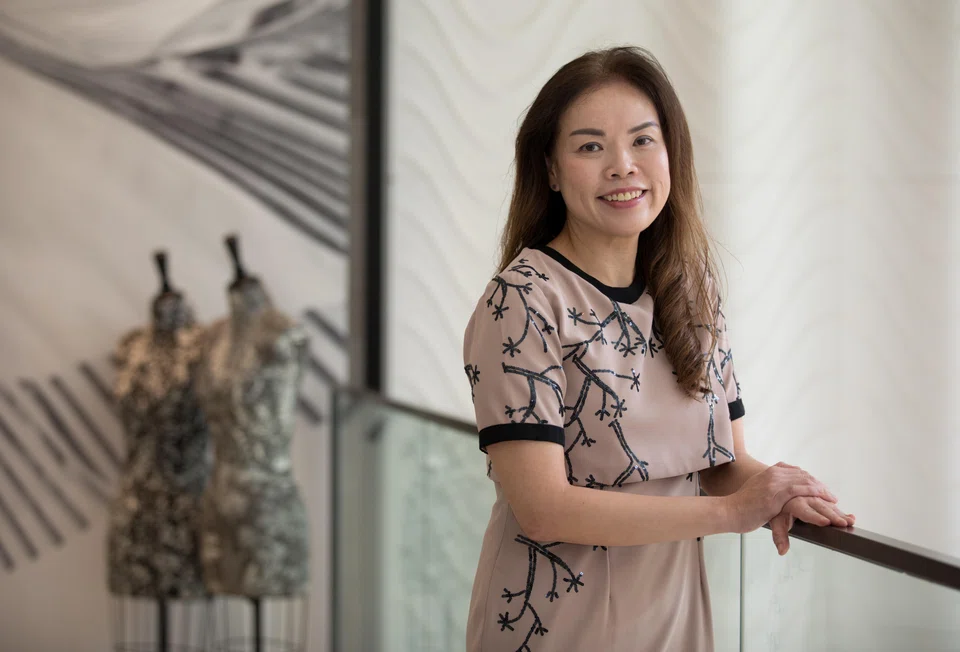
WHEN Serena Teo was appointed chief executive officer of the managers of CapitaLand Ascott Trust (Clas) in June 2022, sustainability was one area she wanted to focus on.
Together with the heads of department of Clas’ managers and The Ascott Limited’s operations and technical teams, Teo set out to implement a sustainability strategy for the trust.
“Sustainability is at the core of everything we do,” the CEO of Clas’ managers told The Business Times. “We are committed to making a positive impact. This not only includes growing in a responsible manner, delivering long-term economic value, but also contributing to the environmental and social well-being of our communities.”
In 2022, Clas increased its share of electricity consumption from renewable sources to 10 per cent, up from 6 per cent the year before.
All of its properties in Belgium, Germany and the United Kingdom are fully powered by electricity from renewable sources, Teo said.
To further reduce electricity consumption, sensors are installed at its properties to turn off the supply when guests leave their rooms. Building management systems also help to optimise how electricity is used throughout the building.
Since Teo’s appointment, Clas has been added to two new sustainability indices, the iEdge-OCBC Singapore Low Carbon Select 50 Capped Index and iEdge-UOB Apac Yield Focus Green Reit Index.
She said: “We are very grateful for these accolades and it carries through to our source of funding.”
Last October, Clas partnered with the International Finance Corporation (IFC) to launch IFC’s first sustainability-linked bond in the hospitality sector globally. Proceeds from the bond were used to refinance Clas’ existing borrowings and to further decarbonise three of Clas’ serviced residences in South-east Asia.
Beyond sustainability, Teo sees Clas – Asia-Pacific’s largest lodging trust – as providing investors with the “best choice in terms of scale and stability”.
As at Jun 30, Clas’ portfolio comprised 107 properties located across 15 countries, with a total asset value of S$8.1 billion. These properties include serviced residences, hotels, rental housing and student accommodation.
Teo said: “The advantage of (being) large is that it gives us scale. The advantage of our portfolio being diversified across geography and asset classes and contract types (is that it) gives us stability.”
It has been a busy year for Clas. Having acquired 15 properties last year and in the second quarter of 2023, it announced on Aug 2 that it will be acquiring three lodging assets from its sponsor, The Ascott Limited, for S$530.8 million.
The managers look for markets with a suitable demographic and high student enrollment for its rental housing and student accommodation properties. As for its hotels and serviced residences, Clas’ preference is for “well-located assets in key gateway cities or business centres”, Teo said.
For instance, The Cavendish London in the UK was selected for acquisition for its “super prime location” in the Mayfair area, just next to the upmarket department store Fortnum & Mason.
“It’s very rare for a property of that size in that location to be up for sale. We are very happy to have had the opportunity to take it on. And that opportunity also came to us, because we are in a position where we get right of first refusal of the sponsor’s pipeline,” the CEO of Clas’ managers added.
Upon completion of the proposed acquisition of The Cavendish London, as well as Temple Bar Hotel in Dublin, Ireland, and Ascott Kuningan Jakarta in Indonesia, Clas is expected to increase its total distribution by S$13.5 million and its distribution per stapled security by 1.8 per cent on a FY 2022 pro forma basis.
Teo noted that the entry yield for these three acquisitions is 6.2 per cent, but post renovation and milestone payments, the yield for these assets could rise to 6.8 per cent.
She said: “There are certain milestone payments that are due after renovation which help to mitigate the risk to our unitholders. Those were really some of the points that made these acquisitions very attractive.”
Depending on the extent of asset-enhancement initiatives, properties could see an increase of at least 10 per cent in room rates, Teo said.
Meanwhile, assets that are sub-optimal will be divested, with the proceeds recycled into higher-yielding investments. This was the case for four of its Citadines properties in regional France which are being divested at an exit yield of about 4 per cent. The divestment is expected to be completed in Q4.
Teo said: “So, you can see that spread. (We) divest assets at a lower yield and reinvest into assets with a higher yield so... (there is an) increase in the quality of the assets we have in our portfolio.”
For the first half of 2023, Clas posted a gross profit of S$154.4 million, up 31 per cent from a year ago.
Revenue rose 30 per cent to S$346.9 million from S$267.4 million previously.
Meanwhile, revenue per available unit rose 44 per cent to S$138 in H1 on robust lodging demand, with key markets such as Australia, Japan, Singapore, the UK and the US performing above pre-pandemic levels.
As at Jun 30, Clas’ gearing stood at 38.6 per cent with an effective borrowing cost of 2.3 per cent per annum, and an interest cover of 4.3 times. Noting that Clas has always been “very prudent” with capital management, Teo said she does not expect a material increase in cost of borrowing this year.
Some 80 per cent of the stapled group’s debts are on fixed rates and the weighted average debt to maturity is 3.6 years.
When asked whether Clas plans to increase its share of fixed debt, Teo said the 70 per cent to 80 per cent range was a “comfortable” level.
“We will continue to look at interest rates to see if it’s more optimal for us to fix (loans). Given that interest rates are currently at a high, it may not be very optimal for the trust if we were to fix at these high levels for an extended period of time.”
Some of the trends Teo foresees will fuel continued travel recovery include an increase in flight capacity, longer trip durations and a resumption of meetings, incentives, conferences and exhibitions events.
She said: “I think these are some of the leading indicators that bode well for travel and lodging demand. For the rest of the year, I’m actually fairly optimistic that demand for travel will continue.”
When asked about the China market, which constituted 4 per cent of Clas’ assets in H1, Teo said occupancy of its properties in China was “above 50 per cent” throughout Covid-19.
The five serviced residences, which are located in business and manufacturing hubs were supported by long-stay guests working nearby, she said.
Teo said: “China is interesting from the perspective of outbound travel. Given the size of the Chinese market, the progressive increase in flight capacities out of China will continue to have an uplift to hospitality demand in the rest of the world.”