

Diversification is key as healthcare S-Reits adjust to end of pandemic: analysts

SINGAPORE-LISTED real estate investment trusts (S-Reits) with healthcare assets must diversify strategies to capture new growth pillars as the healthcare sector normalises and the world returns to a post-Covid “business as usual” situation, market watchers said.
The last two years have been good years for healthcare-related stocks in general. In the Singapore market, Parkway Life Reit (PLife Reit) has significantly outperformed most of its S-Reit peers.
While hospitality Reits dealt with the drying up of tourist dollars, retail Reits faced down empty malls and even office Reits worried about rental renewals as employees worked from home, Parkway Life enjoyed steady income over the pandemic period.
PLife Reit has generated total returns of 10.2 per cent in the year to Tuesday (Mar 7).
In comparison, the overall Reit market here, represented by the iEdge S-Reit Index, has generated total returns of 4 per cent over the same period, while the benchmark Straits Times Index has returned 0.1 per cent.
The edge that PLife Reit enjoyed may, however, be coming to an end.
Singapore on Feb 13 reverted its disease outbreak response system condition (Dorscon) level from yellow to green, which indicates that a disease is mild and poses minimal disruption to daily life. Most countries – including China, which had until recently imposed strict restrictions amid a tough zero-Covid policy – have also reopened their borders.
While expected to be a shot in the arm for sectors such as hospitality and retail, Dorscon Green could put the brakes on the healthcare sector’s trajectory.
New growth pillars
To its credit, PLife Reit has been building up its portfolio to grow its income.
One of Asia’s largest listed Reits by asset size, it acquired five nursing homes in the Hokkaido region and the Greater Tokyo region last year for a total of 5.4 billion yen (S$55.5 million).
“PLife Reit’s asset recycling activities in Japan nursing homes are still ongoing,” said DBS analysts Rachel Tan and Derek Tan, noting that these activities have been “sporadic”. The Reit in early 2021 divested its non-core industrial property, P-Life Matsudo – the only pharmaceutical product distributing and manufacturing facility within its Japan portfolio.
“With the recent acquisitions, we believe its asset recycling exercise will continue to drive growth ahead, given its successful track record,” the analysts added. “But the timing remains uncertain.”
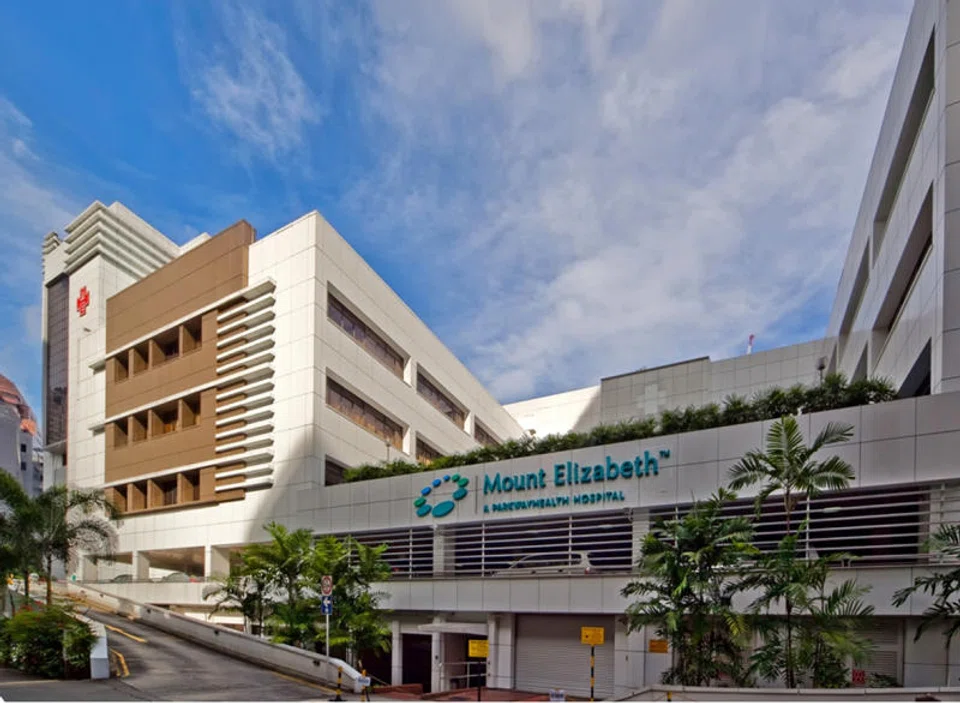
They see a “potential injection” of Mount Elizabeth Novena Hospital into PLife Reit’s portfolio, which already includes three other Singapore hospitals: Mount Elizabeth Hospital, Gleneagles Hospital and Parkway East Hospital.
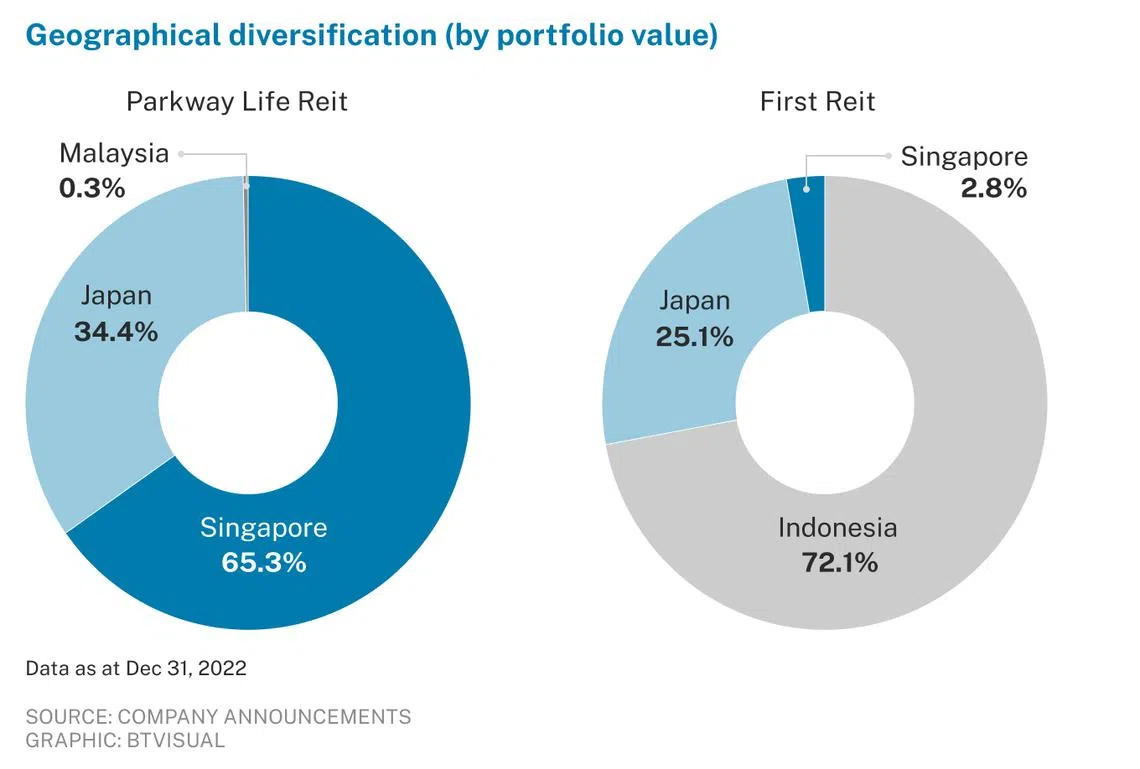
The three Singapore hospitals account for 65.3 per cent of its portfolio by asset value, with the Japan nursing homes making up 34.4 per cent. The Reit also owns some strata-titled units in a medical office building in Malaysia.
The Reit has right of first refusal over Mount Elizabeth Novena Hospital from its sponsor IHH Healthcare .
In addition to the ongoing recycling of its nursing homes properties in Japan and the acquisition pipeline from its sponsor, the manager of PLife Reit is looking to build a “third pillar” for the next phase of growth.
“The management continues to explore opportunities in developed countries with a mature healthcare market and believes that there could be potential options in Australia and Europe,” the DBS analysts said.
Value in Japan
Another healthcare Reit making a play for Japan is First Reit , which in September last year bought two nursing homes near the Tokyo and Nagoya city centres for a total purchase consideration of 2.6 billion yen.
This comes after the Reit in March 2022 marked its maiden entry into Japan with the acquisition of 12 nursing homes from its sponsor OUE Lippo Healthcare for 24.2 billion yen.
The manager of First Reit noted then that Japan is poised to become the first “super-aged” nation in the world, with more than a third of its population projected to be over the age of 65 by 2040.
First Reit, which has 72.1 per cent of its S$1.15 billion in assets under management (AUM) based in Indonesia, has not done as well as PLife Reit. It generated total returns of 2.5 per cent in the year to date – lower than the S-Reit average.
According to SAC Capital analyst Peggy Mak, First Reit – like many of its S-Reit peers – has been weighed down by concerns over rising interest rates and the resultant impact on its cost of funds and asset valuations.
“But its risk profile has improved with the conclusion of new master leases for the Indonesian assets in late-2021 and the addition of the Japan assets in March 2022,” Mak said in a report.
First Reit’s 14 Japan nursing homes accounted for 25.1 per cent of its AUM as at end December. Its three nursing homes in Singapore account for the remaining 2.8 per cent.
The Reit manager had earlier announced that it intends to pivot into developed markets, which it targets to account for more than half of its portfolio by 2027.
With the easing of cross-border travel restrictions, First Reit said in its latest results announcement that it will continue to carry out what it calls its “2.0 Growth Strategy” to explore accretive opportunities arising from the increasing healthcare demand.






