Hotels: CDL’s inconvenient sustainability challenge
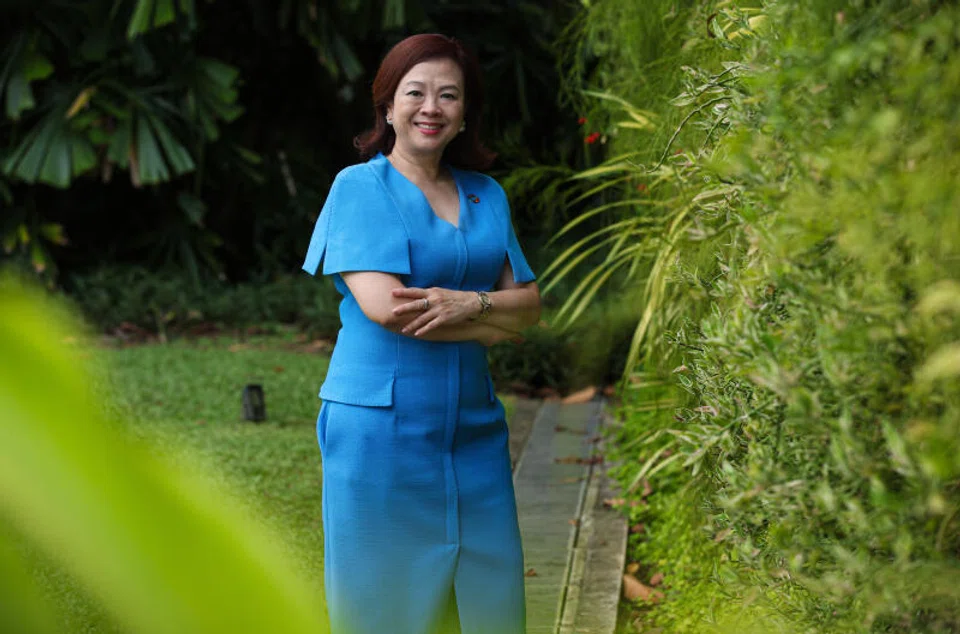
Chief sustainability officer Esther An confronts CDL’s exclusion from the Dow Jones Sustainability World Index

Wong Pei Ting
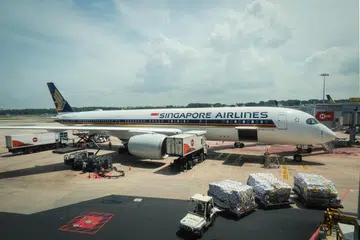
CITY Developments’ (CDL) hospitality arm has been boosting the company’s topline growth, but the business is weighing on its sustainability credentials.
The company’s chief sustainability officer Esther An said the pandemic made it hard to green the nearly 140 hotels under the London-based Millennium & Copthorne Hotels (M&C), even as a number of the latter’s peers have used the time to improve their sustainability performance.
But An is committed to getting M&C’s six Singapore-based hotels to be certified as sustainable accommodation under the Global Sustainable Tourism Council (GSTC) by 2025.
The rest of M&C’s portfolio, which spreads across some 80 locations in more than 20 countries, will be given more time. But they are still expected to align themselves with the group’s decarbonisation strategy in three to five years.
M&C’s global brand, Millennium Hotels & Resorts, also hired its first dedicated sustainability head in February. The director of sustainability in technical services, Augustine Quek, is based in Singapore.
“We told them that you need a dedicated professional to look at this. Not your marketing person, not your environmental engineer – all of them are important, but you need a dedicated person to really work on it, like what we do at the headquarters,” An said.
The sense of urgency is understandable. CDL’s 11-year streak on the Dow Jones Sustainability World Index – which used to anchor its status as a sustainability leader among Singapore-listed companies – is now broken, no thanks to M&C, which CDL took private in late 2019.
After the acquisition, M&C’s reported total revenue fell by £600 million (S$994.3 million) or 58.5 per cent in 2020 to £425 million as hotels suffered from the onset of the Covid-19 pandemic. But recovery has picked up since 2021, with the topline increasing 27 per cent in 2021 to £540 million.
As CDL delivered a net profit of S$1.3 billion for its 2022 financial year ended Dec 31, 2022 – the highest ever since the group’s inception in 1963 – it said its corresponding 25.4 per cent growth in revenue to S$3.3 billion was propelled, in part, by its hotel operations segment. The segment registered a 58.1 per cent increase in revenue to S$1.38 billion, as revenue per available room shot up 91 per cent to S$137.90, from S$72.20 in FY2021.
The parent company is eager to “pick up the pieces” now that the global Covid-induced air travel and tourism hiatus is no longer putting the subsidiary – the property group’s biggest – on perpetual firefighting mode, An said.
The stakes are high. For one, the company must remain listed on at least one leading global sustainability index in order to secure a discount on interest rates tied to its 2019 S$250 million sustainability-linked loan from DBS.
Also, as the demand for green financing grows in the acceleration towards climate action, companies with strong environmental, social and governance (ESG) performance – again, validated through ratings and indices – are gaining better access to ESG investment funds and sustainable finance.
Over the past year, CDL said it observed a 10 per cent increase in institutional shareholders that have committed to responsible investment and building sustainable long-term growth of financial markets. Some of its larger institutional investors have also stepped up their ESG engagement dialogues with the company.
But An said CDL’s borrowing was not affected by the company’s exclusion from the Dow Jones Sustainability World Index. “The answer might be different if a company only has one (ESG accolade), but CDL has 13,” she said. “I don’t want to say that it is not important, but I don’t want to over-exaggerate the impact as well.”
Yet, CDL has recently slipped in its standing in a number of ratings.
In 2022, CDL lost its place as a global and regional leader in the office/retail category of the Global Real Estate Sustainability Benchmark. It had been on the global leader list for two consecutive years, and on the regional leader list for five.
CDL also fell 23 places on the Corporate Knights’ Global 100 this year to 28th, as its overall score moved from an A to B+.
An acknowledged that this ranking is widely followed by institutional investors. But she said she was not surprised the company has slipped a few rungs, as competition has stiffened with the European Union’s growing push for clean energy adoption and sustainability disclosures.
“To tell you the truth, I was already saying ‘phew’ (when the latest Global 100 results came out),” she said, noting that rankings go “up and down depending on the bell curve”.
“Next year will be even harder… All the European-incorporated companies are under a tremendous amount of pressure to do even better. I can tell you that it is going to be very hard to compete,” she added.
CDL would rather spend its energies competing with itself, in areas such as whether its buildings’ energy efficiency improved from last year, An said. She also emphasised that the company has consistently scored well in several leading ESG ratings over the years, including those by CDP (Double A for climate change since 2018) and MSCI (AAA since 2010).
The thinking behind the GSTC priorities for M&C’s Singapore hotels is to set in motion sustainability “mindset and policymaking” around the accommodation business, she added. “If they can align themselves with the GSTC, then it can be applied to operations.”
It is also much harder for big companies with a large global footprint – such as CDL – to stay ahead, she said. The company that took over its Gresb leadership, she noted, is a small real estate investment trust, where she expects controls to be far more straightforward.
CDL’s shares have declined 11.4 per cent over the past year, ending Friday (Apr 14) at S$7.33. The stock now trades at a 25.5 per cent discount to its book value.