

Kore resumes distribution, declares US$0.0025 DPU for H2 despite 3.1% drop in distributable income
The manager is also making plans for a new asset managment outsourcing arrangement


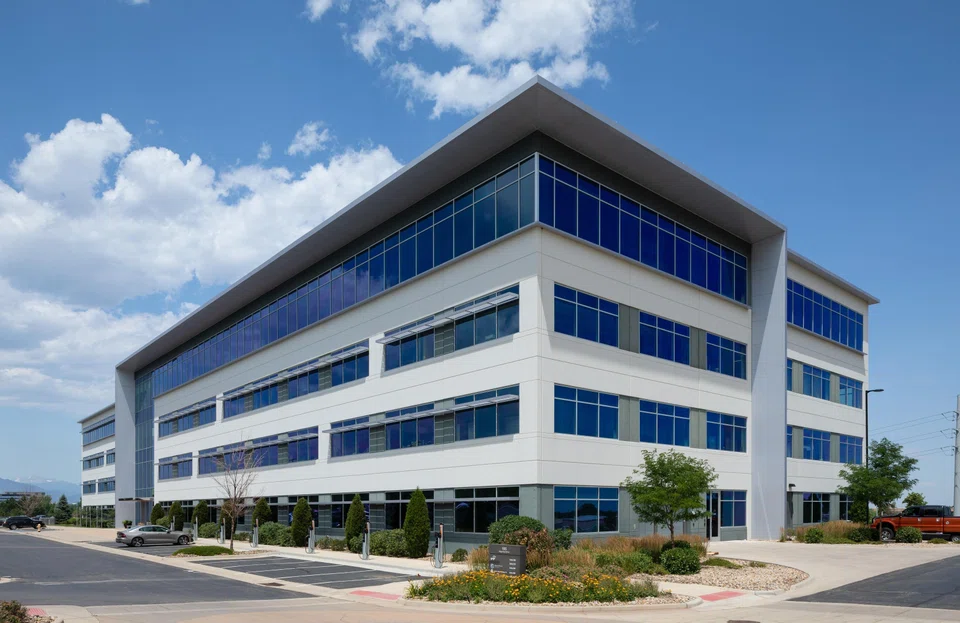
[SINGAPORE] The manager of Keppel Pacific Oak US Reit (Kore), said that it is resuming distributions early, with a distribution per unit (DPU) of US$0.0025 for the second half ended Dec 31, 2025.
The manager had suspended distribution payments since H2 FY2023 as part of recapitalisation plans to address capital needs and leverage concerns.
In an earnings briefing on Tuesday (Feb 3) morning, chief executive of the manager David Snyder said that this decision was made after “carefully considering the real estate investment trust’s (Reit) cash-flow position, capital commitments and liquidity needs”.
“While modest, this early resumption reflects our confidence in the underlying fundamentals of the portfolio,” noted Snyder, who is also the manager’s chief investment officer. He added that while the payout ratio remains conservative for now, it is expected to rise steadily over time to a “sustainable level” of around 80 per cent, with “substantial year-over-year growth”.
That would take several years, noted Snyder, given the current market conditions. “So we’re going to be careful and cautious as we move (forward).”
The latest distribution will be paid on Mar 30, after the record date on Feb 11.
Exploring other options
At the Tuesday briefing, Snyder also addressed plans for the Reit to enter a new asset management outsourcing arrangement (* see amendment note). In a bourse filing earlier that morning, the manager said it has begun late-stage negotiations with a new third-party US asset manager and is close to finalising a replacement.
Snyder cited concerns over the health of its current US asset manager, including recent layoffs and the inability to retain key talent that the manager requires for its operations.
He noted that the manager had been exploring options since the second half of last year. “We have, at this point, determined that the best path forward is to find another asset manager that’s hopefully a bigger (and stronger) organisation.” This could lessen the risk for the Reit, if a similar thing were to happen again, he noted.
The new asset management agreement is not expected to affect unitholders or distributable income, he said.
Separately, Pacific Oak Strategic Opportunity Reit, which indirectly holds a 6.1 per cent stake in Kore, is looking to liquidate its assets. It has contacted Kore’s manager about a potential sale of its units, though no disposals have occurred.
Snyder said that the manager has no visibility over the liquidation process, but expects a substantial – if not complete – sale of Pacific Oak Strategic Opportunity Reit’s units. “We hope that they’ll find some ways to do block trades, (or find) an orderly way to sell the units.” He added: “I would like to reiterate and reassure all unitholders that the manager remains totally focused on strengthening operations, leasing space and improving cash flow.
“Our commitment to delivering sustainable value to our unitholders remains unchanged, and we expect to continue to have the same people and tools available to use to (achieve) our goals.”
Keppel Pacific Oak US Reit will be renamed Kore US Reit to better reflect its operations, Snyder said. “(This) marks a refreshed chapter for us as we emerge from a challenging period, and concludes our recapitalisation plan with the early resumption of distributions.”
Resuming distributions
The manager’s resumption of distributions comes even as the office-focused US Reit posted a 3.1 per cent fall in distributable income to US$23.1 million for H2 ended Dec 31. This was down from US$23.8 million in the previous corresponding period.
Meanwhile, revenue was up 4.9 per cent in the half-year at US$75.6 million, from US$72.1 million in the year-ago period.
The manager attributed the decline in distributable income to higher finance and other trust expenses, which grew 8.6 per cent to US$16.9 million in H2 FY2025. This was partially offset by higher net cash property income (NPI), which jumped 10.3 per cent to US$40 million.
On an adjusted basis, excluding non-cash straight-line rent, lease incentives and amortisation of leasing commissions, NPI increased 5.5 per cent to US$42.2 million.
For the full year, revenue rose 2.5 per cent to US$150.2 million in FY2025, from US$146.4 million in FY2024.
NPI grew 3 per cent to US$80.7 million on the year. On an adjusted basis, NPI inched up 0.3 per cent to US$83.7 million.
Still, higher finance and other trust expenses – up 6 per cent at US$33 million – brought distributable income for FY2025 to just over US$43 million. This was 9.6 per cent lower than FY2024’s US$47.6 million.
Portfolio occupancy stood at 87.2 per cent as at end-2025, with about 622,000 square feet (sq ft) – or about 13 per cent of the Reit’s net lettable area – leased during the year.
Occupancy is likely to take a significant hit in the first quarter of 2026, with Meta vacating 125,000 sq ft of office space in February. This represents around 2 per cent of the Reit’s rental income.
“We’re actively working on backfilling these spaces,” said Snyder. “We are confident in ending the year with an occupancy (rate) in the mid-80s or higher.”
Additionally, he pointed out that no single tenant accounted for more than 4 per cent of the Reit’s cash rental income.
This brought its portfolio weighted average lease expiry by cash rental income to 3.8 years as at Dec 31, 2025. Rental reversion for the year was 6.8 per cent.
As at Dec 31, Kore’s portfolio value stayed firm at US$1.3 billion. After accounting for capital expenditure and tenant-improvement spending of US$39.5 million that was capitalised in FY2025, it had a net fair value loss of US$40.5 million.
Net asset value per unit was US$0.68, down slightly from the previous year’s US$0.69. The Reit’s aggregate leverage stood at 44.1 per cent, with an interest coverage ratio of 2.5 times and weighted average term to maturity of 1.5 years.
Kore’s average cost of debt, excluding the amortisation of upfront debt costs, was 4.5 per cent per annum. Including that, its all-in average cost of debt was 4.7 per cent per year.
The manager’s head of finance See Ai Lin projects an all-in interest rate of about 5 per cent at the end of 2026 and up to 5.5 per cent in 2027, assuming that the current secured overnight financing rate holds.
“We will probably expect further rate cuts, but because of all the (interest rate swaps) that will be dropping off, you will see an increase in (interest) rates,” noted See.
Upbeat over US market
Nonetheless, Snyder remains optimistic about the US office market.
He noted early but clear signs that the market was at the start of an expansionary cycle, with leasing activity reaching post-pandemic highs in the fourth quarter of FY2025 and two straight quarters of positive net absorption.
The CEO pointed to structural shifts driving the recovery: tenants flocking to high-quality, amenity-rich offices amid tight supply, and rising office attendance.
Given Kore’s robust fundamentals, high occupancy and disciplined operational and financial management, Snyder said: “We are confident (the Reit) is well-positioned to ride the upturn.”
Units of Kore fell 4.2 per cent to close US$0.01 lower at US$0.23 on Tuesday.
*Amendment note: An earlier version of this article incorrectly stated that the Reit had terminated its outsourced US asset manager. The article has been updated for clarity.
Decoding Asia newsletter: your guide to navigating Asia in a new global order. Sign up here to get Decoding Asia newsletter. Delivered to your inbox. Free.
Copyright SPH Media. All rights reserved.
TRENDING NOW

Once staunchly pro-China, Malaysian Chinese businesses are now distancing themselves from Beijing

Cliff Tan has 7 million followers and a 4-month waitlist. Why won’t he expand his business?

Grab CEO’s wife Chloe Tong on life with Anthony Tan and finding her purpose
Singapore F1 to proceed despite haze; no changes planned to outdoor entertainment

