

Analysts upbeat on Singapore’s office Reits, naming one ‘uniquely leveraged’ to tap rental upside
They name a few buy-rated stocks, and expect core CBD rents to rise

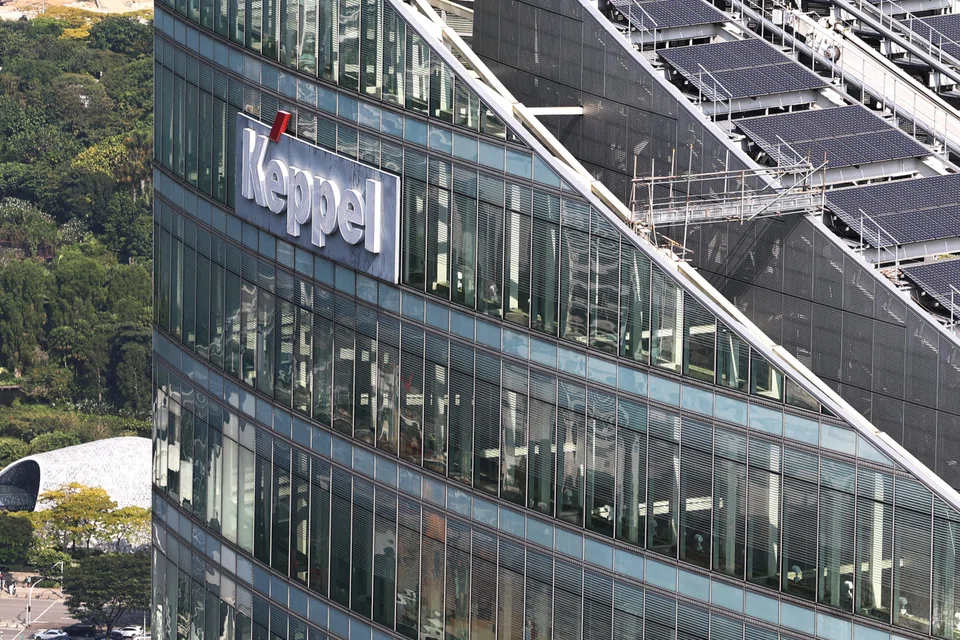
[SINGAPORE] The coming year is looking promising for office Singapore real estate investment trusts (S-Reits), said analysts.
The sector has begun to see “tangible improvements in capital management metrics as expensive hedges mature and refinancing activity accelerates”, said DBS analysts on Monday (Dec 8).
“This decline will provide renewed financial flexibility for asset enhancements, share buybacks, and portfolio recalibration,” said the research arm.
Morningstar equity analyst Xavier Lee was also positive on office S-Reits in a Tuesday report, flagging artificial intelligence (AI) as a net positive for job creation – and thus office demand – while stating that office leasing weakness was likely transitory.
Core CBD rents to rise, vacancy to tighten
Singapore’s core central business district (CBD) has absorbed new supply “more rapidly than expected”, said DBS, which has meant the improving prospects are yet to be priced in.
A “robust” flight-to-quality trend, combined with sustained employment growth in the financial services and professional services sectors, has driven Grade A occupancy to around 95 per cent and elevated rents above S$12 per square foot per month.
Morningstar’s Lee noted that office demand slipped “slightly” in the third quarter of 2025, as occupants prioritised lease renewals over relocation. However, he viewed that as a “short-term pause” rather than a structural shift. “With interest rates trending lower and inflation concerns easing, we expect these macro tailwinds to support a recovery in leasing demand over the next 12 months,” said Lee.
The core CBD area is expected to have new supply of between 310,000 and 630,000 square feet annually until 2028, with no upcoming major office developments.
This means that rents in the area are projected to surpass the 3 per cent increase seen in the 2025 financial year, said DBS, with competition for high-quality spaces “set to intensify further”.



Lee echoed the sentiment, forecasting vacancy rates to tighten to 2.4 per cent by 2027 as existing and new supply, like from IOI Central Boulevard and Keppel South Central, is absorbed.
This will set the stage for a “strong acceleration in rent growth”, he added. “Any significant uptick in office demand should drive rents higher, benefiting CBD office landlords.”
Lee also pointed to AI as a net benefit to Singapore’s labour market, even if some functions are “displaced” by automation, due to a likely emergence of new enterprises and job opportunities driven by broader AI adoption and technological advancement.
The technology is also likely to serve as an enabling tool, said Lee, boosting worker productivity and output.
“Overall, we expect net job creation to positively affect office demand in the medium term,” he said.
Office S-Reits’ rebound in financial strength has also been ahead of DBS expectations, with financing costs already down by an average of 20 basis points over the past two quarters.
At the same time, interest coverage ratios have strengthened by around 0.2 to 2.7 times, said the research arm.
With about 30 per cent of sector-wide loans due for refinancing over the next two years and global benchmark rates trending lower, DBS said office S-Reits are “well positioned for a sharper decline in borrowing costs”.
Keppel Reit the top pick; other buy-rated names
Both DBS and Morningstar flagged Keppel Reit as their top pick in the office S-Reit sector.
DBS gave it a target price of S$1.10, S$0.07 higher than Keppel Reit’s closing price of S$1.03 on Tuesday.
Lee gave it four stars, despite stating it had no economic moat, as it had a “low” uncertainty rating. Its fair value price for the Reit was S$1.16.
As at Sep 30, Keppel Reit was the most highly leveraged among the 10 S-Reits covered by Morningstar, including non-office S-Reits. This was noted as a positive by Lee, who expected highly leveraged Reits to gain some breathing room with the interest rate pivot underway.
Meanwhile S-Reits with lower leverage will be “well-positioned” to capitalise on reduced borrowing costs and pursue growth through acquisitions, he added.
DBS echoed the view, stating that Keppel Reit is “uniquely leveraged” to capture the next phase of rental upside with over 78 per cent of its portfolio concentrated in Singapore’s most supply constrained office precincts.
“Keppel Reit is best positioned to benefit from strengthening CBD cycle. With over 78 per cent of its portfolio concentrated in Singapore’s most supply constrained office precincts, Keppel Reit is uniquely leveraged to capture the next phase of rental upside,” it said.
The S-Reit’s occupancy rate of more than 95 per cent provides a “strong advantage” in negotiating for higher rents amid tightening vacancies, added DBS.
At the same time, it exhibits the “highest refinancing exposure” and the “lowest share of fixed-rate debt” within its peer group at 65 per cent, positioning it as the prime beneficiary of declining funding costs, said the research arm.
Not only that, DBS’ analysts said that stable long-term leases in Australia mitigate its downside risks, reinforcing the Reit’s position as “one of the most compelling” office S-Reit investment opportunities in the current market.
DBS’ other buy-rated counters include CapitaLand Integrated Commercial Trust, Mapletree Pan Asia Commercial Trust, OUE Reit and Suntec Reit.
Decoding Asia newsletter: your guide to navigating Asia in a new global order. Sign up here to get Decoding Asia newsletter. Delivered to your inbox. Free.
Copyright SPH Media. All rights reserved.
TRENDING NOW

LTA proposes combining car COE categories, adding rebate-surcharge system

StarHub to acquire MyRepublic’s mobile business amid ongoing telco consolidation

DBS, OCBC, UOB rout lops billions off STI as inflation, rate concerns spook investors

Grab CEO’s wife Chloe Tong on life with Anthony Tan and finding her purpose

