S-Reit DPUs remain weak in Q1 but sector expected to ride out interest rate woes
Analysts say most rated S-Reits have sufficient buffers to withstand a prolonged period of elevated rates

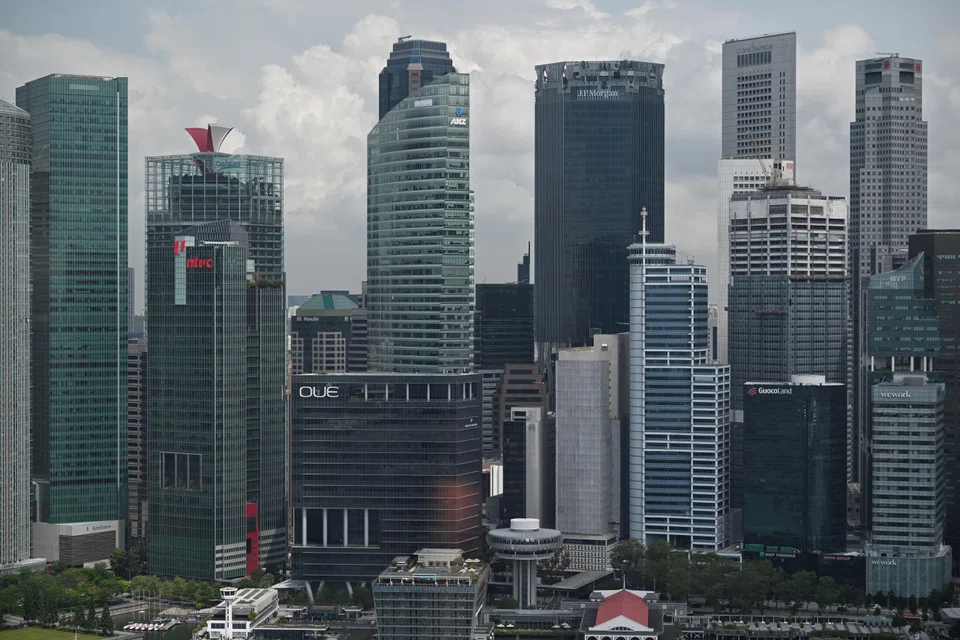
REAL estate investment trusts (S-Reits), including property trusts, logged a sluggish performance in the first quarter of 2024 as sector headwinds of high interest rates and a strong Singapore dollar continued to weigh.
Of the 14 trusts that provided distribution per unit (DPU) data during their latest results or business updates, 11 reported year-on-year declines during the latest reporting period, data compiled by BT showed.
Analysts say the subdued showing was in line with expectations, but some also believe that the sector may be in a better position to ride out the higher-for-longer rate environment.
“Sector DPU and net asset values remain under pressure which is in line with expectations despite ample support from divestment gains, realised foreign exchange gains, rental supports and non-cash fees,” Maybank analyst Krishna Guha said.
Meanwhile, Darren Chan, senior research analyst at Phillip Securities, said it was no surprise that most Reits were impacted by higher year-on-year finance costs.
“As a result, distributions have been impacted despite improving operating performance,” he said.
Just three S-Reits – Parkway Life Reit , Mapletree Pan Asia Commercial Trust (MPACT) and Mapletree Industrial Trust (MINT) – reported year-on-year improvements to DPU in the latest reporting season.
Most Reits and property trusts did not disclose distribution details in their quarterly updates.
Parkway Life’s DPU for the first quarter rose 4 per cent, while MPACT’s and MINT’s fourth quarter DPU were up 1.8 and 0.9 per cent, respectively, amid higher revenue and net property income.
Other Reits on the Straits Times Index (STI) that reported distributions this quarter showed declines.
Mapletree Logistics Trust (MLT) fourth-quarter DPU fell 2.5 per cent, while Frasers Centrepoint Trust and Frasers Logistics & Commercial Trust also saw DPU decline 1.8 and 1.1 per cent, respectively, during their fiscal first half.
“The shift in interest rate expectations has pushed out hopes for a quick reboot to the S-Reits sector. However, we are seeing financial metrics stabilising on margins, despite volatility in interest rates,” said HSBC Global Research analysts Joy Wang, Rayson Khoo and Gokulapriyan V.
They added that most S-Reits have reported resilient operations in Q1 2024, with certain metrics such as reversions coming in stronger than expected
Around two-thirds of the Reits and property trusts that reported revenue showed better performance compared to the previous year, data compiled by BT showed.
“Operational performance has been mixed, in my view,” Guha said. “Positive reversion is the bright spot and some managers have upped the guidance on reversion for the rest of the year, mostly in the retail sector.”
He also observed that logistics S-Reits have continued to deliver a strong set of reversions, but management has been guiding for some moderation.
“However, a key concern is occupancy, which has slipped for offices and the industrial sector both in Singapore and overseas,” he said.
Phillip Securities’ Chan observed that retail and office rental reversions for the first quarter had exceeded expectations.
“Other than the potential interest rate cuts later this year, we are waiting to see whether the surprisingly high rental reversions for retail and office can be sustained into the second half 2024,” he said.
S-Reits with Singapore office exposure, such as Keppel Reit , Suntec Reit and OUE Reit, reported higher revenue in the first quarter. However, Suntec Reit reported a 1.8 per cent decline in DPU, while Keppel Reit’s distributable income was unchanged.
The Reits also reported positive rental reversion, but analysts are more cautious on the outlook for the Singapore office sector.
“Despite a U-turn in Grade A office rents in Q1 2024, we remain cautious on the Singapore office sector and expect a prolonged down cycle with rental declines pushed more into 2025,” the HSBC analysts said.
They observed that a lack of new demand together with a structural shift in space requirements will eventually drive the decline in rental as vacancies start to increase in late 2024.
“Nevertheless, Singapore is one of the better performing office markets globally and should continue to attract investment capital.”
Balance sheet optimism
While higher interest rates are likely to continue weighing on distributions, analysts believe that most S-Reits’ balance sheets remain sufficiently healthy.
Analysts from Fitch Ratings said they expect most rated S-Reits to have sufficient buffers to withstand a prolonged period of elevated global interest rates.
“Most rated S-Reits had strong earnings before interest, taxes, depreciation and amortisation (Ebitda) interest coverage ratios in the quarter, providing a buffer against higher interest rates,” said Hasira De Silva, senior director at Fitch Ratings. “We expect coverage to fall to around 3.5 times in FY24/FY25, then rebound in the following year as interest rates moderate.”
Fitch Ratings noted that most trusts have low gearing – below 40 per cent – while many issuers keep the majority of debt on fixed rates, with a staggered debt maturity.
They noted that S-Reits with sponsors that have global property investment and asset management capabilities are driving mid-term cash flow growth by reconstituting their portfolios away from non-core assets, into newer properties or asset-enhancement initiatives (AEIs).
“The efforts will support valuation gains and mitigate pressures from higher cap rates,” they said, noting that these include MINT, CapitaLand Ascott Trust (Clas) and Cromwell European Reit .
The ratings agency added that lodging trusts such as CDL Hospitality Trusts , Clas as well as Reits with downtown shopping malls such as Starhill Global Reit would benefit from a continued tourism rebound and see organic cash flow growth.
“This will support the highest level of deleveraging among the S-Reits,” the analysts said.
Meanwhile, the HSBC analysts noted that a balance sheet analysis shows that S-Reits are “arguably in a better position compared to two years ago”, with sufficient headroom to finance their forward commitments organically, though some may see gearing cross 40 per cent.
“Though the sector is not totally out of the woods yet, we think S-Reits are in a better position with ‘higher for longer’ now a base case and book valuations adjusted lower with limited downside risks,” they said.
“We continue to favour stocks with embedded growth such as CapitaLand Integrated Commercial Trust . We also like Reits that have priced in most of the negative news and could see potential earnings upgrades such as MLT.”