

S-Reits could provide greater portfolio resilience as interest rates weigh on property plays

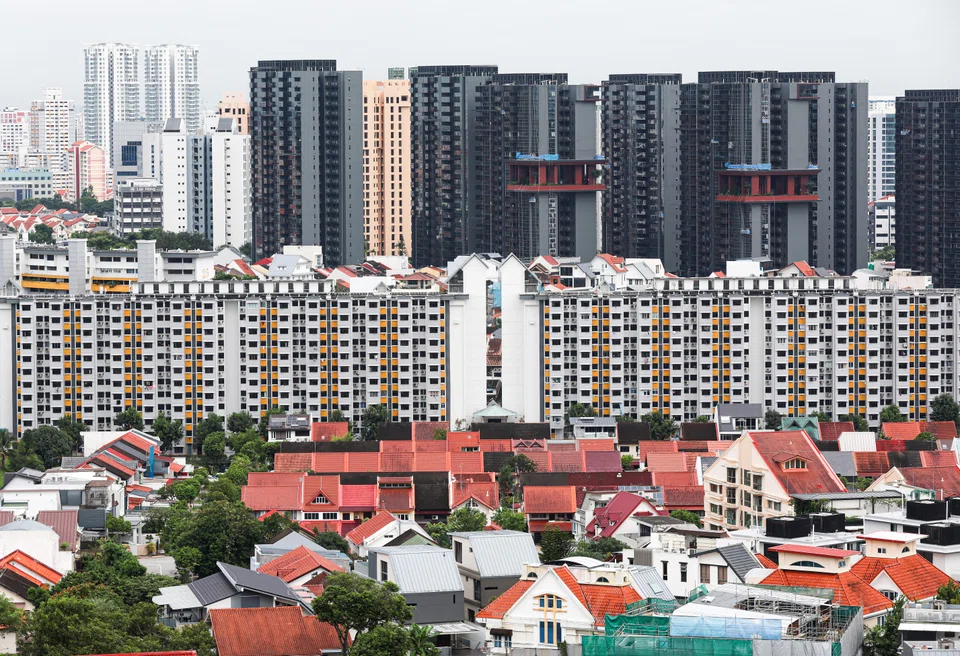
HIGHER interest rates have badly hurt the share prices of Singapore’s property-related stocks, but analysts believe opportunities are turning up among Singapore-listed real estate investment trusts (S-Reits).
Year to date, indices covering the local property sector are all in the red.
The iEdge SG Real Estate 20 Index is down 13.2 per cent so far this year; the iEdge SG Real Estate Developers and Operators Index and the iEdge SG Real Estate Index are down 18.2 per cent and 14.2 per cent, respectively.
Total returns to shareholders of individual property stocks have also been dismal.
According to Bloomberg data, Aspen Group, Yanlord Land, and Yoma Strategic are among the worst performers in the iEdge SG Real Estate Developers and Operators Index for the year to date, with total returns of between -30.8 per cent and -48.8 per cent.
Industry giants City Developments and CapitaLand Investment booked total returns of -20.2 per cent and -14.3 per cent, respectively.
The only two property-related stocks that have delivered a positive return so far this year are real estate agent PropNex and accommodation manager Centurion Corporation.
In comparison, the benchmark Straits Times Index has returned -0.04 per cent in the same period.
Market watchers polled by The Business Times said that property stocks are set to have a tough time in the near term. They added that companies in the sector may need to focus on rejigging their portfolios or consolidating among themselves.
Oriano Lizza, a sales trader at CMC Markets, noted that the current higher inflationary environment increases borrowing costs for developers, which in turn puts downward pressure on asset pricing.
External pressures are also at play. China’s manufacturing slowdown means materials output has fallen while costs of production are on the rise.
Property companies with overseas investments – specifically in countries such as the United States – also face forex headwinds.
The way Tiger Fund Management’s chief executive Jeremy Tan sees it, the outlook for local property stocks for the rest of the year is likely to “remain challenging”.
“We should continue to see pressures for real estate companies with rising interest expense in their debt refinancing decisions, especially due to the current high floating-rate environment,” he said.
Amid “soaring mortgage rates” and expectations of a weak economic environment ahead, Tan added that domestic property buyers may face affordability concerns and could postpone their purchase or upgrading decisions.
SGX market strategist Geoff Howie noted that interest rates and the forewarning of tighter financial conditions typically weigh on the global real estate sector.
Growth for the local residential property market is expected to be “subdued” due to a mix of property cooling measures, macroeconomic headwinds and a greater supply of new houses, Howie said.
S-Reits’ attractive valuations
The Reit sector faces similar challenges, but analysts believe it could be better buffered against the negative impact of interest rate hikes – at least in the medium term.
Ritesh Ganeriwal, head of investment and advisory at Syfe, said that S-Reits’ gains this year have been wiped out following the most recent Federal Reserve interest rate guidance.
The total return of the iEdge S-Reit Leaders Index was -4.2 per cent in the third quarter, he noted. As interest rates normalise next year, however, S-Reits’ prices are expected to stabilise.
Ganeriwal added that S-Reits are currently trading at “relatively appealing valuations”, with price-to-book ratio at 0.83 times. This is well under the 10-year average price-to-book ratio of 1.03 times.
Meanwhile, S-Reits are trading at an average dividend yield of about 7.5 per cent after the most recent sell-off. This represents a spread of more than four percentage points to the 10-year Singapore government bond yield, which is at 3.3 per cent.
“Historically, this spread differential has proven to be an attractive entry point for S-Reit investors,” said Ganeriwal, adding that investors of S-Reits should “remain patient” and invest in a diversified Reit portfolio.
Based on previous market movements, he estimated that S-Reits should be able to generate dividends of 5 per cent to 6 per cent, and an additional capital appreciation of 2 per cent to 3 per cent in the next five to 10 years.
Tiger Fund Management’s Tan also reckons S-Reits could make a “more resilient and attractive” option for investors over the medium term.
With the pressure of high interest rates expected to taper next year, he said that Reits could see a fall in their financing costs.
He added: “Dividend yield spreads should begin to appear more attractive for investors as benchmark rates fall.”
Lizza of CMC Markets, however, warned that Reits’ distribution per unit figures could face tougher headwinds in the near term.
“This may lead to a flight towards... higher-yielding safe-haven assets such as in the short-term bond market, as it remains in an inverted state,” he said.
Lizza added that he remains “neutral” on the outlook for Reits and property stocks for now, as several factors lie outside of the Singapore regulators’ control of the commercial real estate environment.
He pointed out, however, that developers will need to look at repositioning or rebalancing their portfolios to ensure they do not have too much exposure to global uncertainties. Developers would also benefit from focusing on “local market monetisation projects”.
“The next year or two will mark a phase of consolidation for the property sector,” he said.
TRENDING NOW

Government to bring forward raising of retirement age, give employers more financial support to create flexi-load jobs

If Europe goes to war, the fallout will be felt in East Asia

Former minister Maliki Osman, Revolut chairman join Asia Gulf Holdings advisory board

Small nuclear reactors could boost the Asean Power Grid: GE Vernova executive

