

Tempers flare at Sabana EGM as unitholders vote for 8 of 10 resolutions on trustee’s handling of internalisation

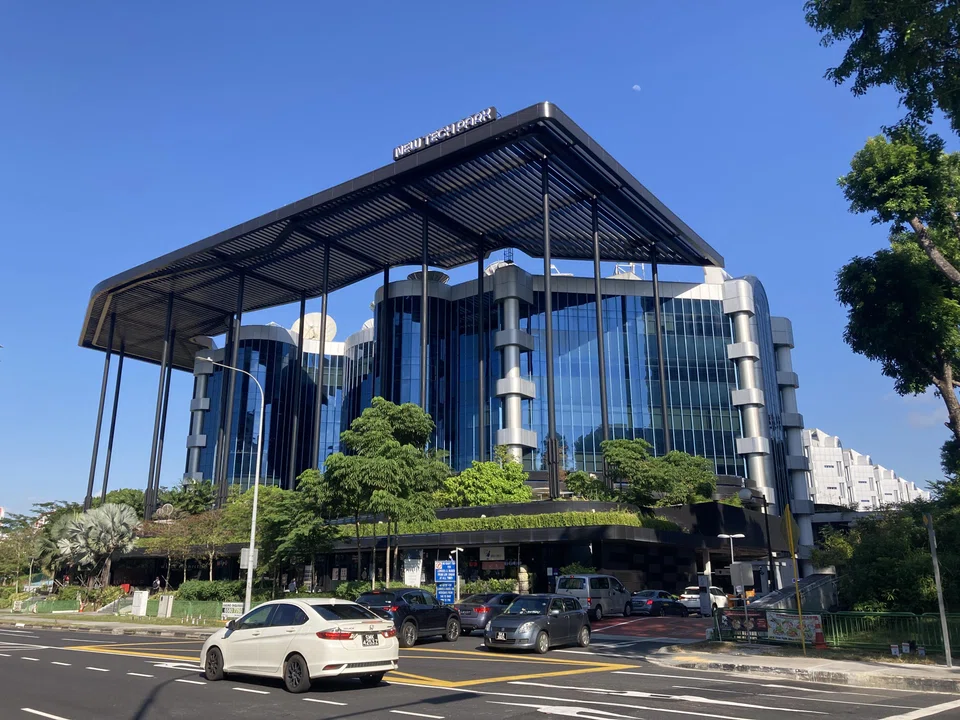
UNITHOLDERS of Sabana Industrial Reit have voted for nearly all the resolutions proposed by activist investor Quarz Capital Asia at a highly charged meeting that had some investors raising their voices at the trustee during the question-and-answer segment.
The 10 resolutions, tabled at the extraordinary general meeting (EGM) on Friday (Mar 8) and which were related to how the trustee should handle the internalisation of Sabana Reit, were all directed at the trustee of the real estate investment trust (Reit), HSBC Institutional Trust Services (Singapore).
The Sabana Growth Internalisation Committee, which was set up by unitholders including Quarz, first requisitioned for an EGM in December to direct the trustee on the internalisation process.
It said then that unitholders were highly dissatisfied and concerned about the trustee’s lack of progress on the process.
Unitholders voted for eight of the 10 resolutions tabled at the EGM on Friday, with between 56 and 58 per cent of votes in favour, so they were successfully carried.
The resolutions that unitholders were in favour of included directing HSBC Institutional Trust Services to form an internalisation committee which includes several Quarz employees.
Another resolution called for a maximum price of S$10 million to acquire the existing external manager within a month of the EGM.
The unsuccessful resolutions were the second and ninth ones. They related to the trustee being directed to provide written updates on the internalisation process every month, and for the trustee to disclose correspondence and a summary of the matters discussed with each owner or beneficiary of the Sabana Reit manager.
During the 90-minute EGM, tempers flared as some angry unitholders raised their voices while questioning the progress of the internalisation.
They called on the trustee to provide more quantitative details on the timeline required.
One investor demanded: “We have already spent S$3.2 million... and we have lost around six months. How (much longer) do we need to go (on for)? That’s something we need to know.”
Rahul Desousa, head of trustee and fiduciary services for Singapore at HSBC Institutional Trust Services, explained that the difficulty with providing timelines is that there are dependencies on external parties, such as the regulator and the court.
“We don’t want to mislead investors by committing to timelines that we can’t,” he said.
He also noted that the trustee is in the “final stages” of the internalisation process. “We’ve completed due diligence on the manager to understand the operations that they need. We’ve identified preferred candidates for the board, and we are in advanced stages of selecting key management roles.”
He also added that the trustee has sought waivers and clarifications from regulators on the internal manager. “We cannot emphasise this enough: shortcuts will not help. If we take shortcuts, skip steps, pretend certain steps don’t exist, we’re only creating risk for the Reit and risk for the proposal.”
But not all investors were satisfied with the explanations.
“What is your final stage? That is what we are asking. How much more money do we have to put in to support this?” one unitholder asked.
Others also asked the trustee to itemise the monies already spent, and provide details on the costs that had been paid to it.
The trustee noted that it is not customary to disclose an itemised bill, and it has made a disclosure in accordance with regulatory guidance.
Havard Chi, head of research at Quarz, also questioned the trustee on the nature of the regulatory waivers it has obtained.
“When did you (seek out) these waivers? When (were) these waivers given? What are the waivers given, and why are you not providing this (information) to unitholders?” he asked.
The trustee responded that it had intended to provide these details at the next EGM. “Regardless of the waivers, we still think trust-deed amendments are required,” Desousa said.
The amendment of the trust deed has been a point of contention in the internalisation process, with four resolutions at the EGM in relation to it, or the parties allowed to vote on it.
The trustee has held the view that such an amendment is needed for internalisation, requiring an extraordinary resolution, which has a 75 per cent approval threshold.
Quarz, however, disagreed. It previously said that this was an “impossibly high threshold”, and requiring a trust-deed amendment has a “serious and negative impact” on unitholders.
The trustee in January filed an Order 32 application with the High Court to seek declarations relating to such amendments.
After the meeting, details on the waivers were shared in a bourse filing. These included waivers of prohibitions for a Reit to invest in a manager’s securities, and a waiver of the requirement for a trustee to be independent of the manager, as the trustee would be the legal owner of an internal manager.
The EGM on Friday was the latest in a long-running attempt by substantial unitholder Quarz to internalise the management function of Sabana Reit.
In June 2023, Quarz requisitioned an EGM to pass two resolutions relating to the internalisation. It said that the cost savings to be reaped from the removal of the external manager would benefit unitholders; its letter also highlighted its concerns over matters of corporate governance.
However, Sabana’s manager, the trustee and sponsor ESR Group, had warned that the process was not so straightforward, as there were risks and uncertainty for unitholders.
Proxy advisers Glass Lewis and Institutional Shareholder Services sounded a similar warning previously, noting that there were uncertainties and adverse consequences that could arise.
The trustee also noted that the process would take a considerable amount of time – at least 12 months – and that costs would be incurred for the internalisation.
On Aug 7, 2023, unitholders of Sabana Reit voted in favour of internalisation, and both resolutions were carried.
But the process has not been straightforward.
Sabana Reit’s manager said in January that S$1.37 million in expenses were incurred in connection with and up to the requisition of the first EGM, most of it in legal costs.
Following the EGM, another S$3.27 million in expenses were incurred and accrued as of Dec 31.
The manager has also retained 10 per cent of distributable income in FY2023, in view of costs to be incurred during internalisation, and warned that further retention may be necessary in the coming years.
Shares of Sabana Reit last traded at S$0.36 on Thursday, before a trading halt was called on Friday morning.
TRENDING NOW
Prima to move out of historic Keppel Road flour mill building in 2028
Temasek-related Azalea, SeaTown, Seviora Capital to merge in 2027
Family offices see more tailored products, leverage ‘collective firepower’ for direct deal access

Singapore room rates soar, but hotels seeing mixed demand from F1 race and events

