S-Reits falter as investors weigh possibility of zero rate cuts in 2024
Analysts point out that changing expectations over the high interest rate environment has once again been a contributing factor for its underperformance

PRICES of Singapore-listed real estate investment trusts (S-Reits) have faced volatile trading in the past two weeks as interest rate expectations adjust following strong inflation data in the US.
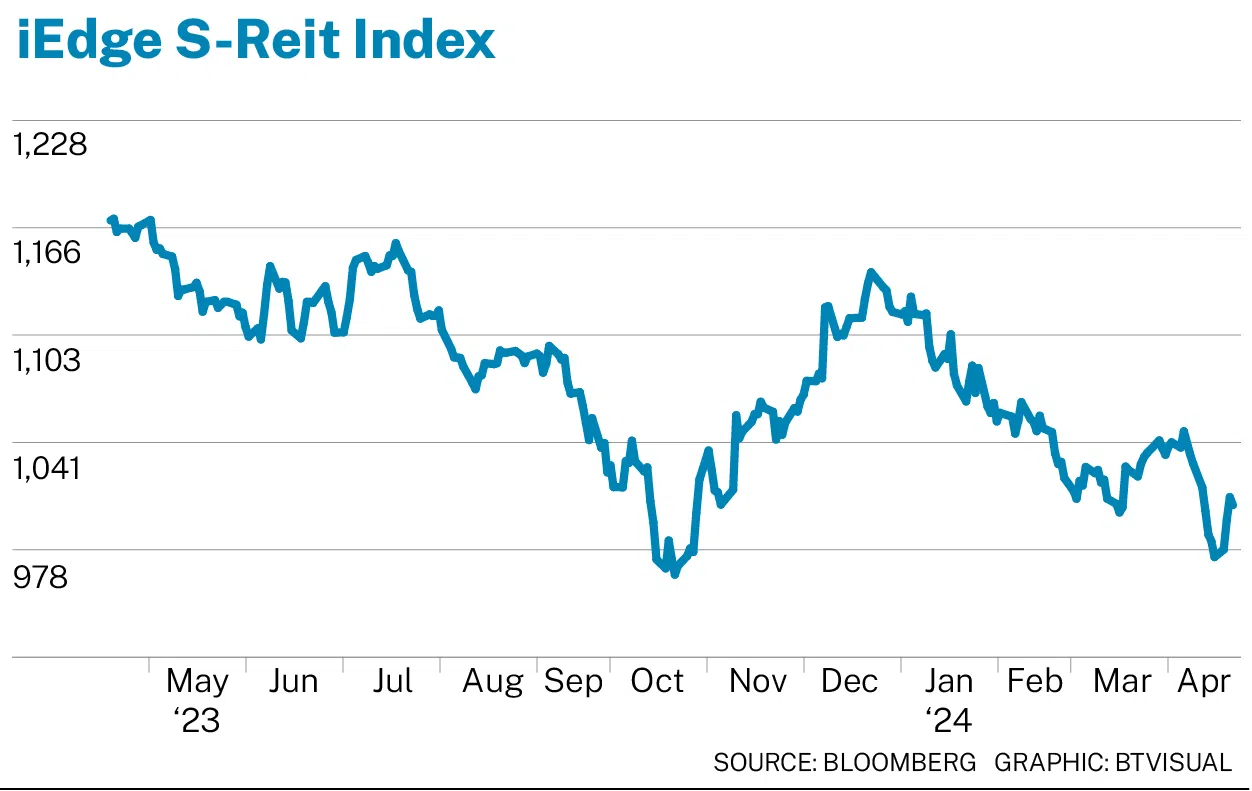
The iEdge S-Reit index sank to 974.08 on Apr 19, close to the multi-year lows registered in October 2023, before rebounding slightly to 1,005.27 on Apr 25.
Analysts point out that changing expectations over the high interest rate environment has once again been a contributing factor for the underperformance of S-Reits.
While the sector saw a robust rally in late 2023 on expectations of a series of rate cuts by the US Federal Reserve this year, that narrative has started to fizzle out on the back of sticky inflation in the US.
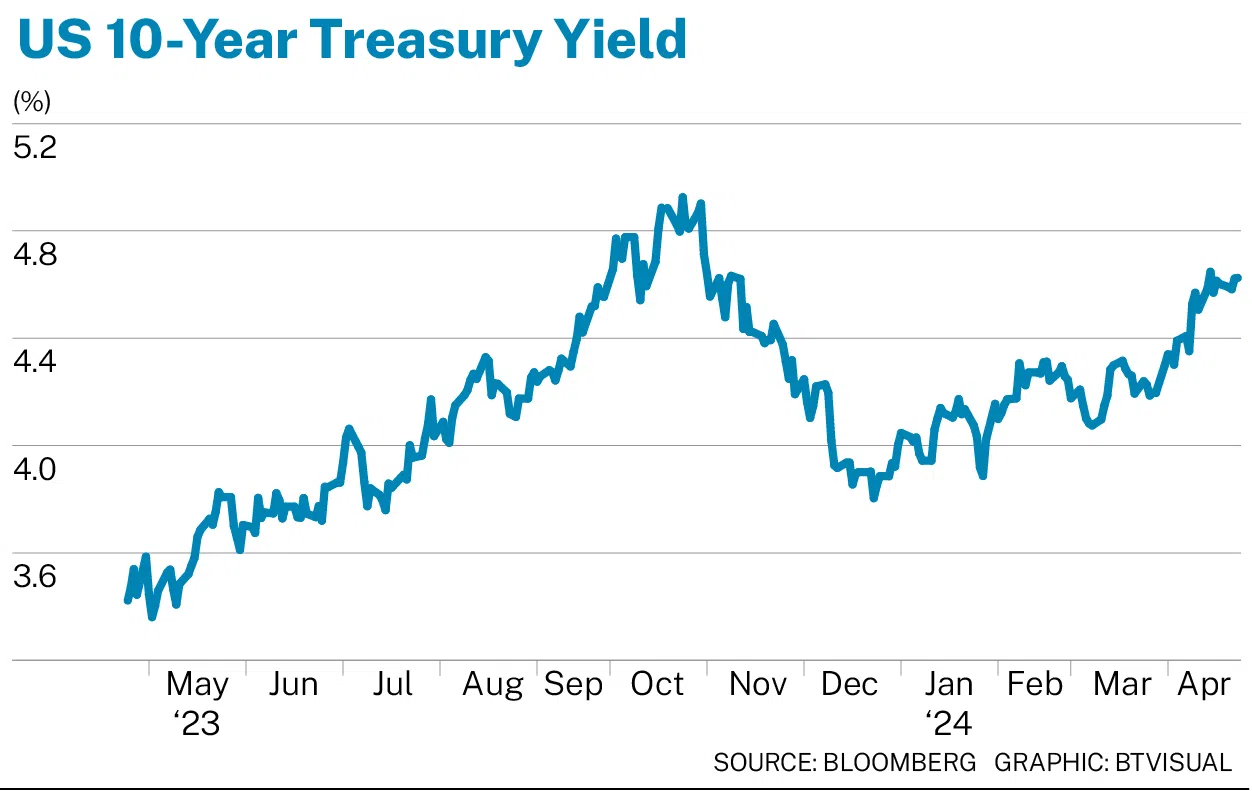
US 10-year Treasury yields have climbed from under 4 per cent at the start of 2024 to 4.64 per cent as at Apr 24, close to its year-to-date high. It remains below the peak of around 5 per cent seen last October.
“The key reason for the recent S-Reit sell-off is the change in the interest rate outlook, from market expectations of six to seven rate cuts at the start of the year to potentially one to two rate cuts,” RHB analyst Vijay Natarajan said.
The higher rate environment is a key factor that has an influence on the sector as higher financing costs result in lower distributions, and property valuations could also be influenced by higher capitalisation rates.
Meanwhile, the yield spread to risk-free instruments also narrows as rates rise, making Reits comparatively less attractive, he noted.
Carmen Lee, head of OCBC Investment Research, observed that the yield differential between S-Reits and Singapore-dollar bond yield has narrowed to around 3.3 per cent, compared to the 10-year average of around 4 per cent.
“Sticky inflation and still-elevated rates have led investors to switch to other investments, which are less interest-rate sensitive or offer higher growth potential. In addition, the escalating geopolitical uncertainty has also meant that risk appetite has come off, as seen by the recent surge in gold prices,” she said.
Lee added that the high rates have contributed to the underperformance of S-Reits versus other sectors. The FTSE ST All-Share Reit index, for example, is down 13.8 per cent for the year to April 22, compared to a 0.5 per cent decline in the benchmark STI ,and a 7.9 per cent gain for the FTSE ST All-Share Financials Index.
Rate path
Market expectations at the start of the year had been for around six rate cuts through the course of 2024, but analysts have since dialled back on this.
“With the US core CPI (consumer price index) coming in higher than market expectations for four consecutive months, this has moderated expectations of rate cuts in 2024,” Lee said.
“Market watchers have now pushed back expectations of Fed rate cuts in terms of both timing and depth. Based on current indications, economists are expecting two rate cuts in 2024, taking place in the second half of 2024.”
Similarly, DBS economists have also adjusted their rate cut projections to two through in 2024, while the economist team at RHB is forecasting just one cut later this year.
DBS Group Research analysts said this week that dialling back rate cut expectations would weigh on the market performance of S-Reits but boost Singapore banks.
“With US inflation heading lower but remaining sticky in the range of over 3 per cent in recent months, Federal Reserve chair Jerome Powell’s most recent comments have turned visibly more hawkish,” they observed.
“There is a likelihood that the central bank could maintain interest rates at the current level for longer than previously anticipated,” they said, adding that there is a chance that the Fed could potentially not cut rates at all in 2024.
“While not a base case, this scenario is certainly plausible if inflation remains stickier than anticipated.”
In such a situation, the analysts said they would be watchful for potential cap rate expansion risk for most asset classes, and the valuation of Singapore offices is one they are watching out for.
In the event of no rate cuts this year, the S-Reit sector could see a potential distribution per unit (DPU) decline persisting well into next year due to higher financing costs, RHB’s Natarajan said.
“Additionally, S-Reit prices could potentially decline by 10 to 20 per cent,” he added. “On the other hand, if more than two rate cuts materialise this year and continue into next year – a soft-landing scenario – we believe the sector could rebound by 20 to 30 per cent in the near-term.”
Portfolio focus
Amid the uncertainties in the sector, analysts believe investors may benefit from a more cautious approach, favouring quality assets.
Natarajan said investors could gradually add on to high quality, large-cap S-Reits on weakness in order to benefit from the upside as interest rate stabilises in the medium term. “Our picks remain CapitaLand Ascendas Reit, Keppel Reit, CDL Hospitality Trusts and Aims Apac Reit, “ he said.
Meanwhile, the DBS analysts said they prefer banks over Reits in the interim, as the banks’ high dividend yields of around 6.1 to 6.5 per cent continue to be attractive compared to an average yield of 6.5 per cent for S-Reits.
“In the scenario of no cuts in 2024, and heightened geopolitical tensions, the markets will likely seek safety in S-Reits with relatively healthier financial metrics such as low gearing levels and higher interest coverage ratios,” the analysts said.
“These refer to names within the retail and industrial subsectors over the hotel and office subsectors,” they added.
Nevertheless, DBS Group Research noted that its base case is still for two rate cuts in 2024, and it remains comfortable that underlying cash flows and property fundamentals remain landlord-friendly for most sectors.
Lee from OCBC said that investors should consider having a well-diversified and good geographic spread of Reits, which will be helpful in positioning for a recovery in the sector when rates eventually do ease down.
“However, as rates are expected to stay high for a while, there are limited near-term price drivers.”