Reits, tourism-related stocks top picks amid Singapore market’s resilience in 2024

Yong Jun Yuan
SINGAPORE stocks are expected to stay resilient in the coming year, amid expectations of easing interest rates and continued tailwinds from the tourism rebound. Market watchers said investors must be more selective in their sector choices, however, as the benchmark Straits Times Index (STI) is expected to perform only modestly in 2024.
Analysts who spoke to The Business Times said investors could see outperformance in sectors such as real estate investment trusts (Reits) and tourism-related counters.
According to UOB Kay Hian, Singapore’s blue-chip index – which closed at 3,214.40 points on Thursday (Dec 28) – is expected to finish at 3,290 points at the end of 2024. This is assuming the index constituents report an average 2.4 per cent earnings per share (EPS) growth for 2024, and that it trades at 12.5 times earnings and 1.04 times book value.
The analysts noted in a Dec 5 report that the STI was trading at 9.9 times their 2024 forecast earnings and at book value, which are meaningful discounts to the index’s long-term averages and compared with its regional peers.
RHB analysts believe the index’s EPS growth could come in at 4.5 per cent. “While we are constructive about the STI delivering positive returns for 2024, we maintain that the upward move for the index will be slow,” they said.
The STI is likely to be dragged down by a decline in earnings growth from the banking sector, which has a large weightage in the index.
“The banks could see peak net interest margins that may slow earnings growth,” said Maybank Securities head of equity research Thilan Wickramasinghe.
On the other hand, he said potential interest rate cuts down the line would be positive for local Reits as these would widen the spread between Reit yields and the risk-free rate.
Phillip Securities head of research Paul Chew also expects Reits to rebound as markets start to price in a monetary easing cycle next year.
RHB head of equity research Shekhar Jaiswal expects that investors might take their money out of banks to buy into Reits.
“Assuming we are already close to the peak of the interest rate hiking cycle and we do witness a soft landing on the growth front, interest-rate-sensitive sectors such as Reits would see the biggest benefits,” he said.
RHB in November upgraded the Reits sector to “overweight” from “neutral” and encouraged investors to opportunistically start building their positions.
“We recommend investors adopt a slightly more aggressive stance, with a balanced mix of industrial Reits for stable yields as well as office and hospitality Reits to ride on the recovery and rebound from the turn in the interest rate cycle,” the analysts said.
The brokerage also prefers Reits with high-quality sponsors as well as healthy balance sheets with gearing ratios of less than 40 per cent. Investors with higher risk appetites can also consider certain mid-cap and overseas Singapore-listed Reits to offer more upside due to their “bombed-out” valuations, the analysts said.
Among RHB’s top picks for the Reit sector are CapitaLand Ascendas Reit , Keppel Reit , Aims Apac Reit and CDL Hospitality Trusts .
Game on for tourism boost
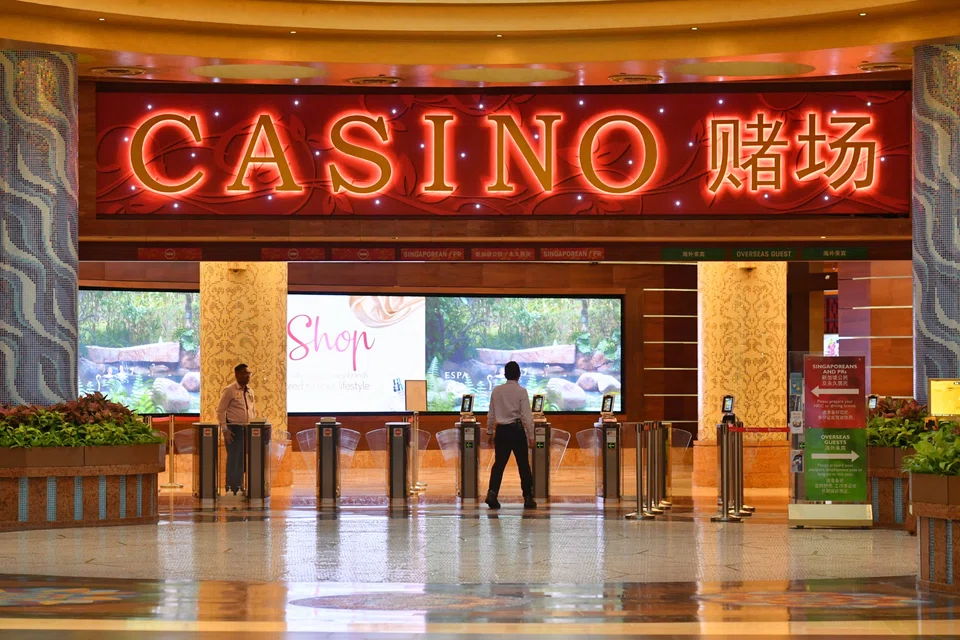
CGS-CIMB analysts are overweight on the gaming sector as they believe the integrated resorts would benefit from higher spending as more wealthy tourists visit.
Its analyst Tay Wee Kuang noted that the industry’s profitability surpassed pre-Covid levels this year, even though tourist volumes remained below 80 per cent of FY2019 levels.
He prefers Genting Singapore given its growing market share of VIP gamers. The casino tax rate on the gross gaming revenue for such gamers are lower, which makes them more profitable.
The potential for outbound tourism from China to pick up is also expected to benefit Singapore’s transport sector.
According to Maybank analysts, the strong travel demand could result in higher rail and taxi ridership.
Their preferred pick in the industry is land transport operator ComfortDelGro for its sustained earnings growth and strong balance sheet with net cash of S$500 million.
They also noted that taxi fares remain elevated due to a driver shortage, and that the company is actively investing in transport-related green energy businesses.
Another area of growth that the analysts are positive on is healthcare, as private healthcare operators have embarked on regional expansion, given the more mature local market.
Raffles Medical , for instance, proposed in October to acquire a majority interest in American International Hospital in Ho Chi Minh city for up to US$45.6 million, funded by internal resources.
“We believe these major M&A deals could help to unlock a sizeable Vietnamese opportunity, thus paving the way for further inroads into one of South-east Asia’s fastest-growing healthcare markets,” they said, adding that they are “sanguine” on Raffles Medical’s long-term expansion in China and Vietnam as it improves operating efficiency.
CGS-CIMB’s Tay is similarly bullish on Raffles Medical, preferring it over Q&M Dental Group as it is “more integrated across the healthcare services value chain, from primary healthcare services in general practice (GP) clinics to tertiary healthcare services in hospitals”.
He is also “overweight” on the healthcare sector and said that other healthcare peers in the region, such as IHH Healthcare , have focused on organic bed expansion in countries such as Malaysia, India, Turkey and Europe.