Relisted International Cement eyes demand in rapidly developing countries
It is looking to set up more cement plants in Central Asia, Africa and South-east Asia
Singapore
INTERNATIONAL Cement Group (ICG), formerly Compact Metal Industries, is looking to set up more cement plants in Central Asia, Africa and South-east Asia, targeting especially regions that benefit from China's Belt and Road initiatives.
ICG, which had its Mainboard listing recently transferred from Compact Metal following a scheme of arrangement, relisted on March 8, 2019, and is holding a listing ceremony at SGX Arena on Friday.
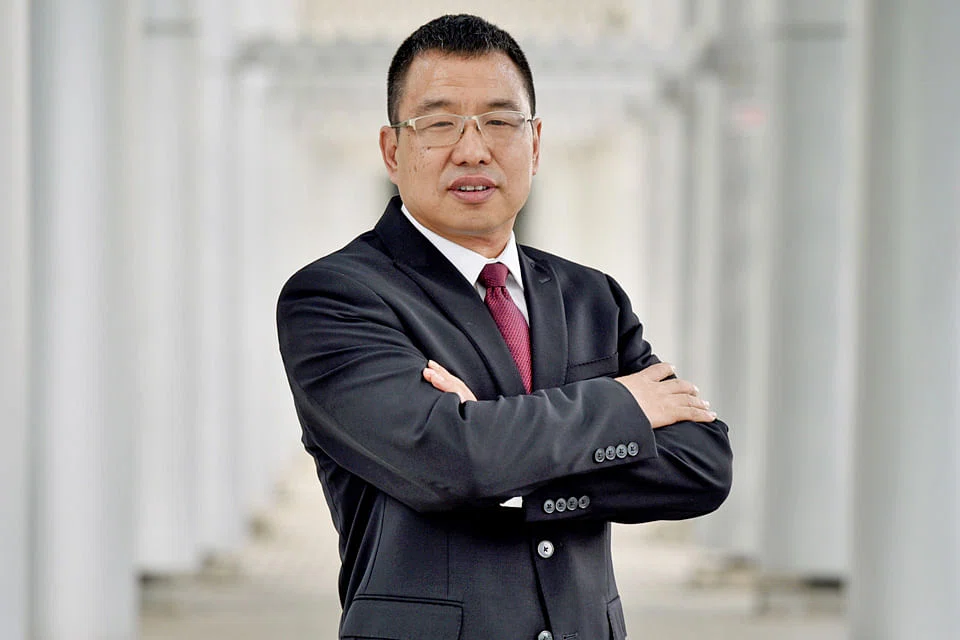
Group chairman Ma Zhaoyang told reporters in an interview earlier this week that the company considers three criteria before entering a market or setting up a plant in a locality. These are: the presence of limestone quarries for access to raw materials, proximity to a market, and high selling prices.
In most places where the production technology is mature and the market is saturated - including in China - there is an oversupply of cement. Prices are fixed, which raises competition among cement makers and narrows margins.
Currently, ICG owns and operates the largest cement plant in the Khation Region in Tajikistan. The group is also currently building its second plant in Almaty, Kazakhstan, and recently announced its intention to buy another plant in Namibia, Africa, from Schwenk Zement International for US$104.4 million.
This year, it expects its Tajikistan plant to continue performing well, if not better. In 2018, the plant maxed out its annual design production capacity to produce 1.2 million MT of cement, better than originally expected. The plant is now expected to hit its maximum annual production capacity of 1.35 million MT after additional new equipment has been installed.
Realistically speaking, too, when ICG finishes the construction of its plant in Kazakhstan in the third quarter this year, and completes its plant acquisition in Africa later this year, the group should see an increase in revenue and earnings contributions from both assets.
ICG's cement business accounted for 83 per cent of the group's revenue in 2018. It posted a net profit of S$26.3 million, compared with S$361,000 in the year-ago period, on the back of a 178 per cent jump in group revenue to S$114.1 million.
In the countries that it operates in, it tends to supply cement for government projects such as power plants, dams and highways. It also sells bag-form cement to households for their own home construction.
ICG is negotiating several investments and joint ventures at the moment which it is not able to disclose, but Mr Ma said that it has plans to enter new geographies in South-east Asia such as Indonesia and the Philippines. He added that compared to building a new cement plant, buying a commercially operational plant will eliminate project risk during the construction period.
Currently, cement prices in Tajikistan average about US$70 per MT after tax, having come down from their peak of US$110 to US$130 per MT, partly due to competition from Chinese state-owned enterprise Huaxin Cement which also operates in the market and the 30-per-cent devaluation of the Somoni currency since 2016. Mr Ma believes cement prices in Tajikistan have bottomed out and will only go up in future.
Cement prices in Indonesia and the Philippines both average around US$100 per MT. Both countries are riding on the back of rapid infrastructure development, which drives demand.
"We haven't raised funds from the market so far because we have to look for projects that are close to quarries and markets, but we have decided to list because for cement production firms, you definitely need to list to grow larger," he said.
Upon completing its ongoing construction and acquisition, ICG's annual production capacity should increase to 3.4 million MT for all three plants combined.
"You can't expand without public funds; to depend on your own funds would be wholly insufficient," he said, citing listed examples such as Switzerland's LafargeHolcim, Germany's HeidelbergCement Group, and China's Anhui Conch Cement.
For foreign cement makers with annual production capacity of 100 million MT, comprising several plants of various capacities, capital expenditure can be US$10 billion. The business is a very capital intensive one, he said.
Compact Metal - what the company used to be called - was a struggling aluminium product supplier that was placed on the watch-list in 2015 after posting three straight years of losses with market caps below S$40 million.
An internal restructuring led Compact Metal to enter a scheme of arrangement to shift its shares and listing status to ICG, an investment holding company owned by executive directors Mr Ma and Zhang Zengtao.
The company diversified into the cement business in 2015 when shareholders passed a resolution at an extraordinary general meeting to allow it. The group then acquired a 65 per cent stake in the Tajikistan cement plant in 2017 from a company controlled by Mr Ma and Mr Zhang.
Both men, with prior experience in the cement business, became controlling shareholders of the company in late 2014 and joined the board. The 2017 acquisition further boosted their stakes in the company as the consideration was paid in the issuance of new company shares.
Currently, Mr Zhang and Mr Ma own 3.84 and 2.07 per cent stakes in the company respectively, while Victory Gate Ventures, 70 per cent owned by Mr Zhang and 30 per cent by Mr Ma, is the largest shareholder at 79.45 per cent, according to Bloomberg data.