Resurrected bull market faces earnings test this week
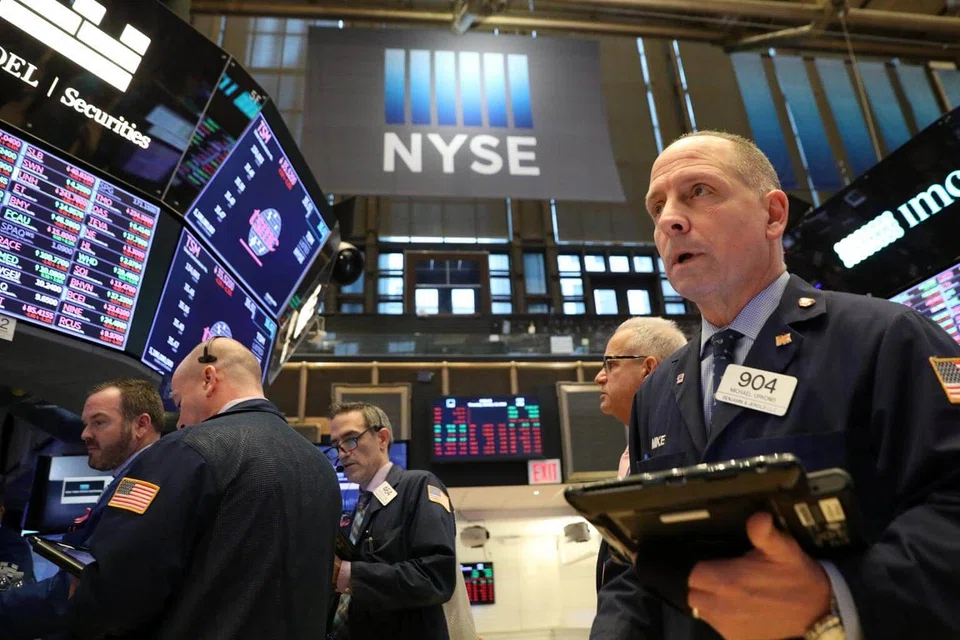
THE bull market's resurrection faces an earnings test this week.
US stocks rose last week, completing their strongest three-week run in more than two years as progress in talks between the US and China brought the bull market back from the dead.
On Dec 26, the Dow Jones Industrial Average, which was a hair's breadth from the 20 per cent peak-to-trough decline that defines a hip index, has risen by roughly 9 per cent. Measures of more US-focused small and mid-cap stocks have risen even more sharply.
This week, earnings season will reveal whether there's enough left in the corporate tank to drive major indexes back to new highs.
Fourth-quarter earnings for the Standard & Poor's 500 corporations are expected to rise 15 per cent and revenue a modest 5 per cent, according to a review of Wall Street targets by research firm Refinitiv.
One brokerage said optimistic earnings reports would be necessary to keep stocks moving higher.
"We think investors are at 0 per cent growth so guidance better than that might keep the good times rolling," said strategists at brokerage Jefferies in a note to clients.
There have already been several high-profile warnings about an earnings slowdown, but they have done little to dampen the post-holiday market spirits.
Apple's warning that weak demand in China would cause it to miss revenue targets caused a major selloff. A week later, Samsung issued a similarly gloomy warning.
American Airlines echoed a warning from Delta Air Lines, suggesting that travellers are pulling back on their plans. Again, the stock market took it in its stride.
Shares of Macy's fell, almost wiping out their surprise gain for 2018, after the department store said growth in the pivotal holiday shopping season lagged expectations.
JCPenney shares also fell as investors feared that it would follow household names like Sears Holdings into bankruptcy courts.
Yet the consumer services sector was largely unchanged. One strategist said investors did not view the holiday shopping season as a bad one, but rather were singling out companies whose business models may not be keeping up with the mixture of digital and physical presence that modern shoppers are seeking.
"Target had very strong numbers so did Bed Bath & Beyond...both had a pretty good online strategy," said Oliver Pursche, chief market strategist at broker-dealer Bruderman Brothers, referring to two other big chains.
"It's too early to tell (if the holiday season was successful), but my gut tells me it's going to come down to business-model differentiation."
This week, the largest US banks such as Wells Fargo, JPMorgan Chase and Bank of America will reveal whether the slide in interest rates and spike in volatility took their toll on their profit margins as they report fourth-quarter earnings.
The banks will be able to reveal if market and political worries are affecting financial decisions when they report loan volumes.
Quarterly updates from the banks and other corporations could also provide insight on whether the partial government shutdown, already the longest on record, is starting to have an impact on consumer spending or corporate plans.
With 800,000 federal employees going unpaid or having paychecks delayed, "that adds strain, a relatively small strain, given the population but strain nonetheless", said Mr Pursche.
"They shut down the government, which shuts down national parks; it's starting to impact travel and tourism. Those are big ticket items and it has a trickledown effect."
The other elixir that awoke the bull market, of course, was the change in tone from the Federal Reserve.
The December crash was merely a wobble until Dec 19, the day that Fed chairman Jerome Powell gave a press conference that struck markets as defiantly pro-rate hike.
Central bankers have spent much of the intervening month walking back that impression, reassuring markets that they are mindful of financial conditions and may well hold off on rate hikes until those conditions have settled down.
"Since Mr Powell used the word 'patient' last week when referring to the Fed's approach to hiking interest rates, stocks have gained five straight days," noted Ryan Detrick, senior investment strategist at brokerage LPL Financial last Thursday. Mr Powell's shift ended a "big disconnect between what the Fed was saying and what markets believed".
The combination of Mr Powell's apparent change of heart, strong jobs data and the statements of progress from both US and Chinese trade delegations caused the recovery in stock prices, said Quincy Krosby, chief market strategist at Prudential Financial.
Developments in any of these areas - Fed policy, data, and trade negotiations - will continue to hold sway on the stock market.
"Nobody is expecting this to be finished immediately," said Ms Krosby, referring to the trade negotiations. "For the market, at least, it's moving in the right direction."
Mr Pursche and others acknowledge that a decade of torrid growth for the earnings and share price of companies like Apple is unlikely to be followed by another such decade. The bull market could still survive, in a less raging style.
"You can make the argument that you're not going to see the type of returns out of Apple that you had in the past, sure," said Mr Pursche. "That's very different to suggesting that it's downhill from here."