

For retail Reits, domestic spending can mitigate absence of tourist dollars
DBS analysts see sectors like fashion and apparel, electronics, and F&B benefiting in coming months as Singaporeans open their wallets

Singapore
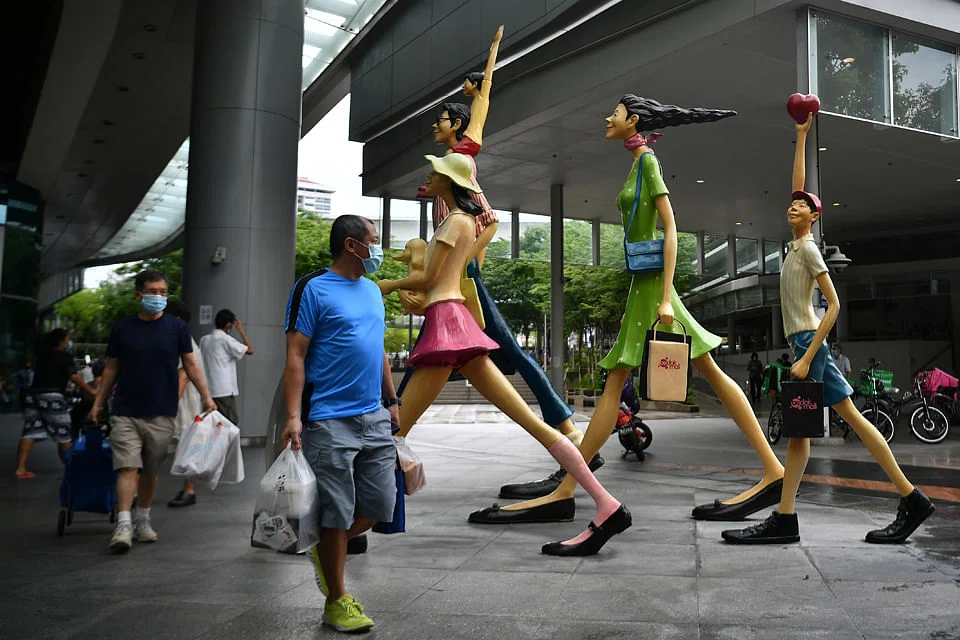
DBS Group Research believes retailers and mall landlords in Singapore can capture a significant part of outbound expenditure by locals, and this will more than compensate for the lack of tourist spend in 2021.
Given that Singaporeans are still unable to travel due to Covid-19-related restrictions, what they usually spend overseas may now be diverted to the domestic scene instead. Retail landlords, including Singapore-listed real estate investment trusts (S-Reits), should thus capture this "lost opportunity" from locals while tourist shopping traffic is still sparse, wrote DBS analysts on Wednesday.
Singaporeans forked out US$24.5 billion in outbound expenditure in 2017. That's equivalent to about 73-75 per cent of the total retail sales value that Singapore retailers derived locally. It also far outweighed tourist retail spending, which made up 20-25 per cent of the city-state's total retail sales derived in that year, according to DBS's estimates.
With locals' travel spend being triple that of tourist retail receipts, DBS believes some of the travel savings this year and pent-up demand from Singaporeans could be reflected in more domestic shopping instead.
"We see opportunities to be captured within the fashion and apparel, electronics, and food and beverage sectors, as consumers open their wallets in the coming months," said analysts Geraldine Wong and Derek Tan.
In addition, retailers' ongoing consolidations can be an opportunity for landlords to tweak their tenant mix and "right-size" their exposure to department stores and brand representatives, according to DBS. This will allow landlords to bring a refreshed offering and stay relevant.
For instance, the closure of department stores was widely viewed as a risk to mall owners, given their chunky retail plots and anchor tenant positions. But DBS sees opportunities in this arena for luxury beauty booths owned by brands such as Chanel. Such beauty brands, previously represented by department stores, can now venture out on their own to open physical storefronts. "We see this as a net positive and believe that selected malls across the island that enjoy strong traffic and sales will benefit from this trend," DBS said.
Its top picks in the retail S-Reit sector are CapitaLand Integrated Commercial Trust (CICT), Frasers Centrepoint Trust (FCT), Lendlease Global Commercial Reit and CapitaLand Retail China Trust (CRCT).
Valuations support a positive weight on the sector, the research team said. It recommends investors stay invested in its selected retail S-Reits, given the "cyclical upturn in sentiment coupled with attractive valuations at -0.5 time standard deviation and a robust two-year DPU (distribution per unit) compound annual growth rate of 13 per cent (FY20-22)".
Retailers will continue to rationalise their operational footprints while malls need to adapt to the new retail ecosystem amid structurally higher online spending. This also means retailers are handpicking their physical storefronts to maximise visibility and sales, said DBS.
Against this backdrop, malls owned by CICT, FCT and Lendlease Global Commercial Reit will likely emerge as the winners as they can attract tenants to maintain occupancies in the longer term, according to the analysts. DBS expects the three S-Reits' portfolios to recover ahead of the rest of the sector and deliver higher-than-industry occupancy rates.
On Wednesday, DBS also maintained its "buy" call on CICT and raised the target price to S$2.50, following the merger of CapitaLand Mall Trust and CapitaLand Commercial Trust to form the combined entity.
CICT is "big, cheap and fresh", trading at close to one-time price to net asset value, the analysts said. And with forward yields of about 6 per cent, CICT offers the highest yield among its large-cap peers, which are trading at about 5 per cent yield.
As the largest S-Reit, CICT is "too big to ignore", and its integrated commercial assets are set to drive synergistic value from its existing portfolio, DBS noted. Moreover, its size offers a bigger platform and opportunity to grow with acquisitions of integrated developments, led by the rising global trend of live-work-play.
CICT units were up S$0.04 or 2 per cent to close at S$2.08 on Wednesday.
READ MORE: Embattled S-Reits headed for slow recovery next year
Decoding Asia newsletter: your guide to navigating Asia in a new global order. Sign up here to get Decoding Asia newsletter. Delivered to your inbox. Free.
Copyright SPH Media. All rights reserved.
TRENDING NOW

Singapore identifies 7 firms responsible for haze fires, notices issued urging action: Grace Fu

Philippine power giant First Gen rebuffs foreign offers, plans up to US$2.6 billion in expansion
DBS remains analysts’ pick ahead of Q3 earnings after Singapore banks’ share slump
Indonesia imposes US$116 million in fines over manipulation of Sinar Mas, Prajogo-linked stocks

