

Revolut aims for higher compliance standards as it seeks expansion in Asia
Firm plans to make Singapore its regional hub and to innovate and develop new products here
Singapore
FINTECH Revolut has amped up efforts in boosting compliance standards, which it sees as necessary for regional expansion.
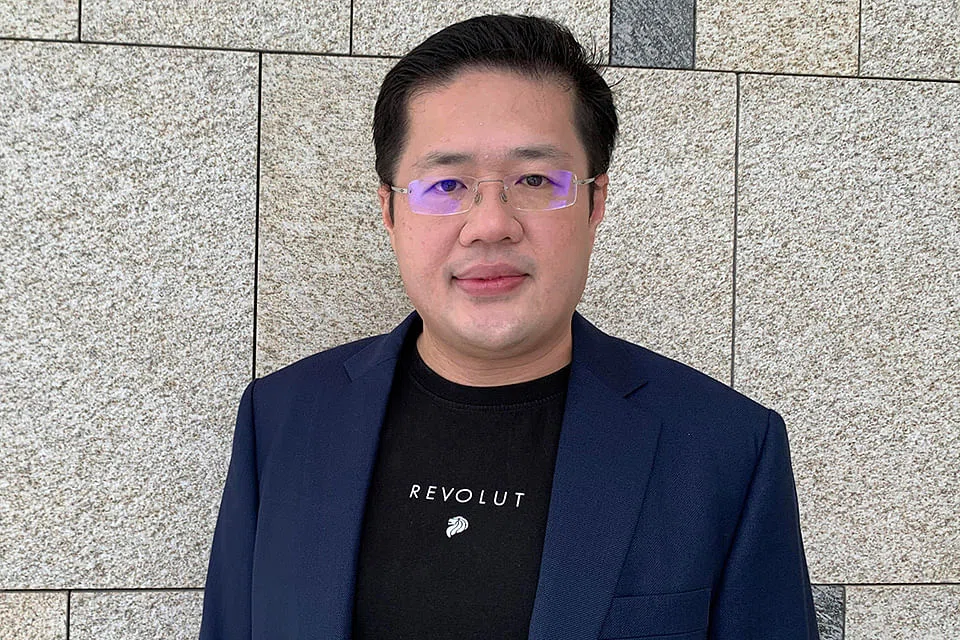
One of its most senior hires is Rayson Tan, who recently moved from Credit Suisse to join the payments fintech as its new chief compliance officer for Singapore.
"Regulations have become more important in shaping business strategies and models. How we respond to these regulations, and whether we have an effective compliance system in place, can be a true differentiator (among our peers)," Mr Tan told The Business Times.
Putting more emphasis on compliance standards has been a global undertaking for Revolut, amid reported questions over the quality of some of its compliance operations.
Amid this, it has appointed the former co-chief executive of asset manager Standard Life Aberdeen, Martin Gilbert, as its first chairman.
Mr Tan, who joined to try something new after over two decades of experience in banks such as UBS and Deutsche Bank, said that as Revolut scales up in Asia it will lean on its in-house risk and compliance systems to build tailored solutions for itself.
Revolut has built an in-house fraud detection system that can flag a possible fraudulent transaction "within milliseconds", he said. The affected user is then notified automatically via the Revolut app to verify the transaction.
"Developing this system in-house gives our customers the ability to, very quickly, verify the transaction on their smartphones and reduce fraud losses on our end," said Mr Tan, without specifying the fintech's current fraud-loss rate.
Revolut also monitors live transactions and adjusts customers' individual risk levels in real time via a separate in-house system.
"At any point in time, we know who our riskiest clients are. So, instead of onboarding clients and waiting for the next periodic review three years down the road, we can do it in real time," said Mr Tan.
The firm currently has a pipeline of projects to improve its capabilities in detecting, investigating and reporting suspicious activity.
This comes amid a recent regulatory concern that has surfaced for several Singapore-based fintechs.
Under the Payment Services Act, e-wallet players licensed in Singapore must restrict users from holding more than S$5,000 in their wallets at any point in time. Users are also prohibited from transferring more than S$30,000 within each year to accounts other than the user's previously-nominated bank accounts.
The Monetary Authority of Singapore (MAS) has said that these safeguards are in place as funds in e-wallets are not protected under the Deposit Insurance and Policy Owners' Protection Schemes Act.
Based on the 2017/2018 household expenditure survey, the average household member spends about S$19,500 annually.
With this, BT understands that regulators have deemed the S$5,000 cap adequate for most individuals, even assuming individuals pay all their day-to-day expenses out of a single e-wallet.
Still, as more adopt digital payments amid lockdowns instituted due to the Covid-19 outbreak, Mr Tan is hoping for a policy change - something that the regulator said it would be open to over time.
"The pandemic has accelerated the shift to digital payments and I think this can play a big part in supporting that change. Hopefully, we can continue to grow and get to a stage where there can be some level of consideration by MAS to exempt us (from the caps)," said Mr Tan.
Revolut has so far attracted some 65,000 users in Singapore, up from about 30,000 at its official launch last October.
For now, the rate of growth of premium customers - those who pay S$9.99 in fees per month - is higher than the rate of growth of its overall user base here.
But at the same time, travel-related transactions have "fallen away" due to the virus outbreak. Travel expenditure had formed the bulk of Revolut's transactions before the pandemic, given that its multi-currency card is predominantly used on travels.
The firm's newly minted Singapore chief James Shanahan - the second of three new recent hires - said the firm has been actively encouraging its customers to use the Revolut card as an "everyday card" with incentives such as cashbacks, rewards and deals.
Increased online spending on groceries, food delivery, entertainment and home furnishings offered some cushion from current travel restrictions, though Mr Shanahan said it is "very hard" to replace the full travel spending amount with other expenses.
Since the "lows" in mid-April, he said, Singapore transaction volumes have grown about 12 per cent.
Revolut plans to make Singapore its regional hub to move into more Asian markets, as well as innovate and develop new products here.
The firm is targeting to roll out its full suite of products in Singapore, Australia and Japan by year-end, and expand into markets such as India and New Zealand over the longer term, said Mr Shanahan.
Revolut is currently in talks with several firms to boost its presence in South-east Asia, a region where regulatory requirements differ in each country.
With a focus on partnerships, building up its compliance and risk systems can give it a credibility boost among potential partners and regulators in the region.
"In the financial ecosystem, very few people do things alone. If you're looking for a partner, you obviously want someone you can trust," said Mr Tan. "As we continue to grow, my role is in making sure that we do this in a way that is smart, ethical and sustainable."
Following a funding round in February, Revolut is now valued at £4.2 billion (S$7.3 billion) - making it the UK's most valuable fintech startup.
TRENDING NOW

Two Singapore-listed palm oil firms named in Greenpeace report on Indonesian plantation fires

Singapore Airlines flight returns to San Francisco after ‘unruly’ passenger incident

Singapore looking into which companies responsible for haze-causing fires: PM Wong

Deluge IPO 3.86 times subscribed ahead of SGX debut

