Rice next on the plate as inflation-led food protectionism persists

Uma Devi
Published Mon, Aug 29, 2022 · 05:50 AM
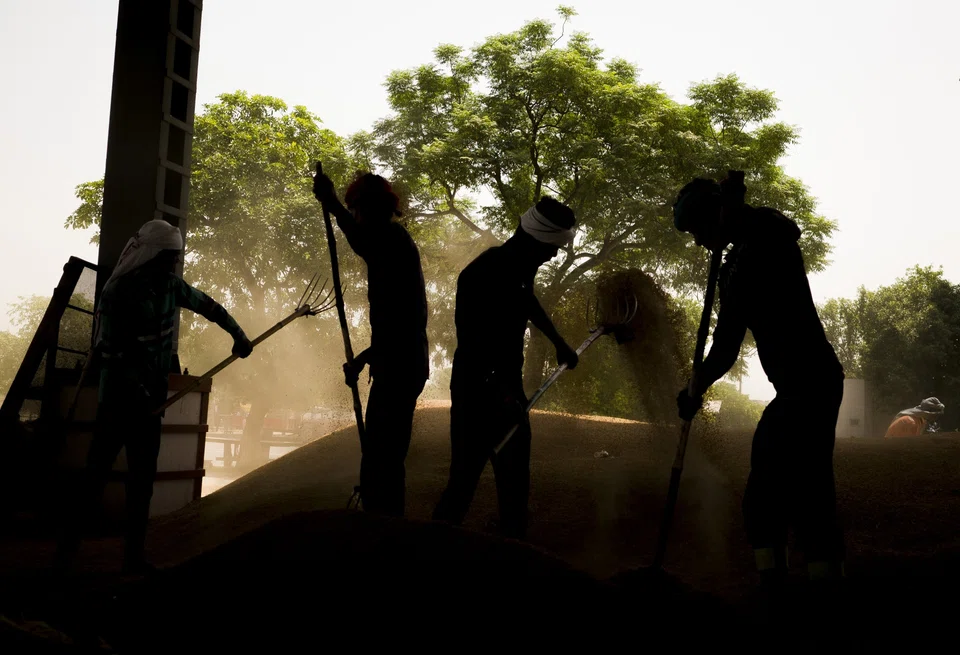
    •  According to data from research firm Statista, India topped the list of top rice exporters. Vietnam and Thailand were also among the biggest exporters of the commodity.
    • According to data from research firm Statista, India topped the list of top rice exporters. Vietnam and Thailand were also among the biggest exporters of the commodity. PHOTO: BLOOMBERG

    FIRST it was palm oil. Then it was chicken.

    Rice is the agri commodity to keep an eye on next amid rising food protectionism in the region as inflation persists, although the risk of fresh export curbs remains low for the rest of this year, according to market watchers polled by The Business Times.

    The agribusiness has been hit hard since Russia’s invasion of Ukraine, which resulted in an assortment of government bans and disrupted and weakened global supply chains, sparking a significant rally in food prices in the first half that continues to persist.


    Sabrin Chowdhury, head of commodities at Fitch Solutions, said rising government intervention is now a “megatrend” across economies.

    “Food protectionism by governments has seen a spike in 2022 amid decade-high global food prices and low domestic stocks, and will continue as long as there are concerns about food security,” she said. 

    With elevated supply risks and prices expected to remain strong in the coming months and into 2023, Chowdhury reckons food protectionism or nationalism is “definitely something to watch”. 

    Among the agri commodities, she said rice is particularly at risk, given weather-related issues in India – the world’s largest exporter of rice. The lack of sufficient rainfall in India has threatened the wheat crop there.

    Chowdhury believes the risk of a ban are low. But a Bloomberg report on Friday (Aug 26) quoted “people with knowledge of the matter” as saying the government is discussing curbs on broken rice exports.

    According to Bloomberg’s report, the curbs are motivated by a need to bring down the price of broken rice.

    Monika Tothova, an economist at the Food and Agriculture Organisation (FAO) of the United Nations, said that although international food commodity prices have declined from their peaks, food price inflation has not yet eased in many countries. 

    She said export restrictions might be seen next in countries where domestic prices remain elevated, or if an exporting country of a certain agri commodity is trying to secure inputs to domestic production. 

    “The countries’ propensity to employ trade restrictions is related to prices and the supplies on the domestic markets – which are in turn related to supplies on global markets,” said Tothova. “The bigger the exporter, the bigger the impact of the measure.”

    South-east Asia is home to some of the top exporters of a number of agri commodities. 

    A number of countries in the region are top exporters of rice. According to data from research firm Statista, India topped the list. Vietnam and Thailand were also among the biggest exporters. 

    Statista’s data also said that Thailand and Australia were among the top exporting countries of sugar for the period 2021/2022, while Vietnam is one of the top exporters of coffee. Australia is one of the largest exporters of wheat, while Indonesia and Malaysia are the top 2 palm oil producers globally.

    The knee-jerk reaction to ban exports, however, can be harmful in the longer run.

    DBS analyst Andy Sim said export bans are mostly imposed to “curb domestic prices with a price shock” and to mitigate the effects of inflationary pressure in source markets. But such restrictions could have an adverse impact on the operations of companies in these countries. 

    Malaysia’s ban on chicken exports was attributed partly to rising prices and a domestic supply shortage. But the higher prices were also a result of rising feed costs, caused by disruptions in grain supply globally.

    “The removal of free market movements tends to affect companies adversely,” Sim added.

    In Malaysia, chicken farmers have complained that the ban on exports has caused them to lose market share in Singapore.

    Maybank Singapore economist Brian Lee echoed this: “Export bans penalise producers by cutting off external demand for their products, and preventing them from taking advantage of higher international prices. If restrictions are prolonged, producers may lose clients to other exporting countries.”

    A prolonged ramp up in food protectionism would also reduce global supply and drive up food costs, Lee continued.

    Singapore relies on imports for 90 per cent of its food supply, which means it will “feel the pinch from higher inflation”. This could be somewhat cushioned by “relatively high household purchasing power”, he said. 

    Fitch’s Chowdhury said developed importing nations like Singapore are likely to mitigate sudden food export bans through substantial reserves of food, as well as the ability to source from elsewhere, albeit at higher shipping costs and prices.