Rigs out, green in for Keppel and Sembcorp
Their multi-business strategies will now be put to the test like never before

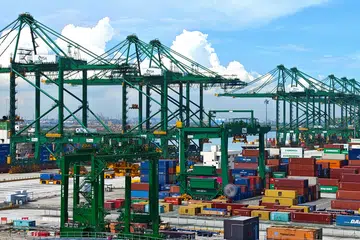
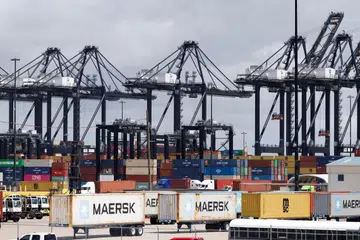
THEY were two of the world's largest offshore rig builders. But following the historic oil crash last year, Sembcorp Industries and Keppel Corp have decided they want little to do with the beaten-down offshore and marine (O&M) business.
It is hard to find fault with their big shift except that in hindsight they should have let go much earlier.
Keppel swung into the red - to the tune of S$506 million - in FY2020. This was its biggest loss in more than two decades. Sembcorp is set to issue its full-year report card in two weeks, and is expected to incur its first loss in two decades.
After oil majors cut back on spending, local yards were left underworked. The result has been impairments for Keppel's O&M business. And while Sembcorp has since completely carved out its O&M business, its FY20 numbers will undoubtedly be impacted too.
Their decisions to ditch the O&M business say a lot about the future: The glory days of the rig-making business, when both conglomerates shone on a global scale between 2002 and 2007 as oil hit a giddying US$147 a barrel, may well be over. Even if the oil business has a chance of returning to those prosperous times, it could be a long while. Neither company cares to wait.
They have instead set their hearts on the booming renewable energy business - a growing disruptor of the energy market - which companies, including big oil, and investors are flocking to big time.
The "divorce"
Last year, Sembcorp announced a clean split from its subsidiary Sembcorp Marine (SembMarine) in a deal that also involved a S$2.1 billion cash call for SembMarine.
Freed from the shackles of a notoriously cyclical business, Sembcorp is hoping to sharpen its position as an integrated energy and urban player. It is already one of Singapore's largest renewable energy players.
The narrative for Keppel's exit from the rig business, parked under subsidiary Keppel O&M, is not vastly different. Keppel last month said it will offload "legacy" rig assets worth some S$2.9 billion into separate entities, with an eye on potential sales when the time is right.
With that, the conglomerate hopes to push ahead unencumbered with its green agenda - seeking out projects from offshore wind or solar farms to gas solutions.
All rigged out
The greening of Keppel and Sembcorp makes sense given how tough the rig market is. And it should remain so for at least the next 12 to 18 months. Margins have thinned as rig day rates and utilisation rates fell throughout last year, making competition even more brutal.
Brent oil prices recently shot past US$60 a barrel for the first time in a year. That's a major comeback from the destruction wrought by pandemic-led lockdowns and travel curbs, which pushed oil to an average of US$18 a barrel in April last year. Even so, caution is thick in the air. Some market watchers have worried that the oil market may be getting ahead of itself on vaccine hopes, and may be over-bought.
Also, there is a rig glut in the market. Even if activity picks up in the oil sector, idling rigs would be put to work first. Benefits will be limited for rigmakers who depend on fresh building jobs. In short, significant recovery is needed in the oil market for rig builders to turn around.
Ding Li Ang, Asia-Pacific research head at IHS Markit, does not expect a demand recovery for new rigs for at least another five years. He also expects the environment to remain extremely challenging for five to 10 years.
The sector is rife with competition from the likes of Chinese giants Cosco Shipyard and Dalian Shipbuilding Industry Co. While the Singapore yards have long held a considerable advantage from the quality perspective, the Chinese players have sharpened their act even as they continue to offer competitive rates. And other regions, such as the Middle East, have also started building their own rigs.
"In the past, demand was strong enough to support many players and already there was strong competition from China and Korea. This time, demand has worsened," said Mr Ding, adding that pressure has therefore piled up for SembMarine and Keppel O&M.
Ready options
SembMarine is set to release its full-year results on Feb 23. It has guided for losses to continue into the final quarter.
Investors waiting for a turnaround will need to have patience. There is plenty of uncertainty over its order book and its capex requirements.
But SembMarine has some ready options. It could rationalise capacity at its massive yards and use its most productive yards for the construction of production platforms, green energy projects such as offshore wind facilities, and specialised ships.
In fact, the company is already doing this. It is actively tendering for more than 10 projects, chiefly in the green energy sector. It also has a similar number of tenders in progress for floating production systems.
As for its idling rigs, it could follow in the footsteps of China's SinoOcean and convert them for other uses, including as installation platforms for offshore wind turbines.
Meanwhile, as Keppel shifts its focus to high margin work, SembMarine stands to win subcontract jobs such as fabrication of blocks.
Dream green
The mega energy transition away from fossil fuels is unfolding at unprecedented velocity. This means more players and more competition.
The building blocks for Keppel and Sembcorp's green ambitions were put in place a few years ago as the drive towards fighting climate change and a low-carbon future gained traction in the world.
With the low-yielding rig assets off their backs, the duo is free to dream big. But while the renewable sector is a fast-growing business, it may be unlikely to make up for the revenue loss in the O&M space - not in the near future, at least.
This also means that from here on out, the conglomerates' multi-business strategies would be put to the test like never before.