

Riverstone expects healthy demand for cleanroom and healthcare gloves
Its CEO says there is sustainable demand for cleanroom gloves as more such facilities are being built and demand for chips and electronic items climb.

Singapore
FOLLOWING a banner year for glove maker Riverstone Holdings in 2021, investors might start to worry about how sustainable the Malaysian manufacturer's earnings are in 2022 and beyond.
Riverstone's top line rose 68.5 per cent to RM3.1 billion (S$1 billion) in FY2021 as demand and average selling prices for both healthcare and cleanroom gloves surged amid the pandemic. Earnings more than doubled to a record high of RM1.4 billion on higher turnover and margins.
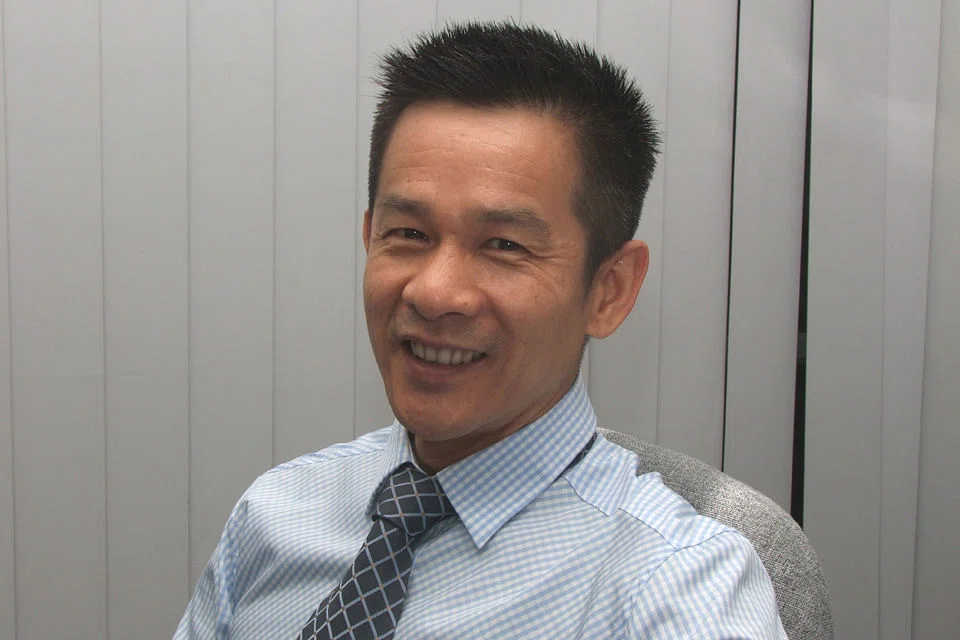
But chief executive Wong Teek Son is sanguine about the prospects of the Singapore mainboard-listed glove producer.
He pointed out that there is sustainable demand for gloves used in cleanrooms as more of such facilities are being built and demand for semiconductors and electronic items climb. These items are highly sensitive to contamination, corrosion or electrostatic discharge, and thus require a sterile manufacturing environment.
Riverstone, established in 1989, had started out as a 100 per cent cleanroom glove producer.
Wong said the company now enjoys a 40 per cent share of the high-end cleanroom glove market globally. Its main market is in Asia-Pacific, including South-east Asia, China, Japan and South Korea; but it is also present in the United States and Europe.
There are high barriers to entry into the cleanroom glove manufacturing industry, added the 60-year-old former chemist.
"We are the leader in the cleanroom glove industry, and our product is benchmarked by the users. So anyone who wants to replace us, they must be able to make gloves at least as good as ours and (for a) lower selling price, because otherwise the user will not take (the) risk to change the source because it's very risky for them."
Wong said products made in cleanrooms are much more expensive than the gloves, so customers are unlikely to drop Riverstone and go for another supplier without a track record just to save 5-10 per cent on glove costs.
Riverstone, Wong added, prides itself on the low electrostatic discharge of its cleanroom gloves. This is a competitive advantage as high electrostatic discharge could damage sensitive electronic parts.
While cleanroom gloves only made up 20 per cent of total volume shipped in FY2021, they contributed 40 per cent of revenue and generated a gross profit margin of about 60 per cent. Healthcare gloves offered a 25 per cent gross profit margin.
Riverstone diversified into healthcare glove manufacturing in 2008, when the economic crisis hit the cleanroom glove business.
Production of cleanroom gloves and healthcare gloves both entail the process of dipping, so it was easy for Riverstone to switch to healthcare glove manufacturing to tap the larger market.
But healthcare glove makers would not find it equally easy to switch to the more profitable cleanroom glove production as the latter involves 2 more processes: surface treatment and cleaning.
Riverstone has about 2 per cent of the healthcare glove market, which was growing 8-10 per cent yearly, pre-pandemic.
The surge in demand from healthcare glove distributors in 2020 and 2021 pushed average selling prices from US$20-US$23 a carton to as high as US$100 in January and February 2021. Prices have since slid back to US$25-US$30.
Wong is unable to say how the market would perform vis-a-vis 2020 and 2021, as these 2 years saw abnormally high demand and there is little data on actual usage.
Demand dropped in the second half of 2021 because distributors had earlier overstocked gloves at much higher selling prices, and were waiting to see how much further prices would drop. Orders resumed in December 2021 for Riverstone.
But Wong expects demand to be sustained even when the pandemic has blown over, as some people have got used to wearing gloves as an affordable personal protection equipment. There is also demand from non-healthcare users such as airlines and food producers, amid heightened awareness of hygiene.
While the price swings have been large, healthcare glove manufacturers are able to adjust selling prices easily as the industry has the practice of negotiating prices with distributors and raw material suppliers on a monthly basis.
"If you manage the business properly, then there are no surprises; it's quite a safe business. Because whatever increases in cost, it's passed over to the supplier and the time lag is only one month... So if you can get a 20 per cent gross profit, I'd like to say it's a very attractive business," Wong said.
Riverstone supplies healthcare gloves to the US, Europe, Japan and Australia. Unlike some of its peers, which have had their gloves seized by the US Customs and Border Protection over alleged poor labour practices, Wong told The Business Times that Riverstone has not had such problems because it is keenly aware of and meets the requirements. Riverstone built and manages its own dormitory with amenities to house its foreign workers, for example.
Producing from plants in Malaysia, Thailand and China with a 4,000-strong workforce, Riverstone has been using internal funds to add capacity every year since 2014. The exception was in 2021, when plans were delayed due to pandemic-induced movement restrictions and labour shortages.
Riverstone would be able to manufacture up to 15 billion gloves a year by 2025 when the added lines in Malaysia are operational.
Although the company has a cash pile of about RM1.6 billion and bank borrowing of only RM1.6 million - the latter maintained in order to "keep the relationship" with the bank - Riverstone is not keen on mergers or acquisitions unless it can find a deal that adds value to its cleanroom gloves production.
Wong said any target must have technology that Riverstone is unable to achieve on its own, or must help to accelerate technology acquisition for Riverstone. Failing that, he would rather use the company's funds to expand and refurbish its facilities. Any balance after expansion and working capital could be returned to shareholders over time.






