Rollout of 5G to be closely watched for earnings potential
But analysts flag challenges of generating higher revenues from higher speeds

Annabeth Leow
Singapore
WITH 5G networks finally rolling out in the new year, how to make money off the new wireless technology will top the agenda for mobile network operators (MNOs) in 2021.
But the incoming CEOs at mainboard-listed Singtel and StarHub, and counterparts at Keppel Corp-owned M1 and Australia's TPG Telecom, have their work cut out for them.
Sai Tunuguntla, a partner at McKinsey, said global telcos "need to prioritise their focus and resources", as mobile service revenues decline while capex stays the same or rises.
Even as telcos ride out Covid-19 headwinds, it's unlikely that 5G will rescue depressed revenues - especially with the industry's initial focus on a crowded consumer market.
Testing the 5G waters
Singapore's first 5G licences were awarded earlier this year, with Singtel and a StarHub-M1 joint venture bagging spectrum for nationwide coverage. TPG can run smaller-scale millimetre-wave (mmWave) networks.
Nationwide 5G outdoor coverage could be achieved by end-2024, Manjot Singh Mann, chief executive of M1, told The Business Times.
All four MNOs had already been carrying out 5G trials for uses from smart estates to consumer gaming. New licences in hand, the three incumbents have also introduced non-standalone 5G networks to drum up consumer interest ahead of full launch.
The initial response has been positive, the telcos said. TPG plans to offer similar 5G services tapping its existing spectrum, starting next year.
Veronica Lai, chief corporate officer of StarHub, said the early consumer launch was a chance to "properly gauge customer response".
"With the very encouraging uptake we see, we are keen to roll out more 5G services and solutions next year," she added.
Based on the narrowing price difference between 4G and 5G phones, TPG's chief technology officer Benjamin Tan said that "Singapore will be a hotbed of 5G activity next year".
Down with dumb pipes
Beyond high speeds, telcos hope to offer innovative product and service differentiation.
The industry appears determined not to repeat its mistake with 4G technology, when telcos boosted their speeds to support new applications only to lose wallet and mind share to Internet giants and tech companies.
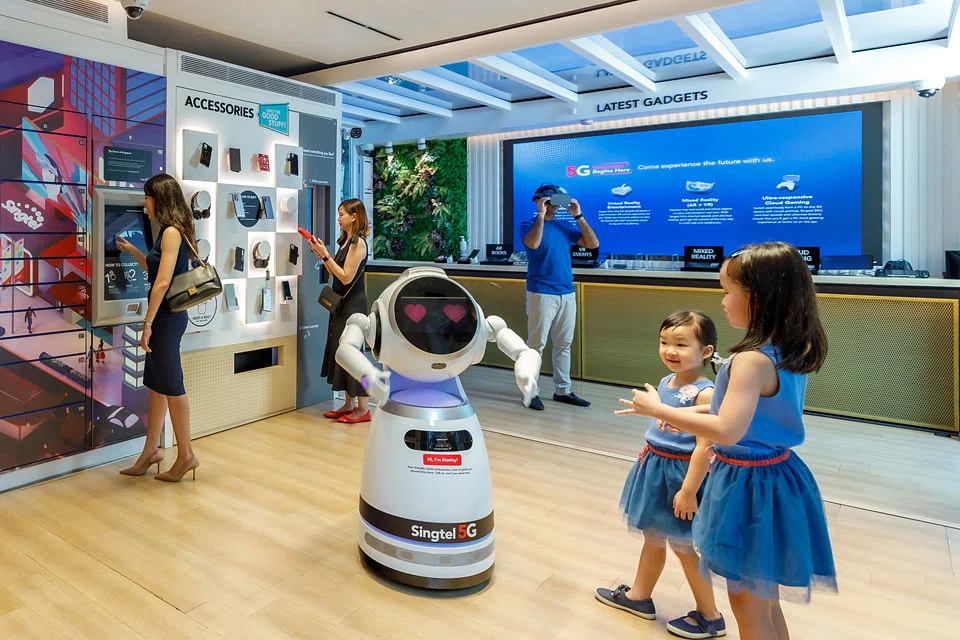
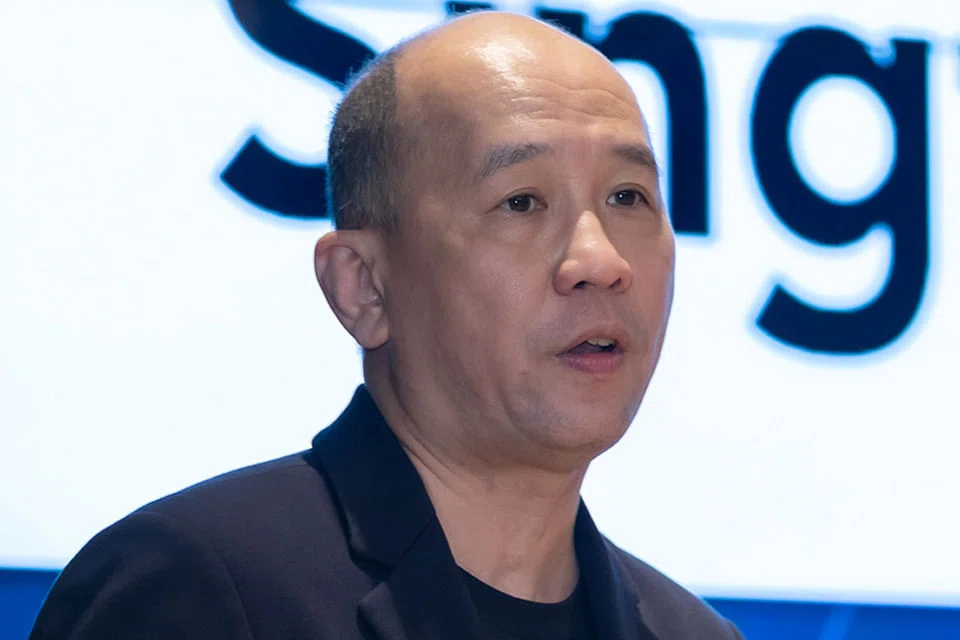
Singtel intends to offer augmented, virtual and mixed-reality "to bring new immersive dimensions to work and play", said Yuen Kuan Moon, who takes over as group CEO in January.
TPG's Mr Tan said there will be potential to offer, over mmWave technology, support for Internet of Things (IoT) devices such as "surveillance cameras and autonomous vehicles, which demand a significant amount of upload speeds."
Price war redux?
In South Korea and China, "higher-end subscribers have been receptive towards 5G data plans that offer significantly more data at faster speed and moderately higher price point", said Johnson Loh, research analyst at Credit Suisse.
But whether local telcos raise prices for 5G will depend on the competitive environment.
When asked how StarHub will differentiate itself, Ms Lai listed "product packaging" as a factor. Customers are always looking out for "deals that give them the best value", she said, adding that StarHub's existing customers enjoy larger data bundles, free entertainment content and gaming, and bundled productivity solutions.
Mr Tan touted TPG's "value for money" consumer proposition: "Offering cost-efficient value data packages for instances where a user requires huge volume consumption is where we feel we can differentiate."
The Covid-19 pandemic has also weighed on consumer willingness to top up for 5G. Their expected price premium for a 5G plan has been cut to 10 per cent, from 20 per cent a year and a half before, hardware vendor Ericsson found in a recent poll.
"We will have to wait for 5G standalone and rise in 5G adoption for ARPUs (average revenues per user) to inch up over the next few years," DBS analyst Sachin Mittal said.
Nidhi Dhruv, senior analyst at Moody's Investors Service, added that a 5G roll-out could benefit ARPUs only after 2021 "and telco's discretion on 5G pricing will also need to be balanced against the competitive environment in Singapore's mobile sector".
McKinsey's Mr Tunuguntla also said it is "becoming less likely that 5G will be able to command (a) premium". He recommended overhauling the way telcos charge consumers, such as tapping 5G's network-slicing capabilities to tier prices based on speed and latency.
He also suggested a "business-to-business-to-consumer" market in which service providers pay MNOs for enabling the seamless delivery of 5G features as part of the over-the-top experience.
Along those lines, Mr Yuen told BT Singtel is "creating a dynamic 5G ecosystem of partners, including cloud hyperscalers, IoT device manufacturers, solution developers, startups and enterprises", to commercialise use cases and scale them up regionally.
Beaming up enterprise
Ultimately, the role of consumer demand will be to lay the groundwork for the enterprise or business-to-business (B2B) opportunity in 5G.
"The success of 5G in the consumer market will be crucial for service providers, underpinning the network expansion to enable them to also target new use cases for industries and enterprises," Ericsson said.
M1 has accelerated its pivot to the enterprise market since its privatisation by Keppel last year.
"With the growing push for enterprises towards digitalisation, 5G will provide us with more opportunities to increase our presence in the enterprise market and sustain our long-term growth," said Mr Mann.
Pointing to potential synergy with Keppel's expertise in areas such as smart shipyards and townships, he listed manufacturing, maritime and retail as priority sectors.
Ms Lai said StarHub is developing 5G solutions for Singapore's aviation, government, retail, media, healthcare and banking industries. Singtel's Mr Yuen identified automated guided vehicles, robotics and virtual and mixed reality as enterprise use cases.
Growth in industry 5G take-up could take a while to arrive. Consultancy AT Kearney noted late last year that various industry use cases for 5G, such as remote robotics, are still in the prototype or research and development stage.
"Most telcos will likely continue their focus in the B2B space," said Credit Suisse's Mr Loh, with "incremental revenue" from enterprise coming "in the longer term".
Nevertheless, Bain partner Kiran Karunakaran said Singapore is likely to be among the biggest beneficiaries of 5G in South-east Asia over the next five years: "Given the strong government push, a clearer spectrum strategy and clear regulatory guidance on the network rollout, Singapore has put in place the right set of enablers to drive adoption of 5G."