

Room to sharpen regulatory efficiency
A collaborative approach among key authorities and empowering regulators to carry out speedy investigations may help expedite process to prosecute offenders

Angela Tan
Singapore
OVER the years, various incidents of alleged corporate fraud highlight a major problem facing enforcement agencies in Singapore.
While there appears to be no lack of will or ability on the part of those tasked with the job of protecting investors, the public perception is there could be room to improve the various regulatory functions so that those guilty can be taken to task faster.
"We think that the key authorities such as MAS, Acra, CAD and SGX could further leverage on...a collaborative approach and perhaps increase over time the range of offences which they investigate jointly and in coordination with one another, and where they share information, expertise and resources, to enhance the effectiveness and speed of investigations," said Joy Tan, partner and joint head, corporate governance & compliance practice at WongPartnership LLP.
Stefanie Yuen-Thio, joint managing partner of TSMP Law Corporation, said while corporate scandals and failures cannot be totally avoided, the speed of response from the investigators and prosecutors is crucial.
"That said, sometimes even when the regulators move fast, it may already be too late, especially when the assets have been dissipated or if they are held in an offshore location where we cannot easily get to them. There is no one solution; we need to beef up the entire universe of legal remedies," she added.
Acra, or the Accounting and Corporate Regulatory Authority, regulates business entities, public accountants and corporate service providers. It investigates breaches of the Companies Act and the Accountants Act, among others.
SGX RegCo is the frontline market regulator, with oversight of listed companies. If there has been an oversight by the company's auditor, it will hold them accountable, too, and refer any shortcomings on their part to their regulators - the Institute of Singapore Chartered Accountants (ISCA) and Acra.
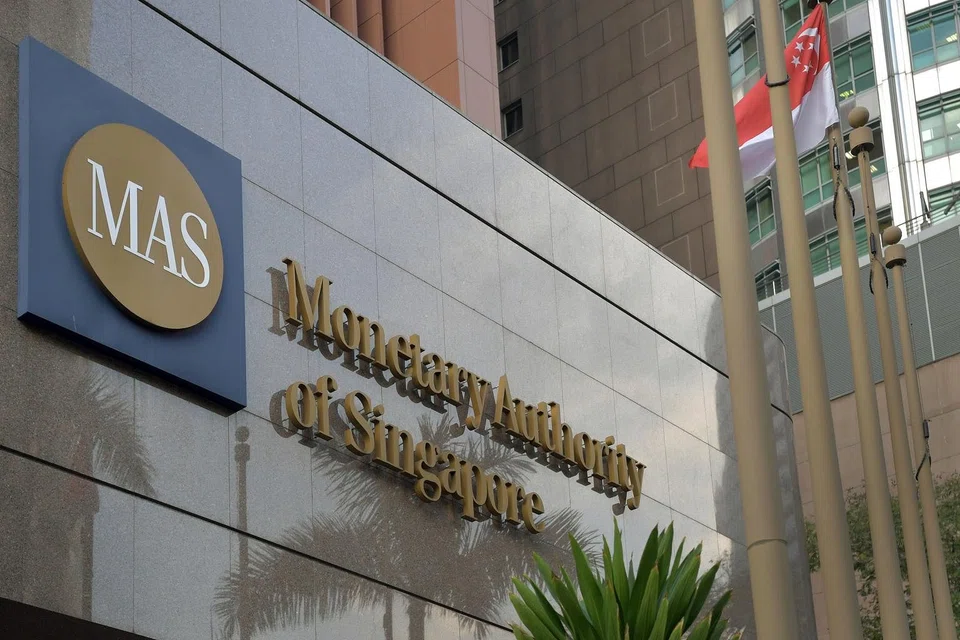
SGX RegCo is accountable to the Monetary Authority of Singapore (MAS), which regulates the financial services sector, including enforcing the Securities and Futures Act, the Financial Advisers Act and the Singapore Code on Take-overs and Mergers.
MAS works closely with different public agencies, including the Attorney-General's Chambers (AGC), the Commercial Affairs Department (CAD) of the Singapore Police Force, the Corrupt Practices Investigation Bureau and Acra.
A chief executive officer, who declined to be named, also noted that more can be done to the overall regulatory framework with the different agencies.
"Take for instance when questions are raised on listed companies and there is a need to look into the company's accounting," he said. "This comes under Acra, but unlike SGX RegCo, Acra doesn't report to MAS. It reports to Ministry of Finance. So I think there is some argument to say there should be horizontal connections."
That is not to say the present arrangements are not working.
Janice Goh, a regulatory investigations and white collar crime lawyer at Cavenagh Law LLP, which is in a Formal Law Alliance with Clifford Chance in Singapore, said existing "partnerships have enabled the collective leveraging of resources and expertise, as well as the streamlining of the enforcement process".
SGX RegCo and Acra invariably leave the enforcement role to the MAS and CAD, said Robson Lee, a partner in Gibson Dunn's Singapore office.
"Unlike SGX RegCo and Acra, the MAS and CAD have joint powers to conduct raids, issue search warrants and prosecutorial powers to bring offenders to justice," Mr Lee explained.
"In my view, the present division, separation and streamlining of roles and functions between SGX RegCo and Acra on the one hand vis-a-vis the MAS/CAD on the other, is not an inefficient arrangement.
"The preliminary or prima facie objective view that there has been a breach of the relevant rule or law based on certain factual matrix should be recommended by either RegCo or Acra and the detailed investigations and evidential establishment should then be left to the MAS/CAD to ascertain," said Mr Lee.
Singapore has seen its fair share of occasional malfeasance. The now infamous Noble Group saga is an example. Singapore authorities finally took overt action last November to probe the commodities group, more than three years after the first reports of accounting irregularities surfaced.
The October 2013 penny stock crash, which saw billions wiped out from the market value of Blumont Group, Asiasons Capital and LionGold Corp, is another example. The trial started only this March.
Midas Holdings, the Chinese railway parts maker which was given a clean bill by its auditors, is yet another example. Since investigations started a year back, the insolvent company has recently declared it was on the verge of being liquidated - a move which will dash all hopes of a recovery for its thousands of shareholders.
Then there is YuuZoo Networks Group Corp, which suddenly ceased operations here, blaming its troubles on ongoing investigations by CAD, which it alleged has found no wrong-doing.
Another high-profile case involves debt-ridden Hyflux, which had over the past decade, enjoyed the stamp of approval by its auditors attesting to the water treatment company's ability to continue to operate.
Not surprisingly, market players are pushing for greater regulatory transparency and for those guilty to be taken to task quickly. Some have questioned if there are resource limitations that are preventing authorities from getting the job done. Others ponder if there is room to simplify the investigation path to deliver more bite and faster accountability even as they acknowledge the timeline in which an investigation could close is not solely determined by the extent of cooperation among the public agencies.
"Faster closures to investigations are dependent on various factors, such as the extent of co-operation of the person(s) being investigated, the scale of the alleged wrongdoing including whether there are cross-border elements and the availability of evidence," Ms Goh said.
Annabelle Yip, partner and joint head, corporate governance & compliance practice at WongPartnership LLP, added that corporate investigations relating to inadequate or improper disclosure, especially where accounting issues are concerned, are inherently complex and may involve possible contravention of multiple laws and regulations.
"A further level of complexity arises if fraud is involved and the veracity or completeness of documents or witness testimonies themselves may be in question," Ms Yip said.
TSMP's Mrs Thio thinks that the enforcement arsenal given to the SGX is not optimal to carry out speedy investigations and mete out punishment.
"The ability to fine and disqualify directors would send a strong message and be a significant deterrent, at least for Singapore-based directors. Potentially we could also consider if other limited and temporary emergency powers - to obtain information from listed companies where it looks like there's a real risk of assets being dissipated or evidence destroyed - would be appropriate. As fraud becomes more sophisticated and corporate wrongdoing goes increasingly borderless, we need to arm the SGX with weapons of speed and greater impact," she suggested.
"I would take it a step further and say that you should give the agencies limited (if temporary) emergency powers to demand immediate production of information if it looks like there's a possibility of asset dissipation. Extend the sanctions to chief financial officers and financial controllers, who should be the first to smell a financial misfeasance rat.
"Next, change the law to give minority shareholders a lot more power to take action when they believe that a company is being unlawfully mismanaged. We need to allow class action lawsuits and give shareholders the right to sue errant directors directly (without having to go through the company)."
As for Mr Lee, he believes that while the final decision to prosecute ultimately rests with the AGC, there could be room for improvement.
"This is where I believe the discretion to prosecute commercial crimes should be decentralised to the CAD as opposed to having such decisions to be taken only by the AGC. The present arrangement where the AGC has to decide whether a white collar crime should prosecuted should be delegated to the MAS/CAD. This will expedite the process to prosecutions of offenders who have breached the rules."






