

Rouble bends to Putin’s will in nod to wartime election economics
 Add BT as a preferred source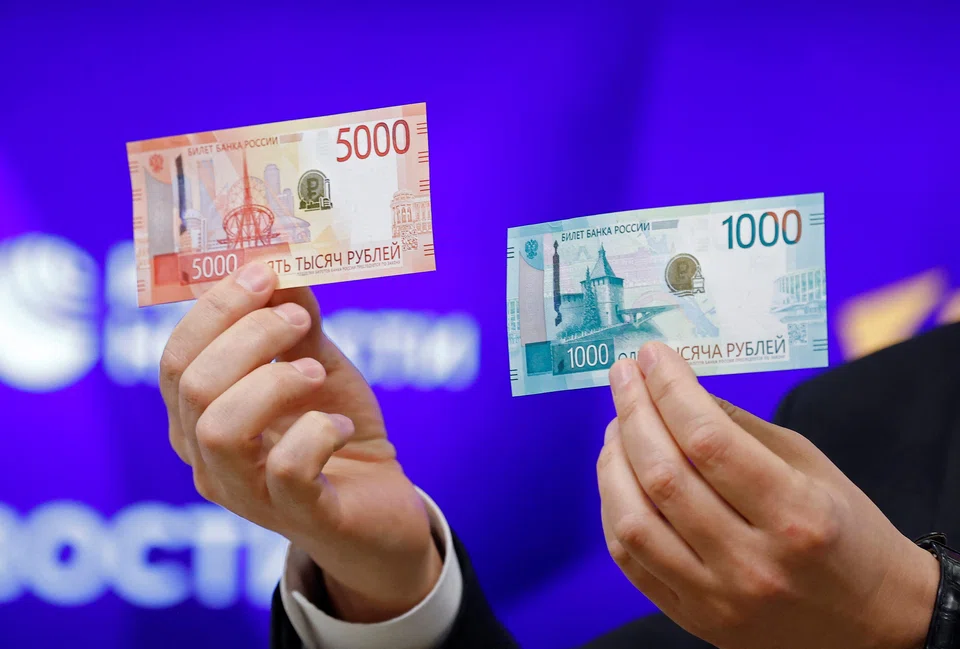
DeeperDive is a beta AI feature. Refer to full articles for the facts.
A RALLY in the rouble that’s propelling it towards its strongest level since July is the latest piece of Russia’s economic jigsaw to fall into place before a widely expected tilt by Vladimir Putin at another presidential term in March elections.
The currency’s reversal of fortunes since early October has brought it to around 90 per US dollar, a level near to the average for next year forecast by the Economy Ministry. The recent appreciation was among the key factors that acted as a check on inflation, according to Bloomberg Economics, which now expects a slowdown after price growth likely peaked in September.
The exchange rate has increasingly emerged as a barometer of the economy’s health amid sweeping international sanctions as Russia closes in on two years of its war against Ukraine. It’s also a critical variable for a budget that will allocate more on the military next year than towards any other single item.
Dragged down by plummeting export proceeds and heavy government spending, the rouble in October briefly hurtled past the psychologically important level of 100 per US dollar. The depreciation has spurred the central bank to double official borrowing costs so far this year to 15 per cent, including an emergency interest-rate hike in August.
But setbacks didn’t stop until the government clawed back more US dollars by restoring some capital controls on major exporters. It was a decision made because Russia needed “the rouble a little stronger”, Putin said last month.
Buoyed by the stiffer restrictions, alongside rate hikes and crude around US$80 a barrel, the rouble is the world’s best performer against the US dollar since early October. It’s gained over 4 per cent so far this month versus the US currency.
Navigate Asia in
a new global order
Get the insights delivered to your inbox.
The challenge now is to find a sweet spot for the rouble’s value that holds off inflationary pressures without cutting into government revenues.
Under the Economy Ministry’s latest outlook that’s used to calculate the Budget, the Russian currency is expected to average 90.1 per US dollar in next year’s baseline scenario. Thanks in part to bigger inflows of hard currency, it projects gains through the first half of 2024 before the exchange rate stabilises at 90-92 from mid-year.
The view is broadly in line with expectations in the market. The currency may continue to advance to 85, but it’s likely to slip back to the 90-95 range early next year under pressure from sanctions and geopolitics, according to Iskander Lutsko, chief investment strategist at ITI Capital.
Barclays predicts the rouble at 90 per US dollar this quarter and the subsequent six months. “On balance, we expect recent policy rate hikes will curb local demand, limiting imports, while the recent rise in the price of urals should help to stabilise the rouble,” said Marek Raczko, foreign currency strategist at Barclays in London.
The negative impact of factors such as companies using local notes to replace eurobonds, major debt redemption by the state or corporate buyouts of non-residents has also lessened, according to Evgeny Suvorov, chief Russia economist at CentroCredit Bank.
“There’s no need to expect a significant decline in the ruble before March,” he said.
The currency remains about 17 per cent down against the US dollar this year even after paring losses. Other emerging market assets also perked up last week, as US inflation figures stoked bets the Federal Reserve’s hiking cycle is over and economic data from China helped boost risk appetite.
The rouble was significantly undervalued in the summer but benefited from an improving outlook for raw materials, increased export prices and a decrease in imports, according to Sofya Donets, an economist at Renaissance Capital in Moscow. Fundamentally, it should be in the region of 85 per US dollar, she said.
“Will the rouble be able to go there and strengthen? We are still cautious,” she said. “At the end of the year, we believe there will be 90 roubles per dollar due to ongoing capital outflows.”
Decoding Asia newsletter: your guide to navigating Asia in a new global order. Sign up here to get Decoding Asia newsletter. Delivered to your inbox. Free.
Share with us your feedback on BT's products and services
TRENDING NOW

Air India asks Tata, Singapore Airlines for funds after US$2.4 billion loss

Beijing’s calculated silence on the Iran war

China pips the US if Asean is forced to choose, but analysts warn against reading it like a sports result

Richard Eu on how core values, customers keep Singapore’s TCM chain Eu Yan Sang relevant

