


Russian money ‘not our business’, says StanChart CEO Bill Winters, as bank doubles down on wealth management
The bank aims to attract US$200 billion in new assets over the next five years, expand relationship-manager team by 50% by 2028

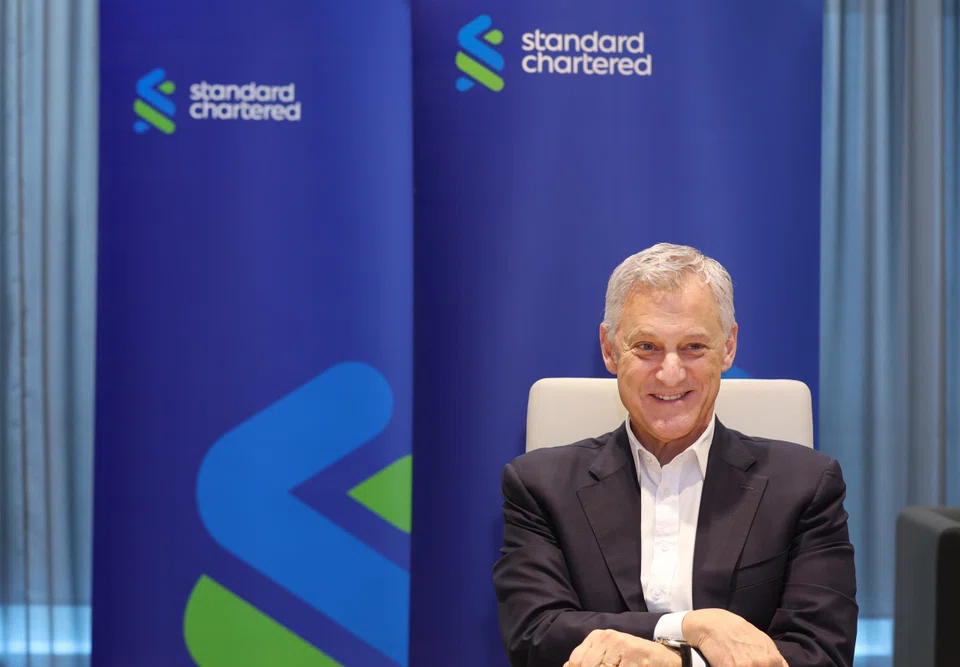
STANDARD Chartered has vowed to double down on its wealth-management business. But chief executive Bill Winters is clear that one segment will not be contributing to this growth: wealthy Russians.
“A lot of Russian money has moved out of Switzerland and gone to Dubai, but that’s not our business,” Winters told The Business Times in an exclusive interview in late November.
BT understands that StanChart does not actively pursue Russian clients.
Many of its global peers have also kept a wide berth from the Russian wealth-management business, as concerns mount over widening sanction risks.
Some financial institutions have restricted or even severed some ties with affluent clients that have links to Russia, for fear of incurring tough penalties from the US and Europe.
In Singapore, second-largest lender OCBC has reportedly told its customers, including private banking clients, that it will stop handling transactions involving Russia from Nov 1, citing operational difficulties in managing regulatory requirements.
But the city-state’s largest lender, DBS, is said to be beefing up its wealth-management team to cater to rich Russians, Bloomberg reported on Tuesday (Dec 3).
Meanwhile, StanChart said on Tuesday that it aims to attract US$200 billion in new assets over the next five years, expanding on earlier announced plans to double its investment in its wealth-management arm to US$1.5 billion.
With this shift in focus towards affluent individuals, StanChart plans to hire more relationship managers and investment advisers, deploy more wealth solutions and implement enhanced advisory, cross-border and digital capabilities.


The bank said that it will aim to increase the size of its relationship-manager team by 50 per cent by 2028.
This comes after Winters, in a statement accompanying the lender’s latest quarterly results, announced that it would continue to reshape its mass retail business “to focus on developing our pipeline of future affluent and international banking clients”.
For the third quarter ended September, StanChart’s pre-tax profit more than doubled to US$1.7 billion, from US$633 million the year before.
Profit from its wealth and retail banking client segment rose 11 per cent to US$742 million, spearheaded by a 32 per cent increase in income from its wealth-solutions business to US$694 million.
The increase was attributed to broad-based growth across products, as the bank recorded continued growth momentum in net new sales and affluent new-to-bank clients.
StanChart’s increased investment in wealth management, Winters said, will enable the bank to “sustain double-digit income growth in wealth solutions” over the medium term.
However, the landscape for the wealth-management business is becoming more competitive.
“Dubai was almost irrelevant four years ago, and now it’s coming up,” Winters said. “There’s Abu Dhabi as well, so they’re actually competing a little bit with each other.
“They’re accumulating – especially in Abu Dhabi, actually – a pretty big expat population of hedge fund managers, asset managers and other financiers, who are rich. And it’s a zero tax jurisdiction with lots of incentives to set up business there.”
That said, he pointed out that the wealth-management infrastructure in the United Arab Emirates, including rule of law, is not yet fully developed. This means having to take legislative steps to reassure wealthy clients that their money is safe there.
“But they will get there,” he said. “It’s becoming competitive.”
For now at least, he believes that the Asian wealth hubs of Singapore and Hong Kong should not be worried about rising competition from the United Arab Emirates.
“I don’t think you’ll notice it for a long time. In the meantime, Singapore and Hong Kong are growing so fast because the Asean region and mainland China are getting wealthy fast.
“There are limits, obviously, but it’s a huge place,” he added. “We see some Chinese putting money in Dubai, but the overwhelming majority of funds that are being invested are being invested in Hong Kong and Singapore – roughly evenly.”
He played down competition between Singapore and Hong Kong – two of StanChart’s biggest wealth centres.
“Hong Kong is fine, Singapore is fine; there’s plenty of good stuff to go around,” he said.
Decoding Asia newsletter: your guide to navigating Asia in a new global order. Sign up here to get Decoding Asia newsletter. Delivered to your inbox. Free.
Copyright SPH Media. All rights reserved.
TRENDING NOW

The only common thing in S-E Asia is that we all eat rice: Cisco’s Asean president

Philippine power giant First Gen rebuffs foreign offers, plans up to US$2.6 billion in expansion

Singapore to use ‘every legal and regulatory lever’ against companies linked to haze: Shanmugam

Once staunchly pro-China, Malaysian Chinese businesses are now distancing themselves from Beijing

