

S-E Asia’s private equity dry powder remains high as exits still subdued: Deloitte
20 of such deals registered in 2025, a drop from 28 the previous year

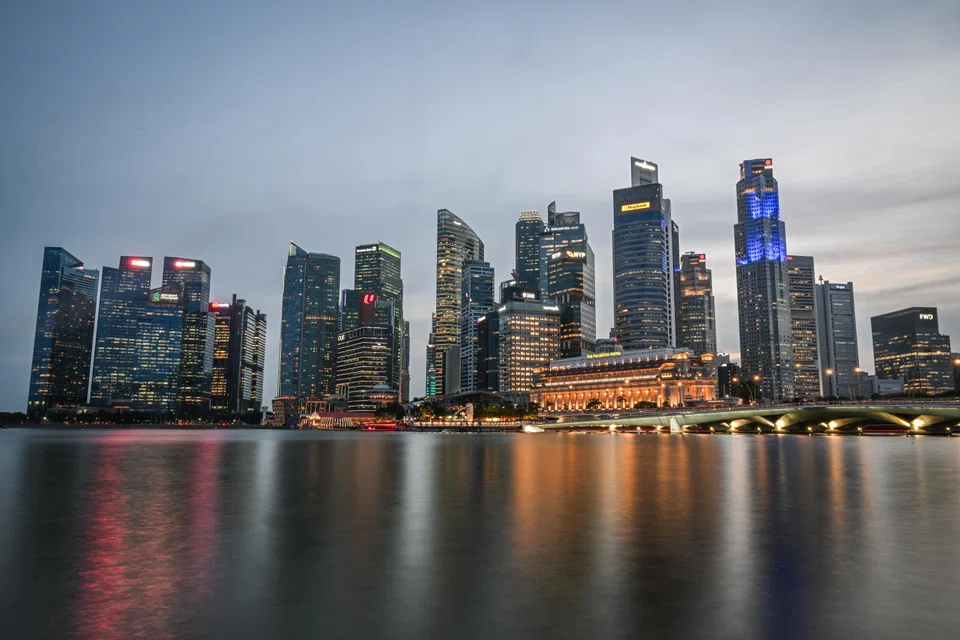
[SINGAPORE] Private equity in South-east Asia has elevated levels of dry powder as exits remained subdued in 2025, said consultancy Deloitte in a report on Monday (Mar 23).
There were 20 exit deals in 2025, a drop from 28 the previous year. But their total value held steady at US$4.5 billion last year, compared with that in 2024.
The relative resilience in deal value is a reflection of buyer appetite for scaled, high-quality assets amid constrained liquidity across the wider market, the report added.
Private-market exit routes were preferred over public-markets ones, such as an initial public offering (IPO), with trade sales and secondary buyouts making up 74 per cent of exits in 2025.
Strategic acquirers remained active in assets that offered scale and defensible positioning, while secondary buyouts offered liquidity when valuation expectation could not be met elsewhere.
Secondary buyouts featured more prominently as sponsors sought to recycle ownership and extend holding periods, among others.
Fundraising still weak in 2025
Fundraising remained weak in 2025, with total capital raised falling to US$3.3 billion in 2025 from US$6.3 billion in 2024.
There was caution among limited partners as distributions remained tight amid ongoing exit uncertainty and shifts towards higher-visibility markets.
Therefore, fundraising was concentrated among a smaller number of funds in South-east Asia.


However, dry powder remained elevated at US$21.1 billion in 2025, though it was a decline from the US$28.3 billion in 2024 and the peak of US$32.1 billion in 2023.
Private equity still has the capacity to deploy capital in a market where selectivity has moderated valuations and reduced competition for non-core divestments, among others.
There have been some developments that might boost private equity fundraising. For example, the Monetary Authority of Singapore consulted the public on its long-term investment fund framework in March 2025.
The framework proposed structures that could provide retail investors access to private-market funds, which may broaden the investor base and diversify the funding environment.
Most active sector
Technology, media and telecommunications (TMT) was the most active sector in South-east Asia in 2025. Healthcare and consumer sectors were the next two most active sectors in the region.
Investment rationale in 2025 was less about capturing macroeconomic tailwinds and more about asset-level defensibility, fragmentation and scalability.
TMT accounted for 41 per cent of total buyout value in 2025 and 30 per cent of deal count in the same period.
However, investments in the sector evolved in 2025 from a broad digitalisation theme to a pivot towards digital infrastructure, with a concentration on assets that can support artificial intelligence and cloud workloads.
In 2026, there could be a pickup in exit activity as a backlog of exits have accumulated after the slowdown in recent years and private equity funds look to return capital to limited partners.
Ongoing uncertainty will continue to contribute to market volatility, but private equity remains supported by dry powder and investor interest.
Liquidity confidence will be a key factor: Should public markets remain selective, private-market routes will likely continue to be the exit of choice. Singapore’s Equity Market Development Programme may gradually broaden the IPO pathways.
Private equity is expected to remain primarily in mid-market buyouts and platform build strategies, where pricing discipline and operational levers can be controlled.
Decoding Asia newsletter: your guide to navigating Asia in a new global order. Sign up here to get Decoding Asia newsletter. Delivered to your inbox. Free.
Copyright SPH Media. All rights reserved.
TRENDING NOW
MSCI proposes standalone status for Indonesia; Jakarta stocks plunge 8%

Palm oil stocks slide after Singapore begins looking into which firms responsible for haze

High Court rules against Julius Baer’s Singapore trust arm in US$50 million family trust dispute

Why is the haze so bad in South-east Asia this year?

