

S-E Asia's robust IPO activity in H1 could continue through 2021
Listing of tech unicorns and potential rollout of SPACs expected to drive markets
Singapore
STOCK Exchanges in South-east Asia have seen robust initial public offering (IPO) activity in the first half of 2021, in spite of Covid-19 flare-ups in the region.
Market watchers see the trend continuing for the rest of the year, with the listing of tech unicorns and the possible introduction of special purpose acquisition companies (SPACs) among the potential drivers.
According to Bloomberg data, exchanges in Singapore, Malaysia, Thailand, Indonesia and the Philippines saw 51 IPOs in the first half of 2021 - up from 43 in the same period a year earlier. These deals raised US$4.9 billion, compared to US$3.2 billion in the first half of 2020.
The trend in South-east Asia mirrors strong performance seen in global IPO markets in the first six months of 2021.
Tham Tuck Seng, capital markets leader at PwC Singapore, said IPO activity globally has been fuelled by excess liquidity arising from government spending and low interest rates.
Stefanie Yuen Thio, joint managing partner at TSMP Law Corporation, also noted that soaring US markets have helped feed appetite for IPOs.
Within South-east Asia, Thailand and Indonesia emerged on top for the first half of the year - Thailand by IPO proceeds, and Indonesia by the total number of listings - in line with the trend over the past couple of years.
US$2.8 billion was raised on the Stock Exchange of Thailand (SET) in H1 2021 across 15 deals, including two that were valued at over US$1 billion. The Indonesia Stock Exchange saw 22 deals, with proceeds of US$0.5 billion.
The dominance of both countries is natural, market watchers said.
EY Asean IPO leader Max Loh noted that Indonesia and Thailand are the two biggest economies in South-east Asia.
"With that, and this focus on a lot of startups, technology companies all coming to the fore, everything else remaining equal, you will see larger numbers coming from these markets," he said.
For Thailand, strong domestic investor interest may also be a factor in its success.
Ho Cheun Hon, head of South-east Asia equity capital markets at Credit Suisse, said: "The domestic pool of funds from both Thai institutional and retail investors is very deep. This provides resilience, as issuers can tap into a pool of domestic interest in addition to international investor interest."
PwC's Mr Tham also noted that Thailand has active retail participation, with investors who are willing to bet on new IPOs. According to Bloomberg data, IPOs on the SET in H1 2021 have seen their shares jump 46 per cent on a weighted-average basis in the first day of trading.
More high-profile listings in Thailand and Indonesia may, over time, make their exchanges serious competitors for Singapore, which is currently still the region's largest market by total capitalisation.
"If the exchanges out there are really moving up the ladder in terms of liquidity, (or being) able to attract or retain these companies to list on home exchanges, then Singapore would definitely lose out in terms of the regional play," said EY's Mr Loh.
There is currently a noticeably different profile of companies seeking to list in Thailand and Indonesia, versus Singapore.
"Singapore generally attracts more regional or even global businesses, whereas in the other regional markets, successful IPOs are usually domestic champions in their own markets," said Credit Suisse's Mr Ho.
But that could change.
Thailand, for instance, may use its strong track record to entice foreign companies, which PwC's Mr Tham said could pose a threat to Singapore.
For H1 2021, Singapore is falling behind.
Both the Philippine Stock Exchange (PSE) and Bursa Malaysia also saw IPO proceeds rise year-on-year to US$1.3 billion and US$0.1 billion, respectively. The PSE saw its largest IPO on record with the US$1 billion listing of Monde Nissin Corp last month.
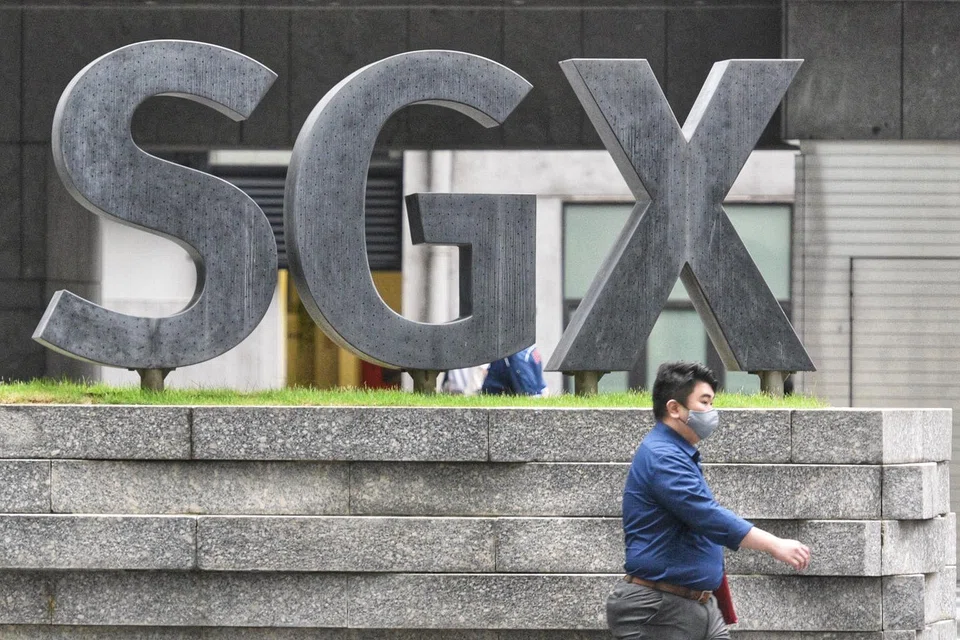
Only the Singapore Exchange (SGX) saw proceeds from initial listings fall. Three IPOs raised US$242 million, around half the amount from a year ago.
One reason could be the lack of large deals. In February, Thai Beverage said it planned to spin off and list its brewery unit on the SGX. This would reportedly have raised US$2 billion. But the plans were deferred in April in view of uncertain market conditions and the worsening Covid-19 pandemic.
Said TSMP's Ms Yuen Thio: "Singapore lags behind, partially as a victim of our own economic success."
Singapore's large companies can often secure a listing and investor following more easily.
She noted that the US has had a boom of SPACs that are seeking attractive targets. But Chinese companies have not been a good option for these SPACs - given current relations between the US and China, and Beijing's crackdown on homegrown unicorns.
"As a result, successful not-yet listed Singapore companies - which would otherwise be considering a Singapore listing - are considering listings via a US SPAC," she said.
In April, Grab said it intended to go public via a SPAC merger with Nasdaq-listed Altimeter Growth Corp that would value it at US$39.6 billion. Meanwhile, Carousell is also reportedly looking towards the US to go public via a SPAC merger that could value it at as much as US$1.5 billion.
Robson Lee, partner at law firm Gibson, Dunn & Crutcher, said there also appears to be an "ingrained and sustained perception that liquidity and valuations in the Singapore market are comparatively low vis-a-vis other stock markets in the region".
"To rekindle and sustain stronger market interest to IPO in Singapore for promising unicorns and successful corporate icons from China and even India, we have to revamp the fundamentals," he said, adding that government grants to promote corporate research and investor education could inculcate the requisite investment culture.
But EY's Mr Loh noted that Singapore still stands a chance of attracting secondary or dual listings.
For the rest of the year, market observers expect the IPO pipeline for the region to remain robust.
Mr Loh said Indonesia and Thailand, in particular, should continue to do quite well; and Credit Suisse's Mr Ho said the overall market is seeing a very healthy pipeline, with more than a few IPOs anticipated in excess of US$1 billion across South-east Asia.
In Indonesia, regulatory revamps could make things interesting.
Gibson Dunn's Mr Lee said: "Indonesia will completely revamp its listing rules that will allow firms to go public with multiple classes of shares carrying different voting rights. The new rules will also make it easier for loss-making firms to IPO, among other changes."
He added that Bukalapak's envisaged US$1.5 billion IPO fundraising, and the pipeline of about 24 companies including GoTo to follow soon after, will "further drive the market impetus for a bumper IPO crop for 2021 in Indonesia".
For the Singapore market, Ms Yuen Thio said there is a pipeline of Singapore IPOs yet to be announced. But she noted that Singapore's investors are still not used to the aggressive forward-looking valuation models used for tech companies and those in emerging industries. "That needs to change," she said.
Market watchers also said regional capital markets could benefit from China's crackdown on US IPOs. While Hong Kong would likely be the biggest beneficiary, Singapore could also be an attractive proposition.
PwC's Mr Tham noted SGX has a team in China looking for potential Singapore listcos. Chinese firms with an eye on the South-east Asian market may also view Singapore as a springboard to the region, he added.
The potential rollout of SPACs could also result in greater activity in regional capital markets. Indonesia and Singapore are among the countries considering the introduction of a SPAC listings regime, and SGX had said it was hoping to launch SPACs in Singapore as early as this year.
Ms Yuen Thio said: "I hope that the much anticipated introduction of SPACs in Singapore will open the door to a new suite of listings, with top notch fund managers and sponsors bringing their listings here."
TRENDING NOW

Indonesia’s coal tycoon Low Tuck Kwong replaced as Bayan Resources president-director

OCBC names Ang Eng Siong as global corporate banking head in rejig of wholesale banking business

Consider lowering homeownership barriers for some non-resident foreigners

DBS opens flagship investment strategy to retail investors with new fund

