S Korea hits brakes on rapid wage gains as economy sputters
 Add BT as a preferred source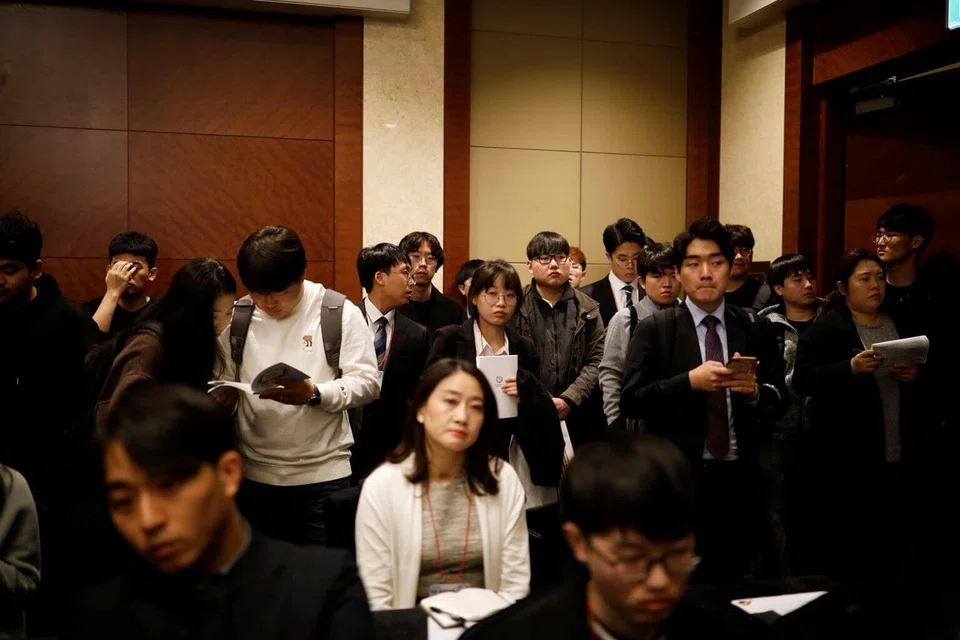
DeeperDive is a beta AI feature. Refer to full articles for the facts.
Seoul
SOUTH Korea slammed the brakes on ambitious pay raises at the centre of President Moon Jae-in's growth strategy Friday as the vulnerability of an economy struggling with slumping exports and growing joblessness hit home.
Minimum pay for workers will rise by 2.9 per cent to 8,590 won (S$9.91) per hour in 2020, following hikes of 10.9 per cent this year and 16.4 per cent in 2018, according to Minimum Wage Commission chief Park Joon-shik, who was speaking on Yonhap TV.
Mr Moon had pledged to raise the minimum wage to 10,000 won by 2020 when he ran for office two years ago, with a promise to stoke up domestic demand and wean the economy off its dependency on exports.
The steep hikes in the first two years of his presidency largely backfired as data showed a widening income gap and job losses in some sectors.
The sharply lower minimum wage gain for 2020 shows the government switching to a much more cautious stance as it views an economy that is just too vulnerable to forge ahead with higher pay as exports continue to plunge and popular support for raising the minimum wage continues to weaken.
Navigate Asia in
a new global order
Get the insights delivered to your inbox.
"It shows the government is worried about the economy and has come to grips with reality," said Park Jeong-woo, an economist at Korea Investment & Securities.
Business representatives had initially demanded a 4.2 per cent cut, while their labour counterparts sought a 19.8 per cent rise.
In an apparent struggle to reach middle ground, the commission missed a legally set deadline of June 27 to submit the wage proposal.
Within the commission, the so-called public-interest commissioners - appointed by the president and labour minister - usually hold sway when labour and businesses disagree.
The decision comes with South Korea's economy showing signs of strain. The economy contracted in the first quarter, with a dismal run of falling exports extending to seven months in June.
The unemployment rate has now hovered around a relatively high 4 per cent for the longest period in almost two decades.
The outlook doesn't look much better. The ongoing trade war between the US and China is exacerbating slowing global growth and a tech slowdown is continuing to batter South Korea's chip and smartphone makers.
A trade spat that erupted this month with Japan also threatens to crimp production of some of South Korea's key chip and panel products. BLOOMBERG
Share with us your feedback on BT's products and services